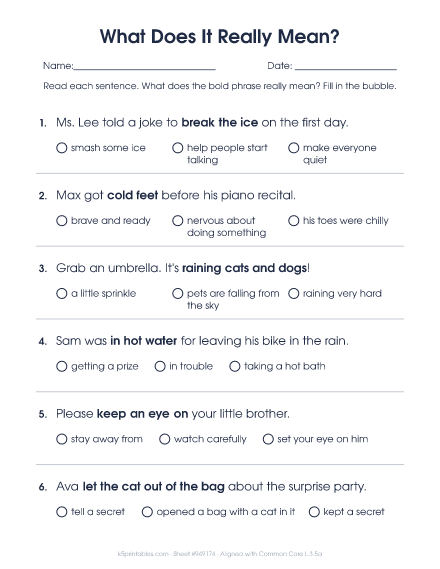
What Does It Really Mean?
Read each sentence. What does the bold phrase really mean? Fill in the bubble.
Fresh sheet anytime. Tap New sheet or reload for a different one. Tap + for up to 10.
This is sheet #94924601.
How to do it
- Read the sentence.
- Think about what the bold phrase really means.
- Fill in the bubble.
Teaching tip
Cross out the silly literal choice first. Then pick the one that fits the sentence. This sheet is aligned with Common Core L.3.5a.
About this worksheet
Six sentences with everyday phrases and three meanings to choose from. One choice is the silly literal meaning. Includes an answer key.
What kids practice
Some phrases mean exactly what the words say. That's literal language. "We broke the ice on the pond" is literal. Other phrases mean something different from the words. That's nonliteral, or figurative, language. "A joke helped break the ice" means it helped people start talking. In 3rd grade, kids learn to tell the two apart and figure out what common phrases really mean. Kids who take language very literally, or who are learning English, may find these phrases confusing at first.
Watch for
- Reading the phrase word by word. Raining cats and dogs is not about pets. Look at the whole sentence.
- Thinking every phrase is nonliteral. Sometimes the words mean exactly what they say, so check the sentence.
- Guessing from one word. In hot water could be a bath or being in trouble. The rest of the sentence decides.
- Using a phrase in the wrong place when writing. Read the sentence out loud to check that it makes sense.
It's free to print, with an answer key. See the full figurative language basics guide for 3rd grade.
More sheets in this set
- See it all
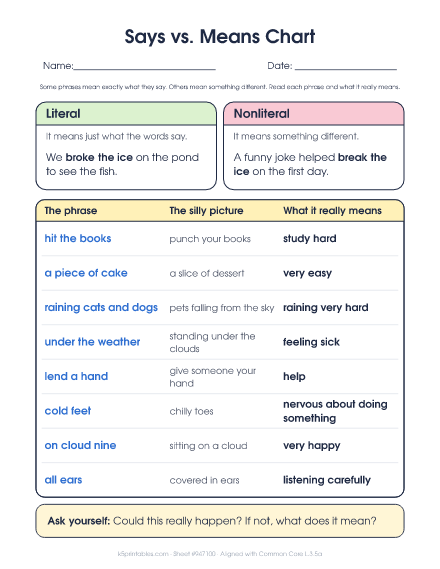 1. Says vs. Means ChartLiteral and nonliteral explained with one example of each, plus eight everyday phrases with the silly picture and the real meaning side by side.
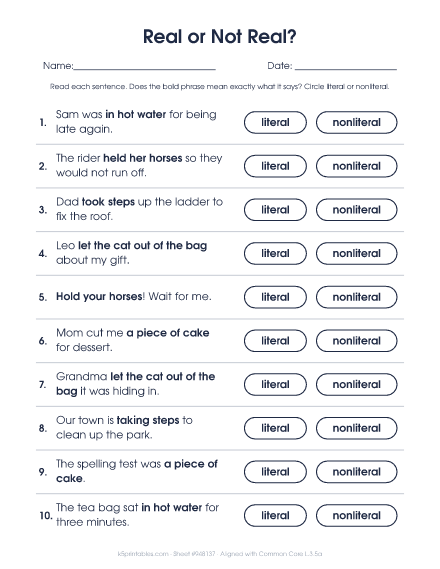 2. Real or Not Real?Ten sentences. Each phrase shows up twice, once literal and once nonliteral, so kids see that the sentence decides. Includes an answer key.
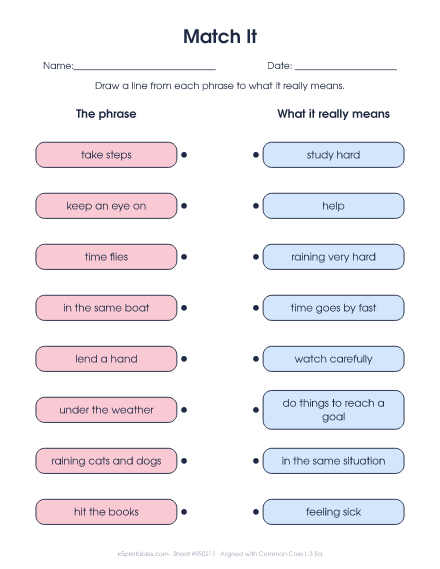 4. Match ItEight phrases to match with their real meanings, a different mix each time you print. Includes an answer key.
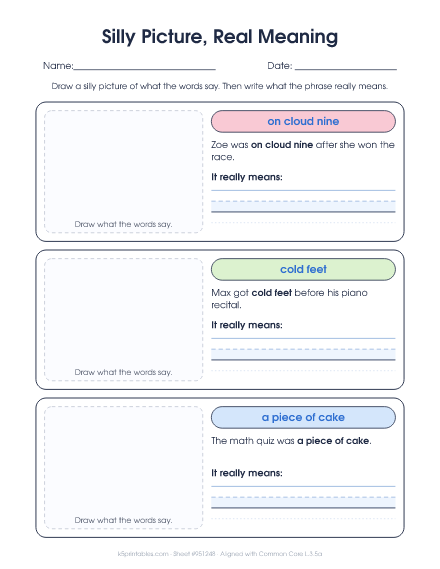 5. Silly Picture, Real MeaningThree phrases, each with a drawing box, an example sentence and handwriting lines for the real meaning. The answer key has example answers.
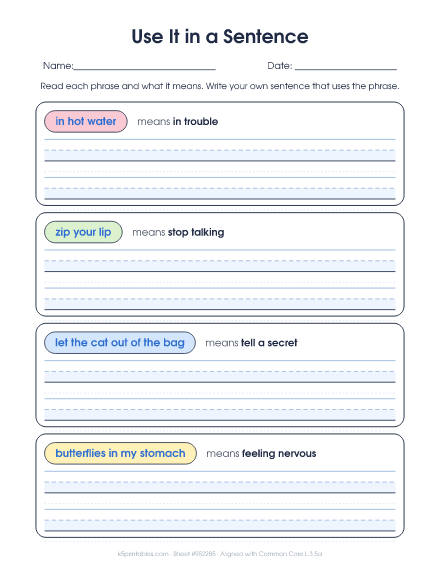 6. Use It in a SentenceFour phrases with their meanings and handwriting lines to write a sentence for each.