Plurals and Past Tense Chart
Plurals mean more than one. Past tense means it already happened.
Need more than one? Tap + for extra copies (up to 10).
How to do it
- Read each plural rule and its examples.
- Read each past tense rule and its examples.
- Keep the chart out while you practice.
Teaching tip
Point out special words when you read together. This sheet is aligned with Common Core L.2.1b.
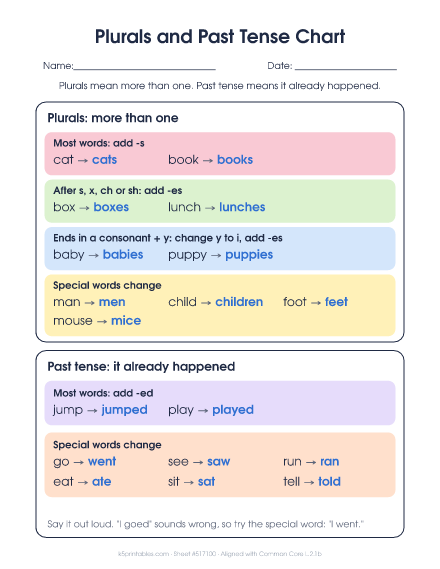
About this chart
The rules for -s, -es, y to -ies and special plurals, plus -ed and special past tense verbs.
What kids practice
A plural means more than one. Most words just add -s, words ending in s, x, ch or sh add -es, and some special words change completely, like foot to feet. Past tense tells that something already happened. Most verbs add -ed, but many common ones change, like go to went and see to saw.
Watch for
- Adding -s to special words, like foots, mouses or sheeps.
- Writing boxs instead of boxes.
- Saying goed, runned or eated instead of went, ran and ate.
It's free to print, as many copies as you need. See the full plurals and past tense guide for 2nd grade.
More sheets in this set
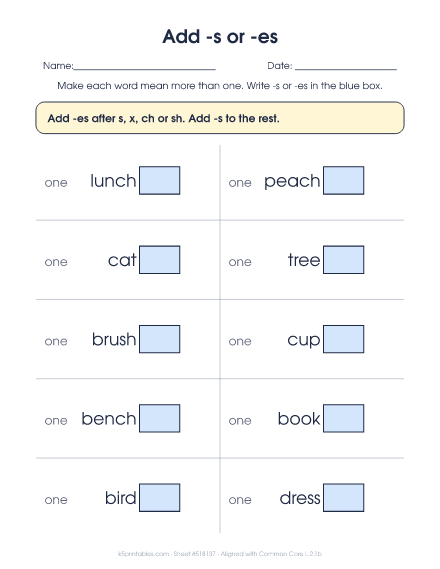 2. Add -s or -esWords to make plural with -s or -es.
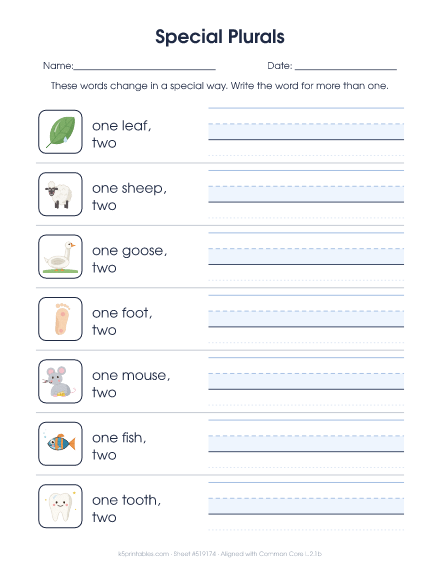 3. Special PluralsPictures of words with special plurals, like tooth and teeth, or sheep and sheep.
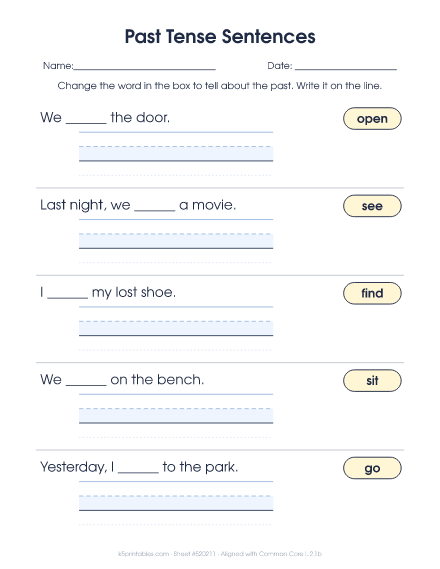 4. Past Tense SentencesSentences about the past with a verb to change. Some add -ed and some change in a special way.
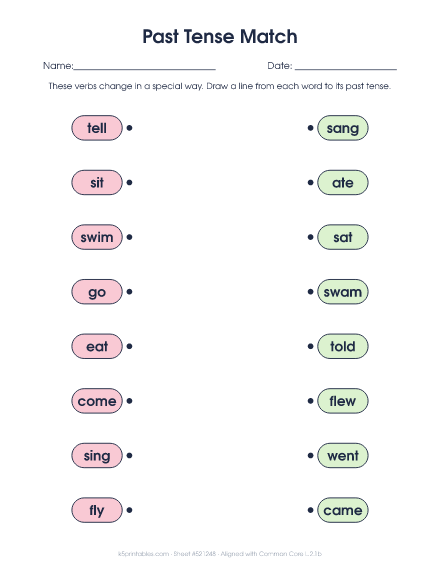 5. Past Tense MatchMatch special verbs to their past tense, like go and went.