Plurals and past tense worksheets
Aligned with Common Core L.2.1b
Printable second-grade grammar worksheets: add -s or -es, special plurals like feet and mice, and past tense verbs like jumped, went and saw.
The worksheets
- See it all
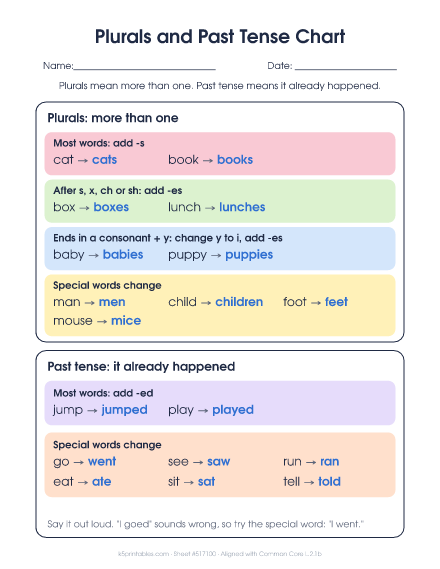
Plurals and Past Tense Chart
The rules for -s, -es, y to -ies and special plurals, plus -ed and special past tense verbs.
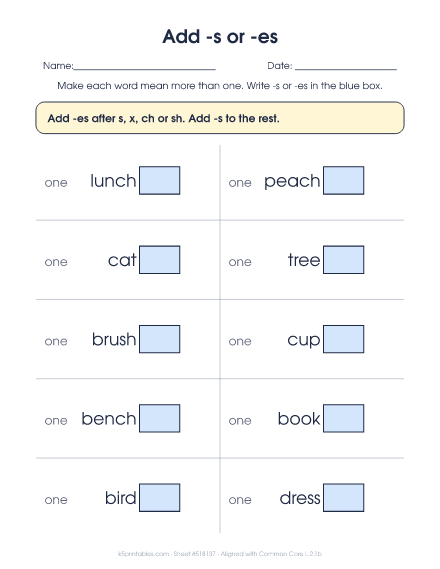
Add -s or -es
Words to make plural with -s or -es.
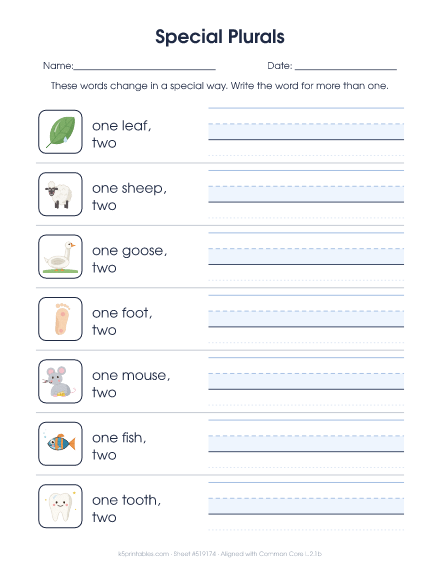
Special Plurals
Pictures of words with special plurals, like tooth and teeth, or sheep and sheep.
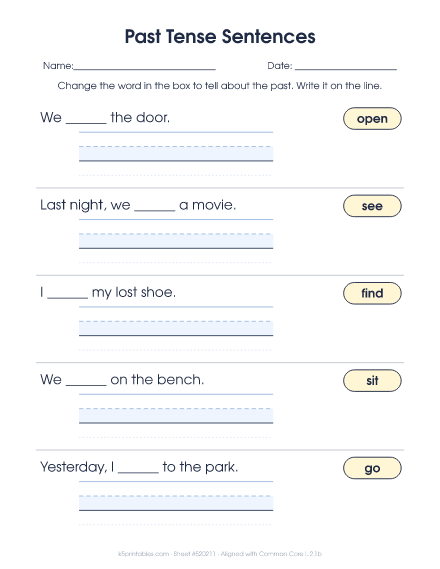
Past Tense Sentences
Sentences about the past with a verb to change. Some add -ed and some change in a special way.
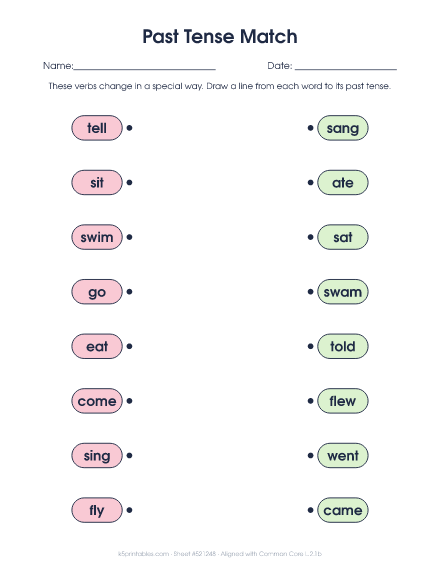
Past Tense Match
Match special verbs to their past tense, like go and went.
Print the whole packet
One copy of every sheet above, in order. Tap + for more copies (up to 10).
For the parent or teacher
What it is
A plural means more than one. Most words just add -s, words ending in s, x, ch or sh add -es, and some special words change completely, like foot to feet. Past tense tells that something already happened. Most verbs add -ed, but many common ones change, like go to went and see to saw.
What comes next
Capitals and commas in dates.
How to teach it
- Count real objects and say the plural, like one sock, two socks; one box, two boxes.
- Say the -es words out loud. You can hear the extra part: box-es, bus-es.
- Learn special words a few at a time with silly sentences, like "two geese with sore feet."
- For past tense, ask "Did it already happen?" and say it as yesterday.
Common mistakes
- Adding -s to special words, like foots, mouses or sheeps.
- Writing boxs instead of boxes.
- Saying goed, runned or eated instead of went, ran and ate.