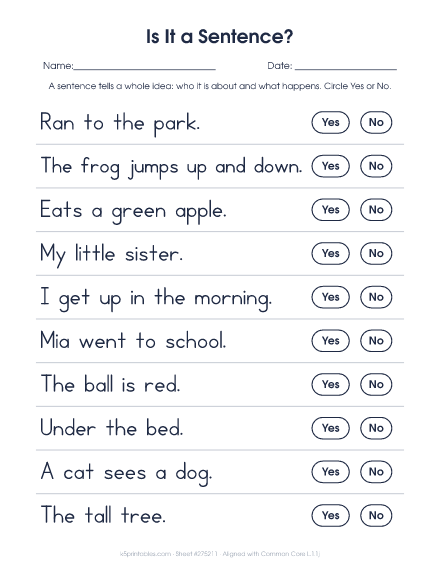
Is It a Sentence?
A sentence tells a whole idea: who it is about and what happens. Circle Yes or No.
Fresh sheet anytime. Tap New sheet or reload for a different one. Tap + for up to 10.
This is sheet #27524601.
How to do it
- Read the words.
- Does it tell who and what happens?
- Circle Yes for a sentence and No if part is missing.
Teaching tip
For each No, ask your child to add words to turn it into a real sentence. This sheet is aligned with Common Core L.1.1j.
About this worksheet
Ten word groups. Some are complete sentences and some are missing a part.
What kids practice
A telling sentence shares an idea and ends with a period. An asking sentence is a question and ends with a question mark. A complete sentence tells who it is about and what happens. First graders learn to tell the difference, to build their own sentences, and to answer questions with a whole sentence.
Watch for
- Writing a fragment like "The big red ball." and calling it a sentence.
- Using a question word but ending with a period.
- Answering with one word instead of a whole sentence.
- Putting words in an order that doesn't make sense.
It's free to print, with Fewer, Standard or More on the page and an answer key. See the full telling and asking sentences guide for 1st grade.
More sheets in this set
- See it all
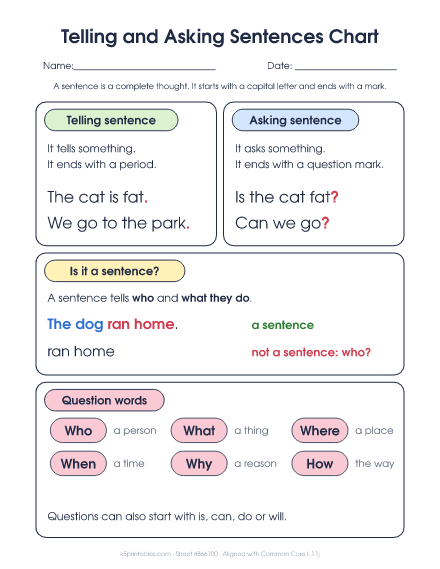 1. Telling and Asking Sentences ChartTelling and asking sentences with their end marks, how to spot a complete sentence, and the six question words.
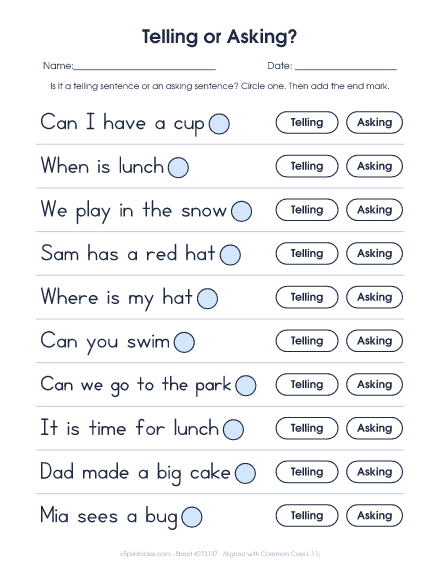 2. Telling or Asking?Ten sentences to sort into telling and asking, then finish with the right end mark.
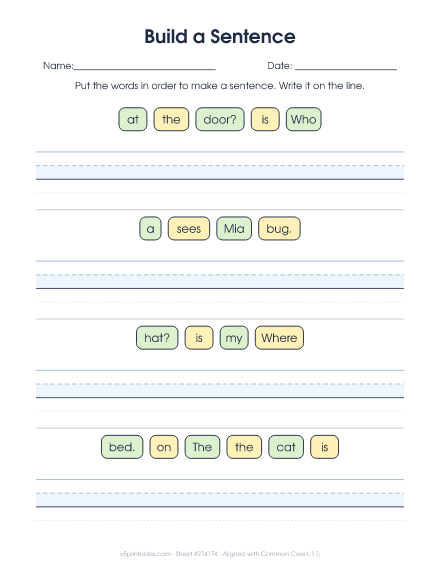 3. Build a SentenceFive sets of scrambled word cards. Put them in order and write the sentence.
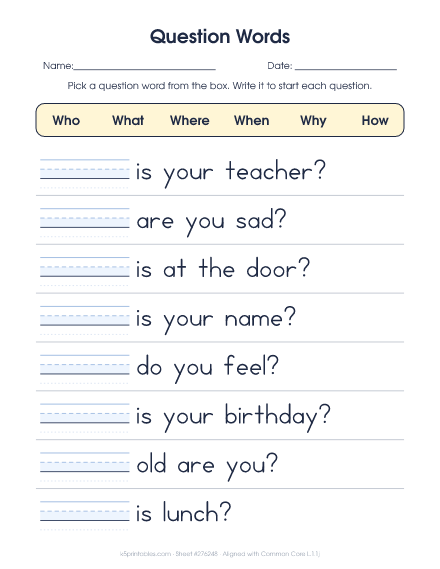 5. Question WordsEight questions missing their first word. Choose who, what, where, when, why or how.
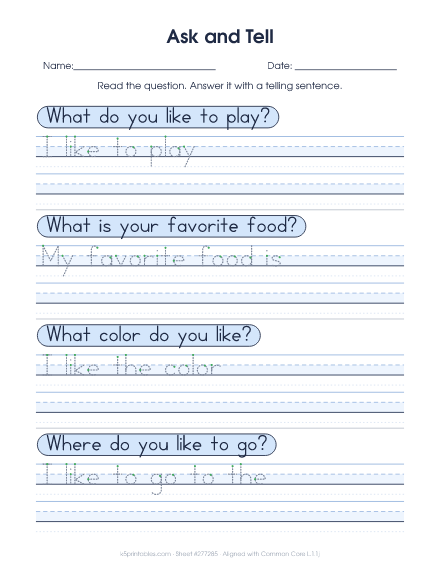 6. Ask and TellFour questions to answer with full telling sentences, using a sentence starter.