See, Say, Trace, Build Chart
Learn letters with your whole body: see it, say it, trace it and build it.
Need more than one? Tap + for extra copies (up to 10).
How to do it
- Look at each way to learn a letter.
- Try all four with one letter.
- Use the bed trick for b and d.
Teaching tip
Pick one letter a day and do all four steps with it.
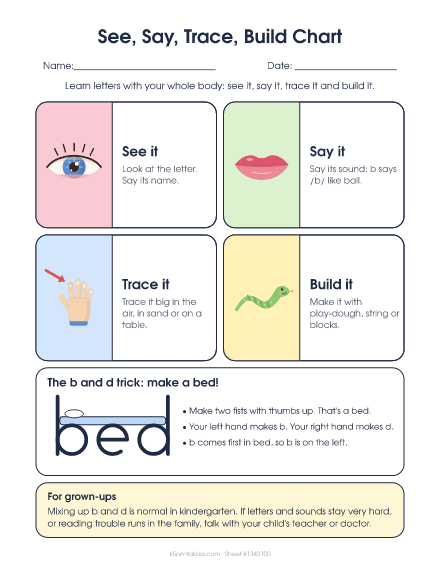
About this chart
Four ways to learn a letter with your whole body (see it, say it, trace it, build it), plus the b and d bed trick.
What kids practice
These sheets help kids who mix up look-alike letters like b and d, lose their place, or need more ways to remember letters. They use big, well-spaced print, a picture for every letter, and hands-on ways to learn. They help many children, with or without dyslexia. They are not a test and not a diagnosis. Mixing up b and d is normal in kindergarten.
Watch for
- Teaching b and d on the same day. Space them apart, then practice telling them apart.
- Correcting every flip. Point to the bed trick instead of saying "no."
- Waiting a long time to ask for help. If letters and sounds stay very hard, or reading trouble runs in the family, talk with your child's teacher or doctor.
It's free to print, as many copies as you need. See the full reading helpers (dyslexia-friendly) guide for kindergarten.
More sheets in this set
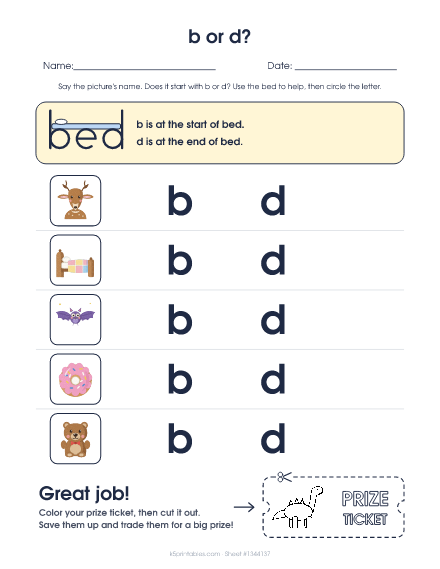 2. b or d?Pictures like ball, dog and bed. Use the bed at the top to decide if each one starts with b or d.
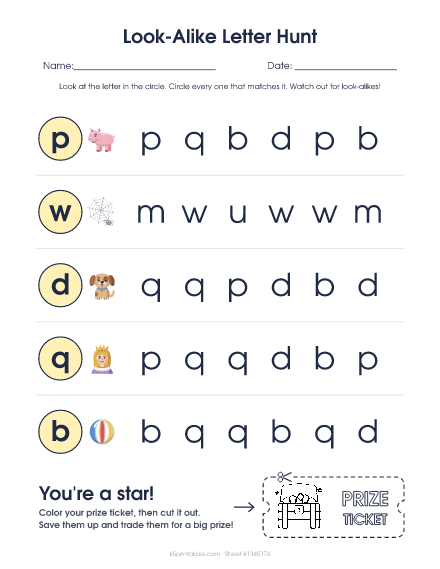 3. Look-Alike Letter HuntRows of big, spaced-out letters with look-alikes mixed in, like b d p q and m n u w. Circle every letter that matches.
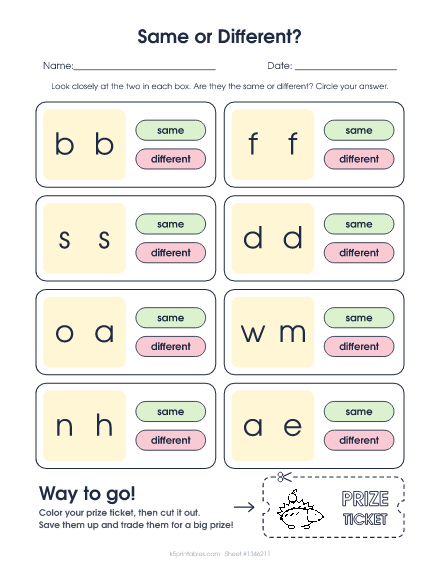 4. Same or Different?Pairs of letters to compare, like b and d or m and m. More uses short words like was and saw.
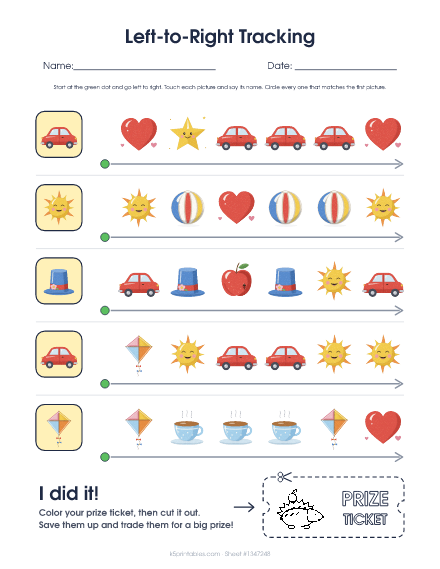 5. Left-to-Right TrackingRows of pictures to scan from left to right, circling the ones that match the picture in the yellow box.
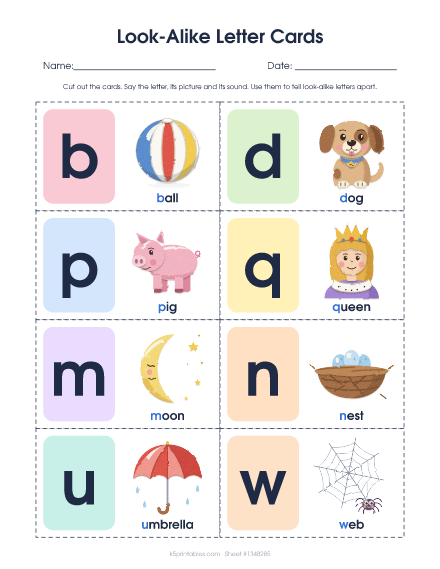 6. Look-Alike Letter CardsEight cards for b d p q m n u w, each with a big letter and a picture that starts with it.