Reading helpers (dyslexia-friendly) worksheets
Printable reading helpers for kindergarten: a see-say-trace-build chart, the b and d bed trick, look-alike letter hunts, same or different letters, left-to-right tracking rows and look-alike letter cards.
The worksheets
- See it all
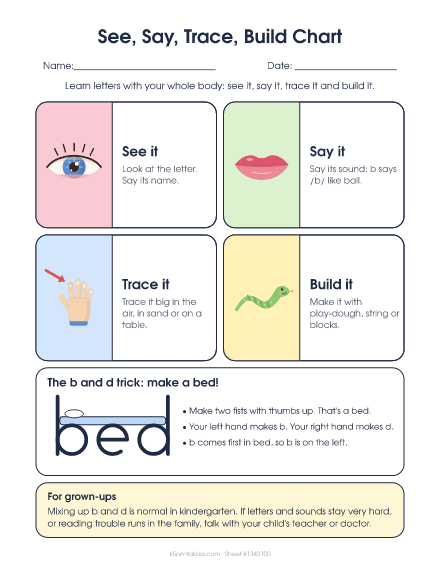
See, Say, Trace, Build Chart
Four ways to learn a letter with your whole body (see it, say it, trace it, build it), plus the b and d bed trick.
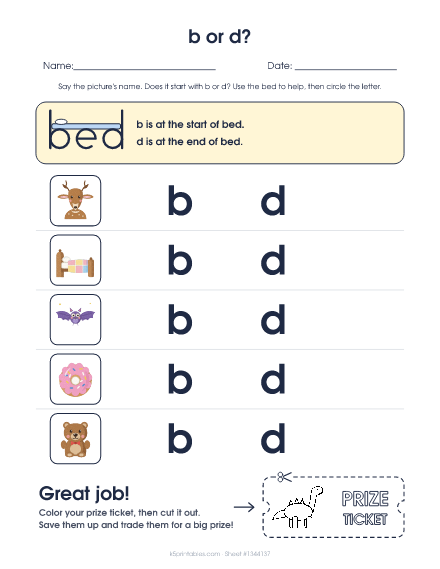
b or d?
Pictures like ball, dog and bed. Use the bed at the top to decide if each one starts with b or d.
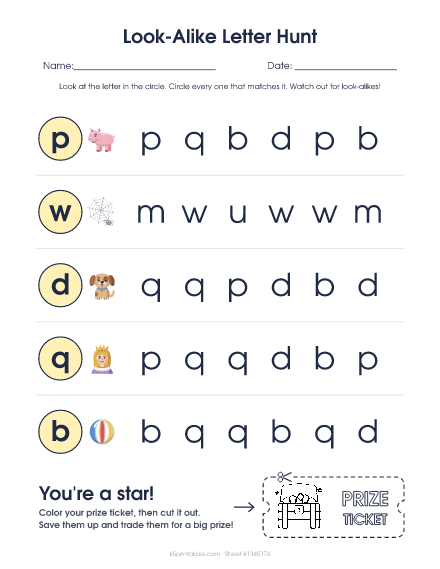
Look-Alike Letter Hunt
Rows of big, spaced-out letters with look-alikes mixed in, like b d p q and m n u w. Circle every letter that matches.
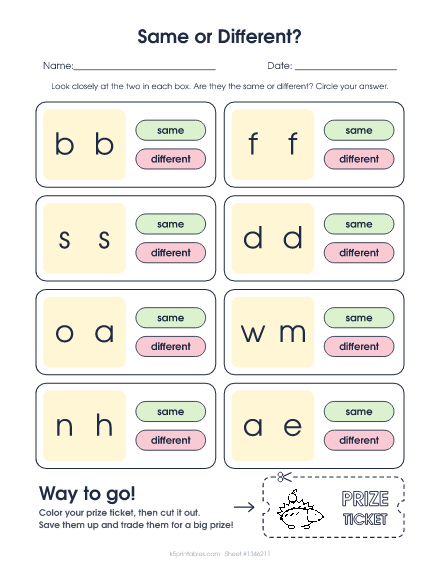
Same or Different?
Pairs of letters to compare, like b and d or m and m. More uses short words like was and saw.
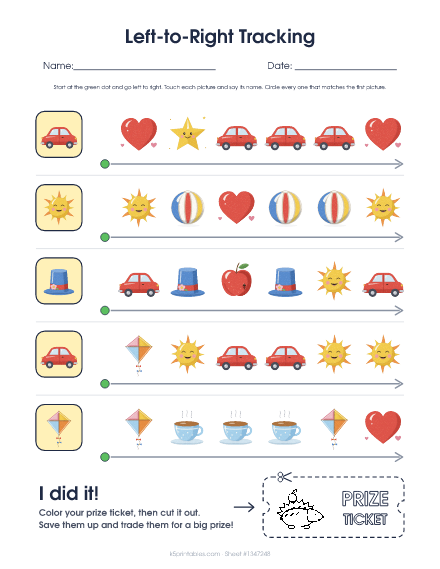
Left-to-Right Tracking
Rows of pictures to scan from left to right, circling the ones that match the picture in the yellow box.
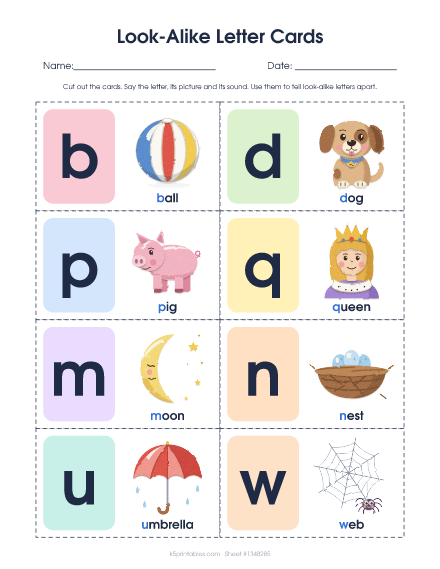
Look-Alike Letter Cards
Eight cards for b d p q m n u w, each with a big letter and a picture that starts with it.
Print the whole packet
One copy of every sheet above, in order. Tap + for more copies (up to 10).
For the parent or teacher
What it is
These sheets help kids who mix up look-alike letters like b and d, lose their place, or need more ways to remember letters. They use big, well-spaced print, a picture for every letter, and hands-on ways to learn. They help many children, with or without dyslexia. They are not a test and not a diagnosis. Mixing up b and d is normal in kindergarten.
What comes next
Use these helpers alongside the kindergarten reading topics, like Letter names and sounds.
How to teach it
- Use more than your eyes. Trace letters big in the air, in sand or with play-dough while saying the sound.
- Teach one look-alike letter at a time. Learn b well before adding d.
- Use the bed trick with your hands every time b or d comes up.
- Keep practice short and fun, and stop while it's still going well.
Common mistakes
- Teaching b and d on the same day. Space them apart, then practice telling them apart.
- Correcting every flip. Point to the bed trick instead of saying "no."
- Waiting a long time to ask for help. If letters and sounds stay very hard, or reading trouble runs in the family, talk with your child's teacher or doctor.