How to Multiply 3-Digit by 2-Digit
Multiply by the ones, then by the tens with a 0 in the ones place, then add.
Need more than one? Tap + for extra copies (up to 10).
How to do it
- Multiply by the ones digit, carrying when you need to.
- Write a 0 in the ones place, then multiply by the tens digit.
- Add the two rows and estimate to check.
Teaching tip
Cross out the carries from the first row before starting the second, so they don't get added twice. This sheet is aligned with Common Core 5.NBT.B.5.
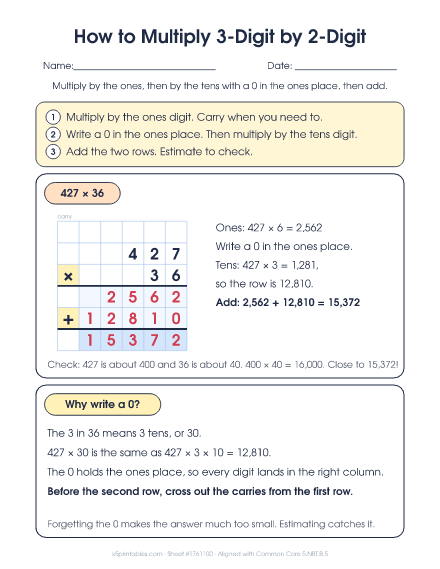
About this chart
427 × 36 worked on graph paper with each step explained, an estimate to check, and why the 0 goes in the ones place.
What kids practice
Fifth graders multiply bigger whole numbers with the standard algorithm, like 427 × 36 or 243 × 152. Each digit of the bottom number makes its own row, with a 0 for the tens row and two 0s for the hundreds row, and then the rows are added. The goal by the end of 5th grade is to do this accurately and without needing an area model, and to estimate to check that an answer makes sense.
Watch for
- Forgetting the 0 in the ones place for the tens row, or the two 0s for the hundreds row.
- Adding a carry from the first row into the second row.
- Lining up a row in the wrong columns.
- Adding the rows wrong after all the multiplying is right.
It's free to print, as many copies as you need. See the full multi-digit multiplication guide for 5th grade.
More sheets in this set
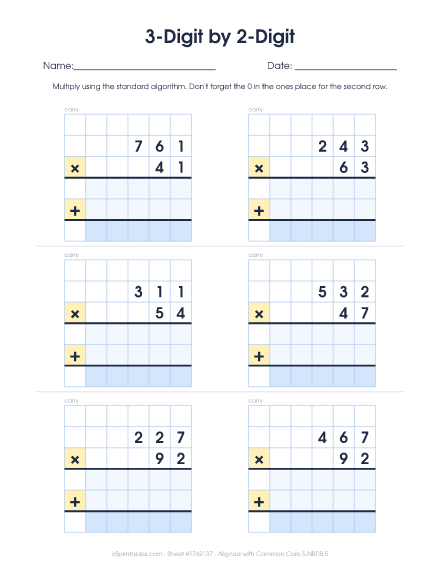 2. 3-Digit by 2-Digit3-digit by 2-digit multiplication on graph paper, with shaded rows for the two partial products and the answer. Fewer has 4 problems, Standard has 6 and More has 9.
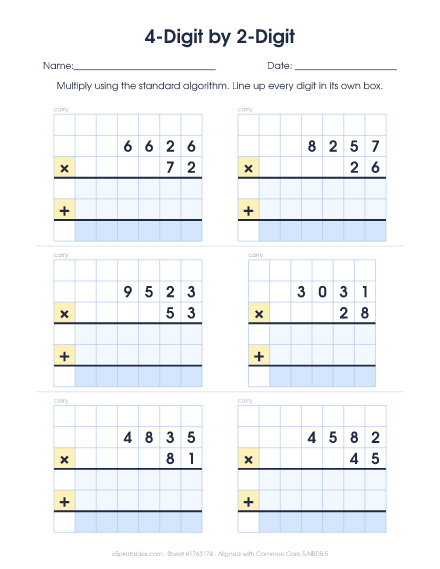 3. 4-Digit by 2-Digit4-digit by 2-digit multiplication on graph paper. Fewer has 4 problems, Standard has 6 and More has 9.
- See it all
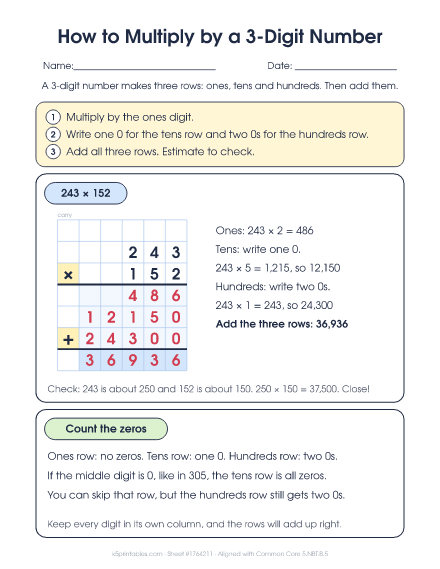 4. How to Multiply by a 3-Digit Number243 × 152 worked on graph paper with three rows, plus how many zeros each row needs and what to do when the middle digit is 0.
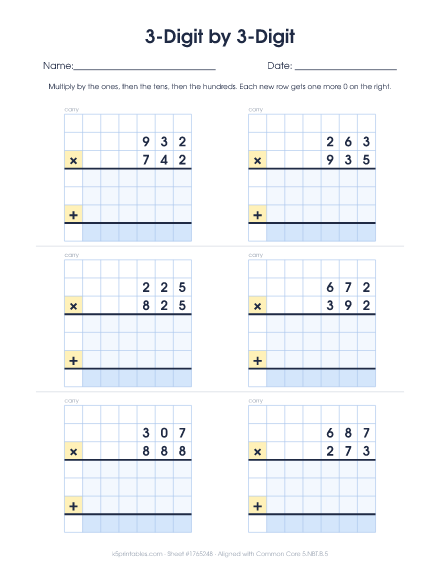 5. 3-Digit by 3-Digit3-digit by 3-digit multiplication on graph paper, with shaded rows for the three partial products and the answer. Fewer has 4 problems, Standard has 6 and More has 9.
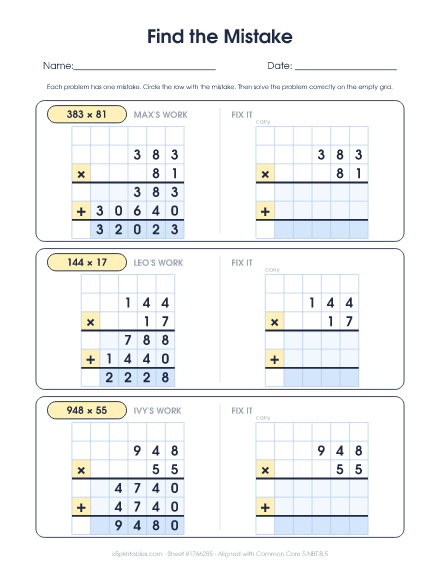 6. Find the MistakeWorked problems with one mistake each, like a missing 0, a carry left out or rows added wrong, next to an empty grid to fix it. Fewer has 2 problems, Standard has 3 and More has 4. The answer key circles the mistake, names it and shows the correct work.
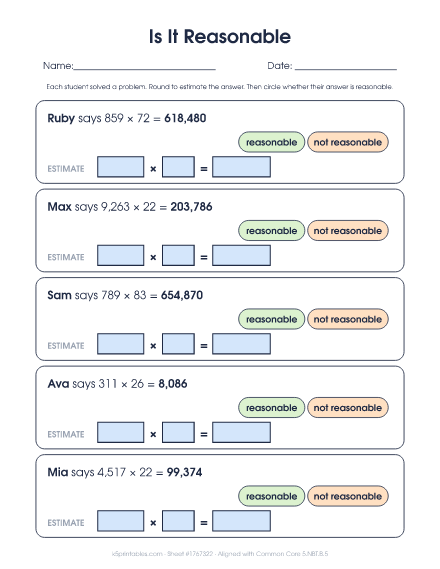 7. Is It ReasonableStudents' answers to check by estimating, some right and some way off. Fewer has 4, Standard has 5 and More has 6. Includes an answer key.
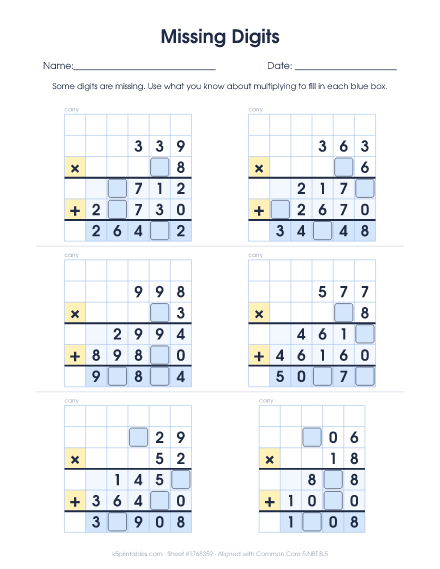 8. Missing DigitsFinished multiplication problems with some digits missing, each with exactly one answer. Fewer has 4 problems with 2-digit numbers, Standard has 6 and More has 6 with more blanks. Includes an answer key.
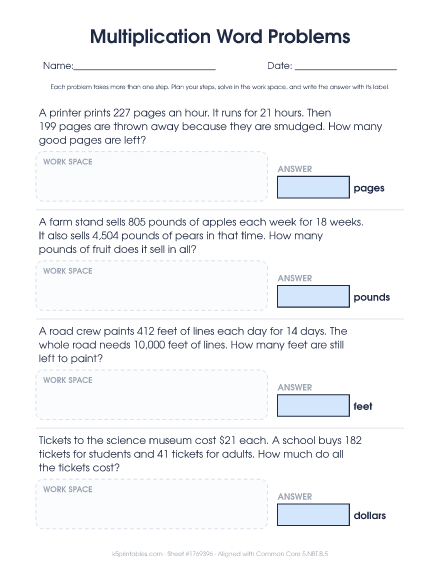 9. Multiplication Word ProblemsMulti-step word problems that use multiplying large numbers with adding or subtracting. Fewer has 3, Standard has 4 and More has 5. Includes an answer key.