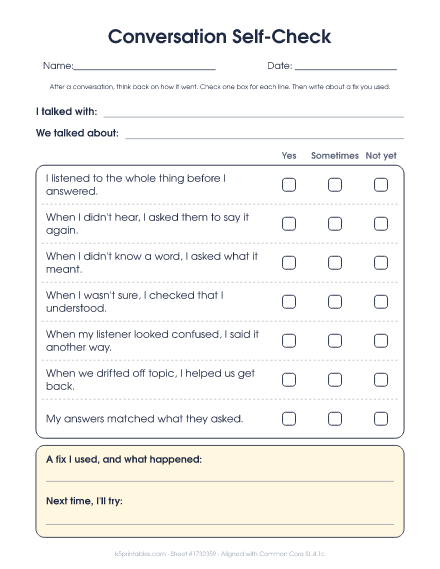
Conversation Self-Check
After a conversation, think back on how it went. Check one box for each line. Then write about a fix you used.
Need more than one? Tap + for extra copies (up to 10).
How to do it
- Have a conversation with someone.
- Check Yes, Sometimes or Not yet for each line.
- Write about a fix you used and what you'll try next time.
Teaching tip
Use it after a short, low-stakes chat first, like talking about a favorite game. This sheet is aligned with Common Core SL.4.1c.
About this worksheet
A self-check to fill in after a real conversation, covering listening, asking for repeats, checking understanding, saying it another way and staying on topic.
What kids practice
Every conversation gets stuck sometimes. Someone doesn't hear, doesn't know a word, gets the wrong idea or drifts off topic. Fixing a conversation (often called conversation repair) means noticing when that happens and using a quick strategy to get back on track: asking someone to say it again, asking what something means, checking that you understood, saying it another way or bringing the talk back to the topic. These sheets build the noticing and the words to say, and they're meant to be practiced out loud.
Watch for
- Nodding along without understanding, instead of asking.
- Saying only "What?" when a more specific question would help.
- Repeating the same unclear words louder instead of saying it another way.
- Not noticing when the conversation has drifted to something else.
- Giving a reply that's too short or doesn't answer the question.
It's free to print, as many copies as you need. See the full fixing a conversation guide for 4th grade.
More sheets in this set
- See it all
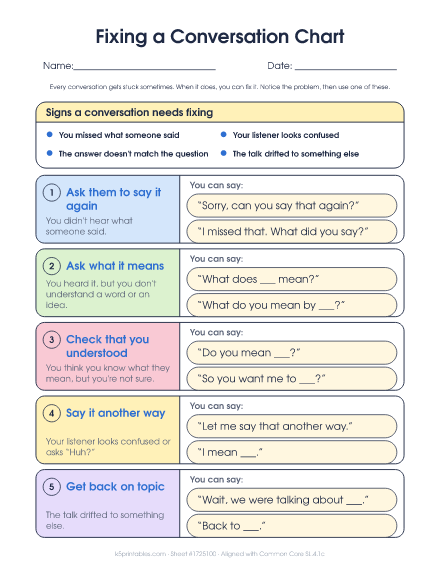 1. Fixing a Conversation ChartFour signs a conversation is stuck and five fixes (ask them to say it again, ask what it means, check that you understood, say it another way and get back on topic), each with things to say.
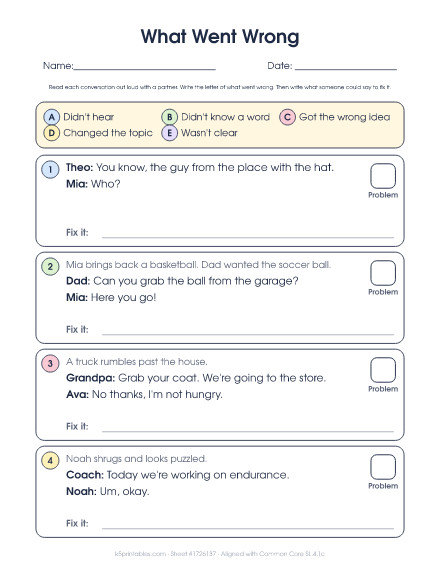 2. What Went WrongShort conversations where something goes wrong, with five problems to choose from. Fewer has 3, Standard has 4 and More has 5. The answer key shows the problem and one example fix.
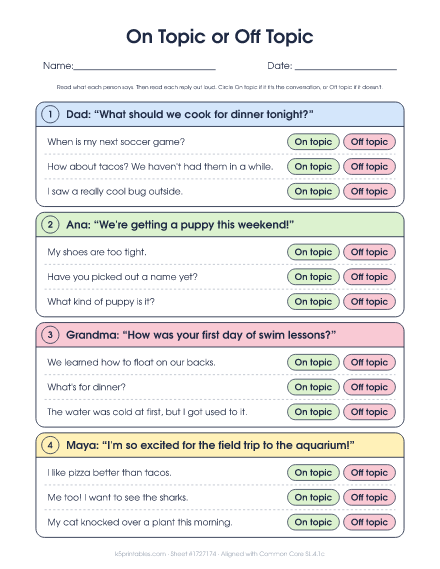 3. On Topic or Off TopicConversation starters with three replies each to sort as on topic or off topic. Fewer has 3, Standard has 4 and More has 5. Includes an answer key.
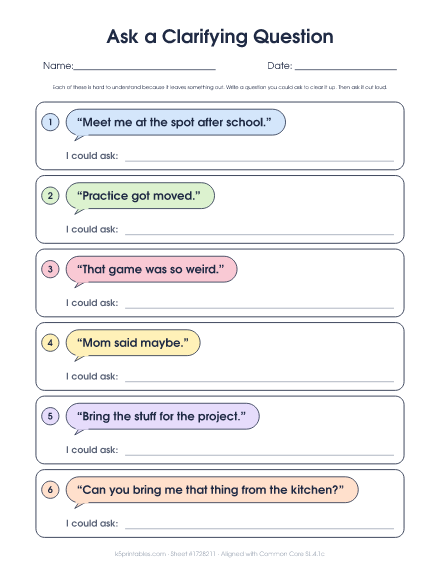 4. Ask a Clarifying QuestionVague things people say, like "Grab the big one," to answer with a clarifying question. Fewer has 5, Standard has 6 and More has 7. The answer key shows one example question for each.
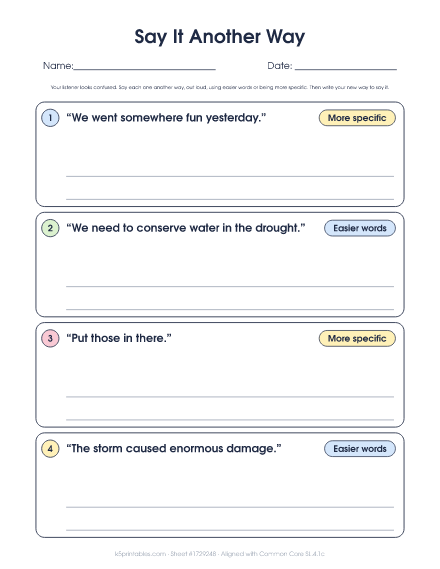 5. Say It Another WaySentences that are hard to follow, to say again with easier words or more specific ones. Fewer has 3, Standard has 4 and More has 5. The answer key shows one example for each.
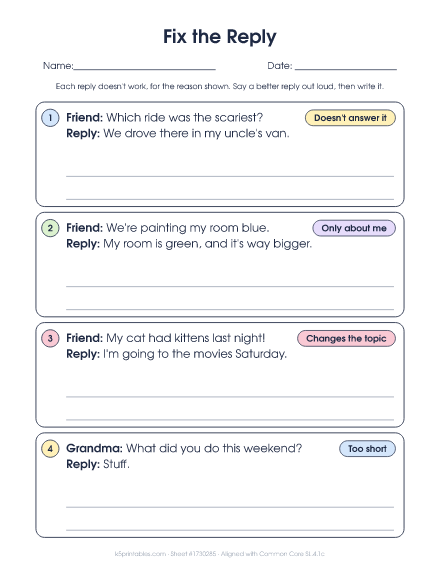 6. Fix the ReplyReplies that are too short, don't answer the question, change the topic or are only about the speaker, to rewrite as better replies. Fewer has 3, Standard has 4 and More has 5. The answer key shows one example for each.
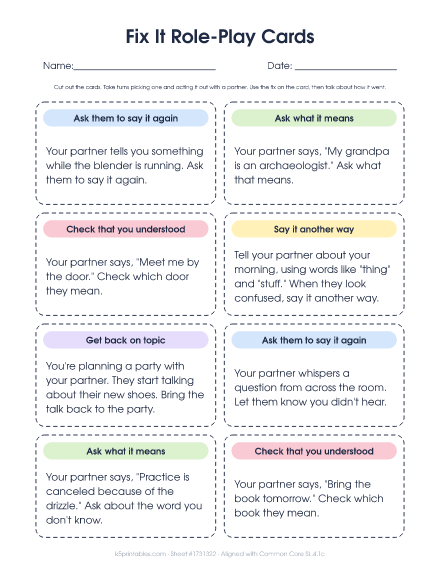 7. Fix It Role-Play CardsEight cut-apart cards, each with a moment when a conversation goes wrong and the fix to act out. New sheet switches to a second set of cards.