Fixing a conversation worksheets
Aligned with Common Core SL.4.1c
Printable fourth-grade conversation repair worksheets for speech and language: a fixing a conversation chart, what went wrong, on topic or off topic, clarifying questions, saying it another way, fixing a reply, role-play cards and a conversation self-check.
The worksheets
- See it all
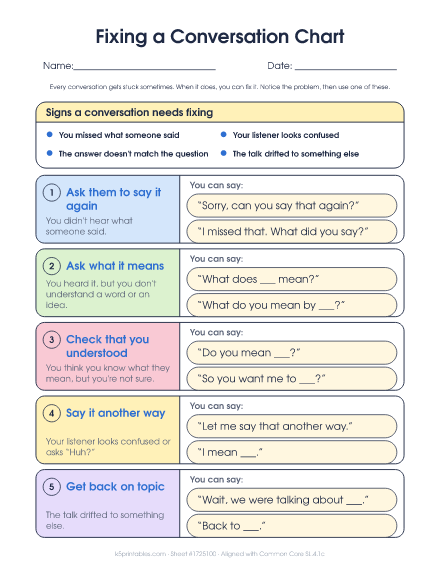
Fixing a Conversation Chart
Four signs a conversation is stuck and five fixes (ask them to say it again, ask what it means, check that you understood, say it another way and get back on topic), each with things to say.
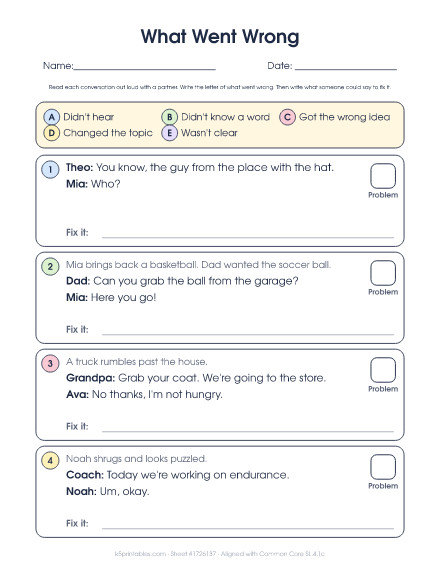
What Went Wrong
Short conversations where something goes wrong, with five problems to choose from. Fewer has 3, Standard has 4 and More has 5. The answer key shows the problem and one example fix.
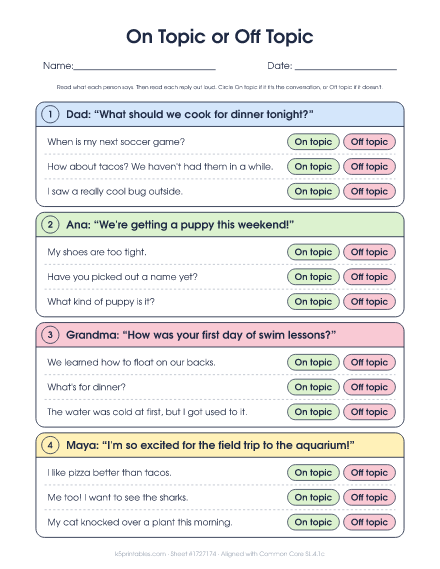
On Topic or Off Topic
Conversation starters with three replies each to sort as on topic or off topic. Fewer has 3, Standard has 4 and More has 5. Includes an answer key.
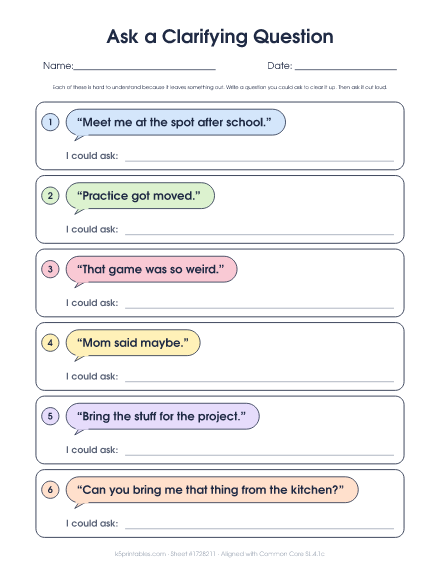
Ask a Clarifying Question
Vague things people say, like "Grab the big one," to answer with a clarifying question. Fewer has 5, Standard has 6 and More has 7. The answer key shows one example question for each.
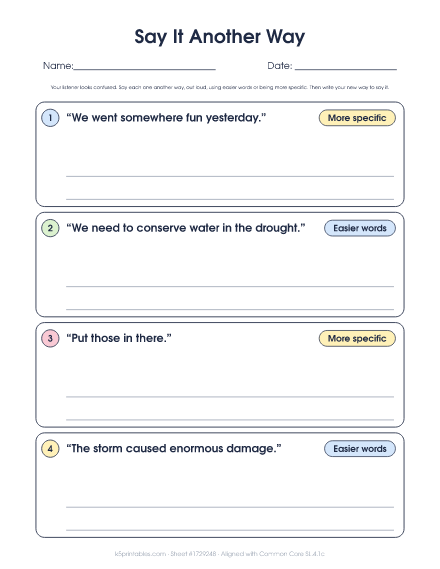
Say It Another Way
Sentences that are hard to follow, to say again with easier words or more specific ones. Fewer has 3, Standard has 4 and More has 5. The answer key shows one example for each.
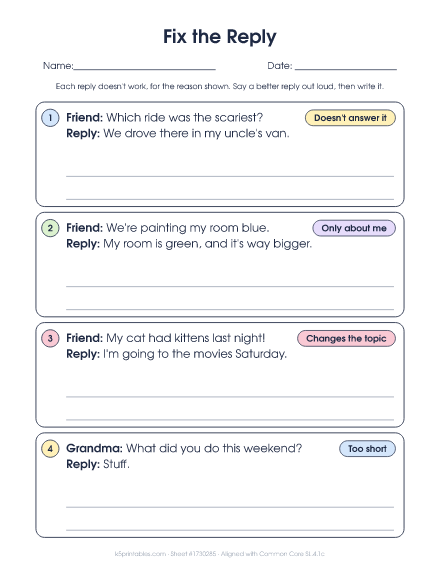
Fix the Reply
Replies that are too short, don't answer the question, change the topic or are only about the speaker, to rewrite as better replies. Fewer has 3, Standard has 4 and More has 5. The answer key shows one example for each.
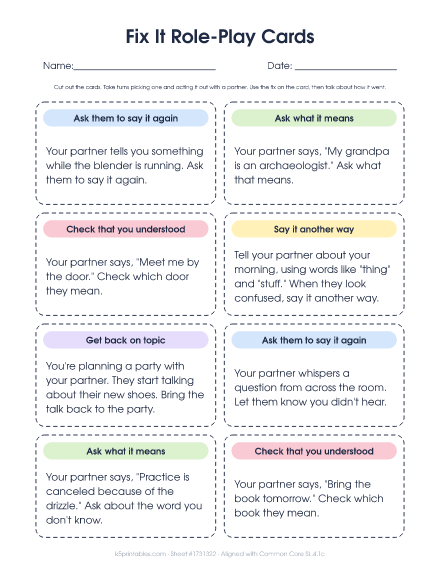
Fix It Role-Play Cards
Eight cut-apart cards, each with a moment when a conversation goes wrong and the fix to act out. New sheet switches to a second set of cards.
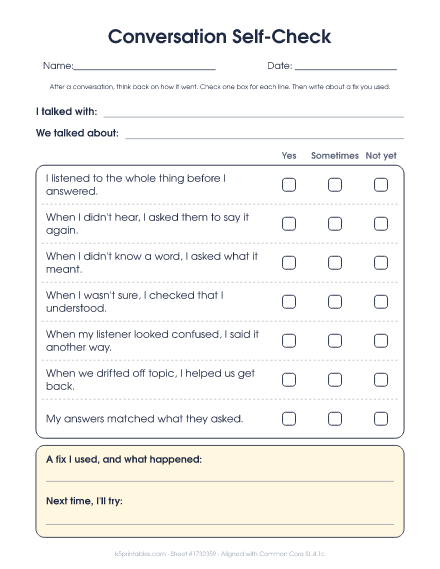
Conversation Self-Check
A self-check to fill in after a real conversation, covering listening, asking for repeats, checking understanding, saying it another way and staying on topic.
Print the whole packet
One copy of every sheet above, in order. Tap + for more copies (up to 10).
For the parent or teacher
What it is
Every conversation gets stuck sometimes. Someone doesn't hear, doesn't know a word, gets the wrong idea or drifts off topic. Fixing a conversation (often called conversation repair) means noticing when that happens and using a quick strategy to get back on track: asking someone to say it again, asking what something means, checking that you understood, saying it another way or bringing the talk back to the topic. These sheets build the noticing and the words to say, and they're meant to be practiced out loud.
What comes next
Retelling with detail, also in 4th grade Speech, practices telling a story clearly enough that a listener can follow along without needing to ask.
How to teach it
- Teach in order or jump to whatever your student needs. A student may ask for repeats easily and still be learning to notice when they've drifted off topic.
- Use the chart as a menu. When a conversation gets stuck, point to the fix that fits.
- Act out the conversations on the sheets instead of just reading them.
- Make a few mistakes on purpose in everyday talk, like mumbling or using a vague word, and let your student fix it.
- Praise the fix, not just the answer. Asking "What does that mean?" is a skill.
Common mistakes
- Nodding along without understanding, instead of asking.
- Saying only "What?" when a more specific question would help.
- Repeating the same unclear words louder instead of saying it another way.
- Not noticing when the conversation has drifted to something else.
- Giving a reply that's too short or doesn't answer the question.