Theme and Summary Chart
What a theme is, how to find it, and how to write a summary.
Need more than one? Tap + for extra copies (up to 10).
How to do it
- Read what a theme is, and compare a topic and a theme.
- Read the questions that help you find a theme.
- Read the summary frame and the example.
Teaching tip
Keep the chart nearby while your student works on the other pages. This sheet is aligned with Common Core RL.4.2.
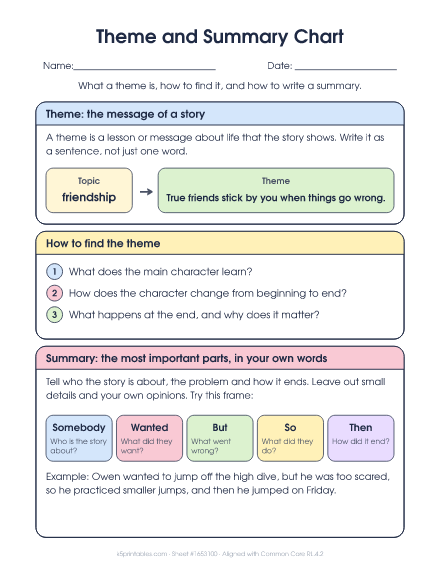
About this chart
What a theme is, with a topic and theme side by side, three questions for finding the theme, and the Somebody Wanted But So Then frame for a summary with an example.
What kids practice
A theme is the message or lesson about life that a story shows, like "Taking small steps can help you face something scary." Stories rarely state the theme, so readers figure it out from what the characters do and learn. A summary retells the most important parts of a story or passage in a few sentences, in the reader's own words.
Watch for
- Giving a topic, like "courage," instead of a theme sentence.
- Choosing a theme that fits only one small part of the story.
- Retelling every event in a summary instead of the most important ones.
- Leaving the ending out of a summary, or adding opinions like "It was a great story."
It's free to print, as many copies as you need. See the full theme and summary guide for 4th grade.
More sheets in this set
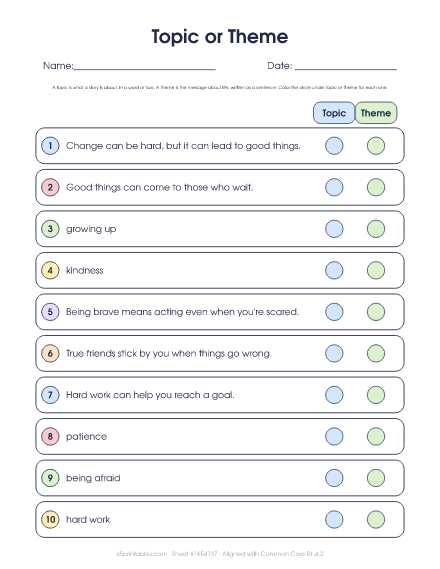 2. Topic or ThemeTopics like "patience" and themes like "Good things can come to those who wait" mixed together, to mark topic or theme. Fewer, Standard or More give 8, 10 or 12. Includes an answer key.
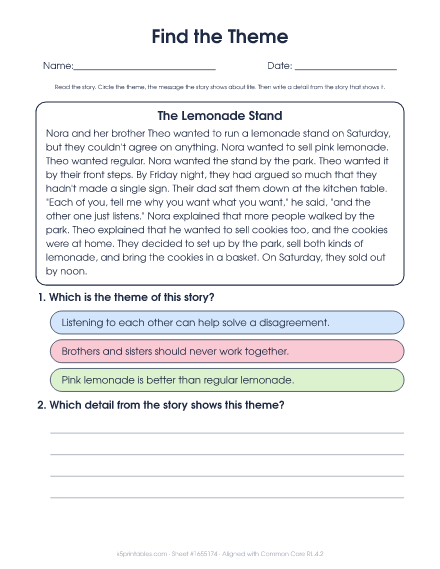 3. Find the ThemeEight short stories, each with three theme choices to circle and lines to write a detail that shows the theme. The answer key circles the theme and gives a sample detail.
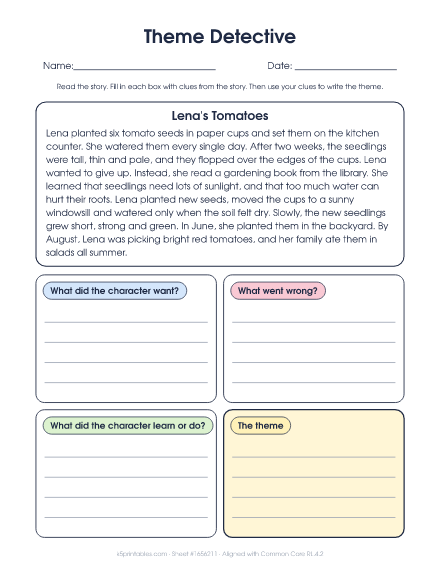 4. Theme DetectiveOne of the eight stories with four boxes to fill in: what the character wanted, what went wrong, what they learned or did, and the theme. The answer key shows sample answers.
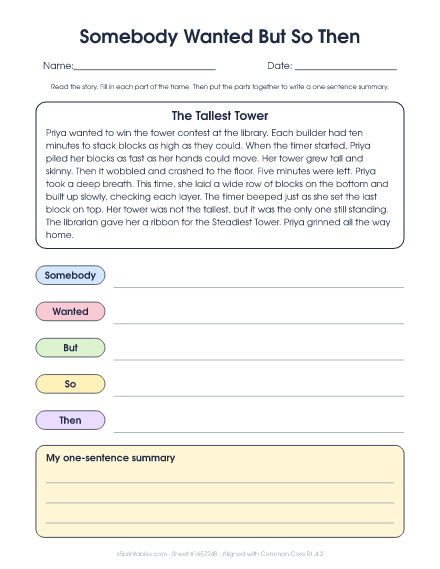 5. Somebody Wanted But So ThenOne of the eight stories with the Somebody Wanted But So Then frame and space to write a one-sentence summary. The answer key shows sample answers.
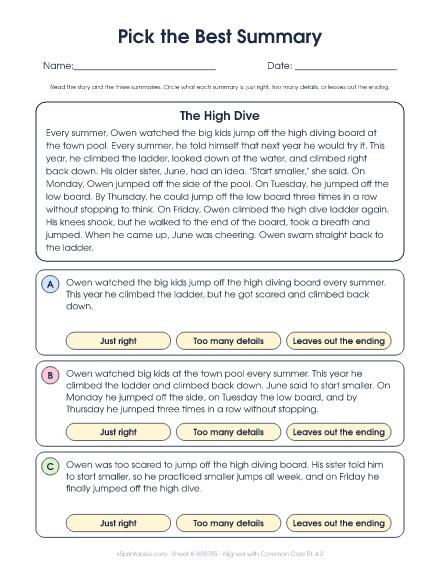 6. Pick the Best SummaryOne of the eight stories with three summaries to label: one just right, one with too many details and one that leaves out the ending. Includes an answer key.
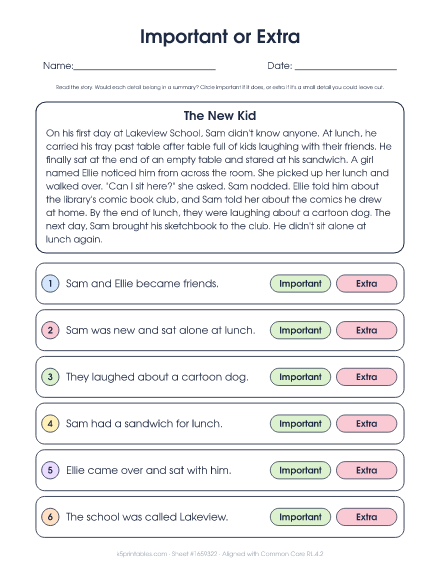 7. Important or ExtraOne of the eight stories with six details to sort into important ones for a summary and extra ones. Includes an answer key.
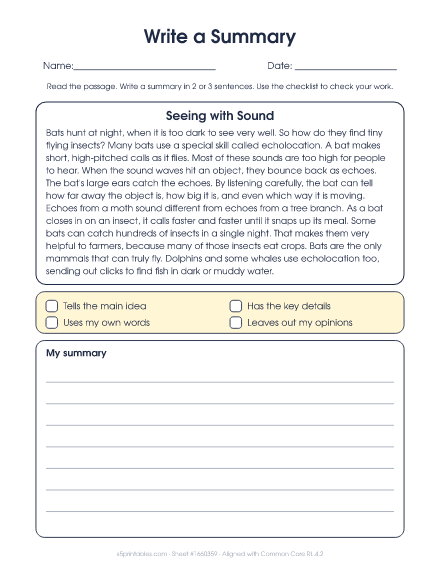 8. Write a SummaryFive nonfiction passages, about honeybees, glaciers, the Pony Express, octopuses and bats, with a checklist and lines to write a 2 or 3 sentence summary. The answer key shows a sample summary.