Figurative Language Chart
Figurative language says something in a colorful way. The words don't mean exactly what they say.
Need more than one? Tap + for extra copies (up to 10).
How to do it
- Read what each kind of figurative language is.
- Read the example and the blue words.
- Read what the example really means.
Teaching tip
Keep the chart nearby while your student works on the other pages. This sheet is aligned with Common Core L.4.5.
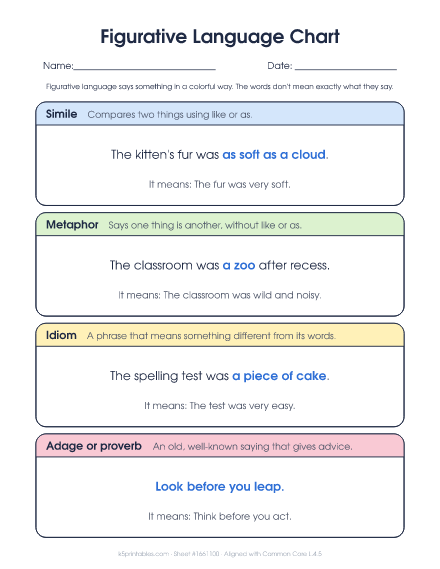
About this chart
Similes, metaphors, idioms and adages or proverbs, each with what it is, an example sentence and what the example means.
What kids practice
Figurative language says something in a colorful way, so the words don't mean exactly what they say. A simile compares two things using like or as. A metaphor says one thing is another. An idiom is a phrase whose meaning is different from its words, like "a piece of cake" for something easy. Adages and proverbs are old sayings that give advice, like "Look before you leap."
Watch for
- Reading an idiom literally, like picturing real beans for "spill the beans."
- Calling every sentence with like a simile, even when like means "enjoy," as in "I like pizza."
- Missing a metaphor because it doesn't use like or as.
- Knowing a saying by heart but not when it fits a real situation.
It's free to print, as many copies as you need. See the full similes, metaphors and idioms guide for 4th grade.
More sheets in this set
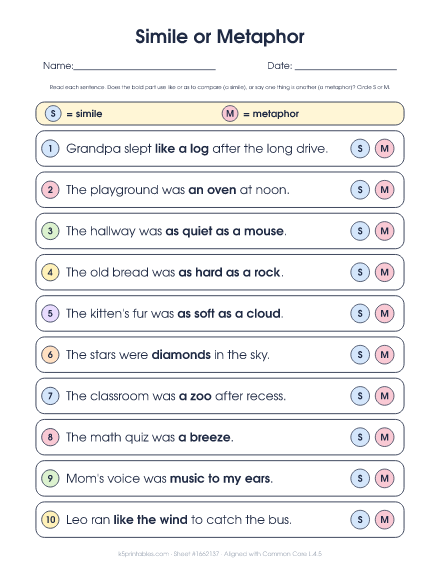 2. Simile or MetaphorSentences like "The classroom was a zoo after recess." with the comparison in bold, to circle S for simile or M for metaphor. Fewer, Standard or More give 8, 10 or 12. Includes an answer key.
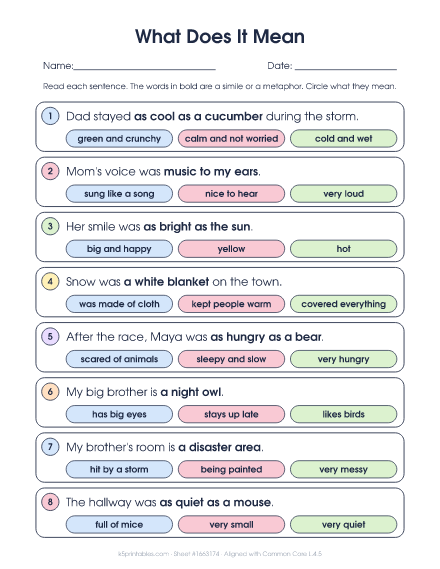 3. What Does It MeanSimiles and metaphors in sentences, each with three meanings to choose from, like "very hungry" for "as hungry as a bear." Fewer, Standard or More give 6, 8 or 10. Includes an answer key.
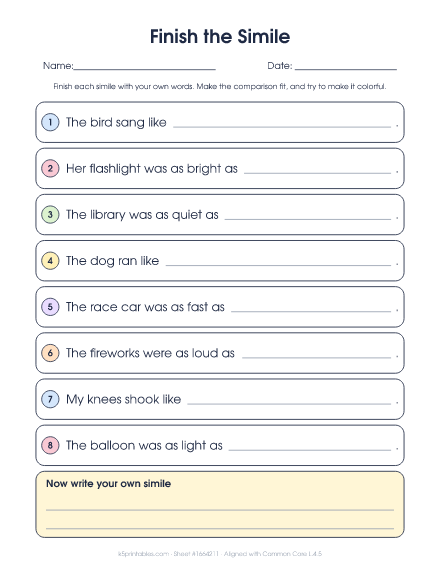 4. Finish the SimileSimile starters like "The library was as quiet as" to finish in your own words, plus a space to write your own simile. Fewer, Standard or More give 6, 8 or 10. The answer key shows sample endings.
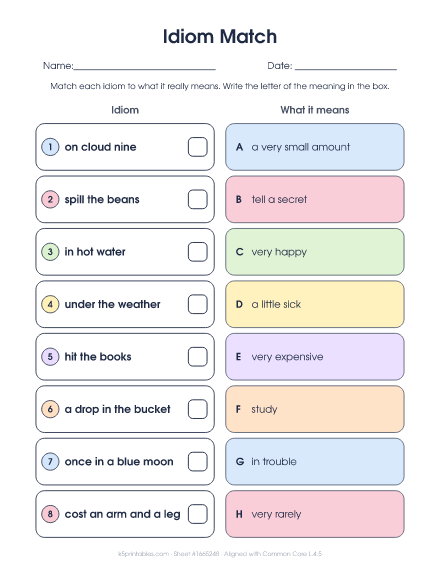 5. Idiom MatchIdioms like "hit the books" and "hold your horses" to match with their meanings by letter. Fewer, Standard or More give 6, 8 or 10. Includes an answer key.
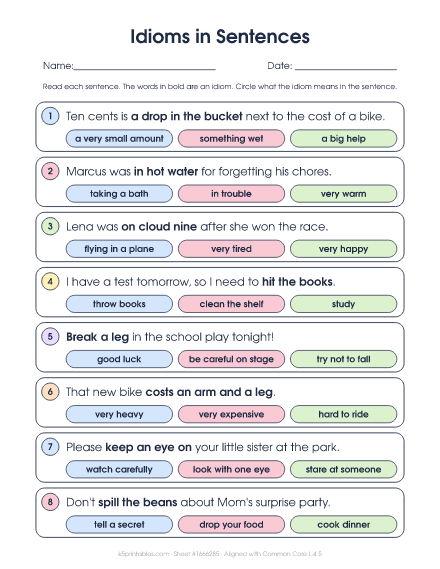 6. Idioms in SentencesIdioms in sentences, like "Sam stayed home because he felt under the weather," each with three meanings to choose from. Fewer, Standard or More give 6, 8 or 10. Includes an answer key.
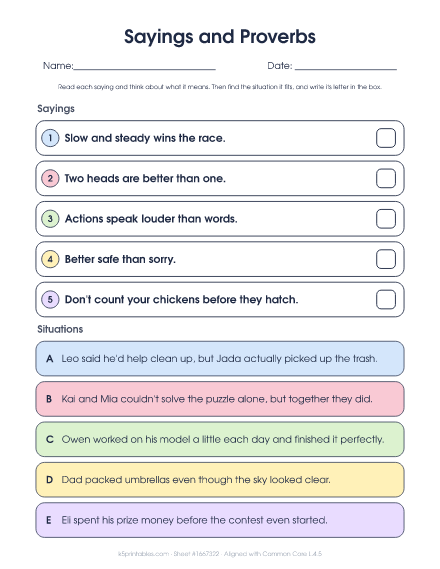 7. Sayings and ProverbsSayings like "Two heads are better than one" to match with a situation they fit. Fewer, Standard or More give 4, 5 or 6. Includes an answer key.
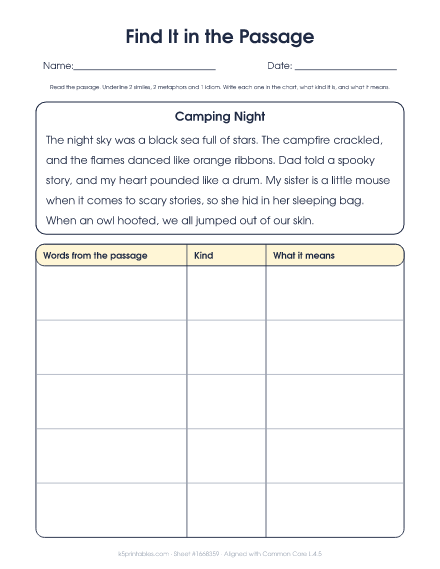 8. Find It in the PassageFour short passages, like "Snow Day" and "Camping Night," each with 2 similes, 2 metaphors and 1 idiom to find, label and explain. The answer key marks each one and gives its meaning.