Similes, metaphors and idioms worksheets
Aligned with Common Core L.4.5
Printable fourth-grade figurative language worksheets: a chart of similes, metaphors, idioms and proverbs, simile or metaphor, what figurative language means, finishing similes, idiom matching, idioms in sentences, sayings and proverbs, and finding figurative language in a passage.
The worksheets
- See it all
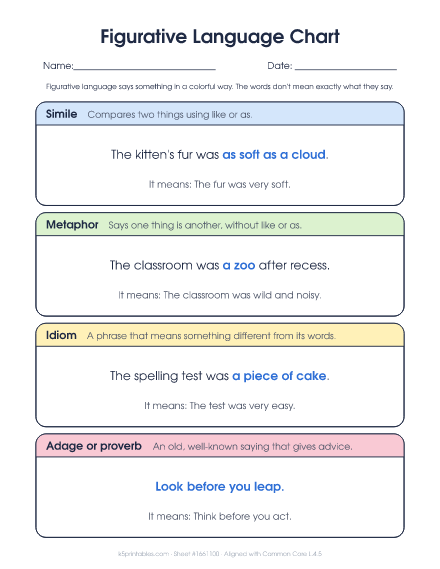
Figurative Language Chart
Similes, metaphors, idioms and adages or proverbs, each with what it is, an example sentence and what the example means.
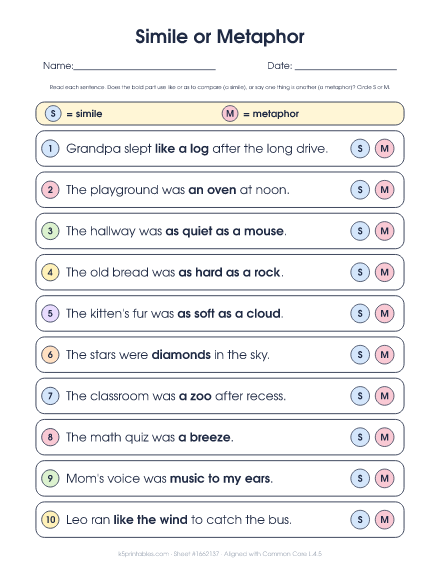
Simile or Metaphor
Sentences like "The classroom was a zoo after recess." with the comparison in bold, to circle S for simile or M for metaphor. Fewer, Standard or More give 8, 10 or 12. Includes an answer key.
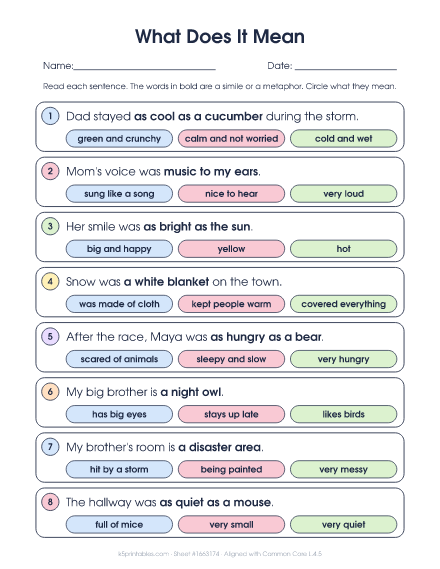
What Does It Mean
Similes and metaphors in sentences, each with three meanings to choose from, like "very hungry" for "as hungry as a bear." Fewer, Standard or More give 6, 8 or 10. Includes an answer key.
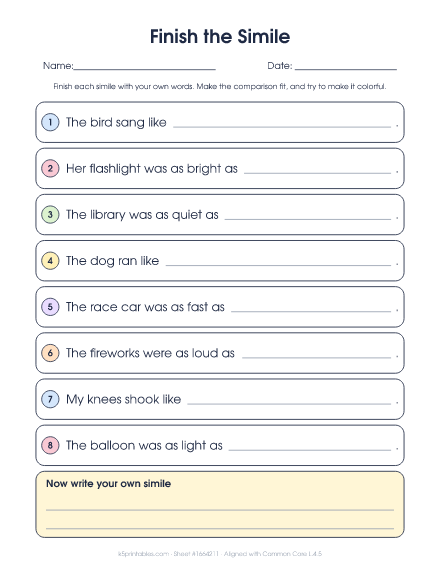
Finish the Simile
Simile starters like "The library was as quiet as" to finish in your own words, plus a space to write your own simile. Fewer, Standard or More give 6, 8 or 10. The answer key shows sample endings.
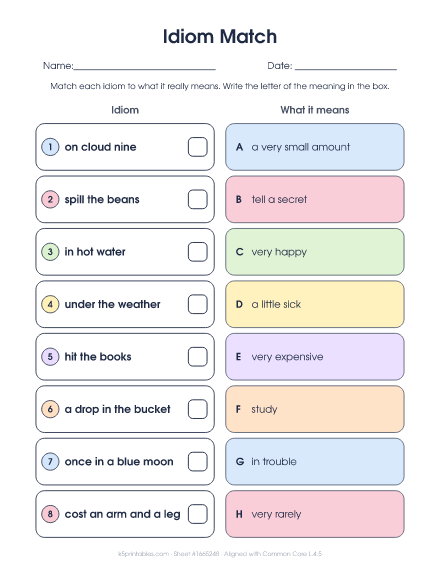
Idiom Match
Idioms like "hit the books" and "hold your horses" to match with their meanings by letter. Fewer, Standard or More give 6, 8 or 10. Includes an answer key.
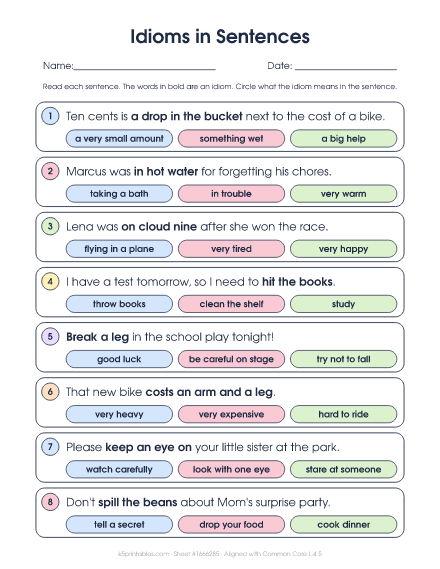
Idioms in Sentences
Idioms in sentences, like "Sam stayed home because he felt under the weather," each with three meanings to choose from. Fewer, Standard or More give 6, 8 or 10. Includes an answer key.
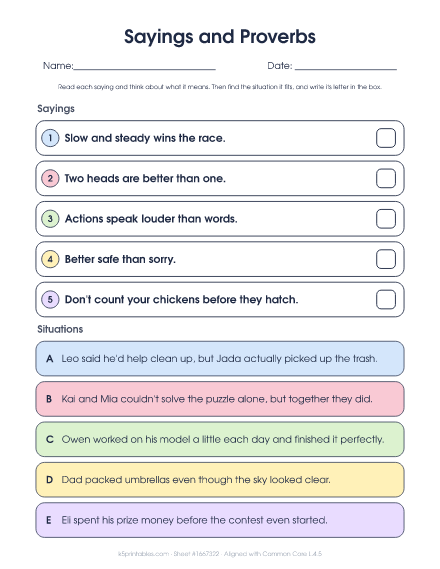
Sayings and Proverbs
Sayings like "Two heads are better than one" to match with a situation they fit. Fewer, Standard or More give 4, 5 or 6. Includes an answer key.
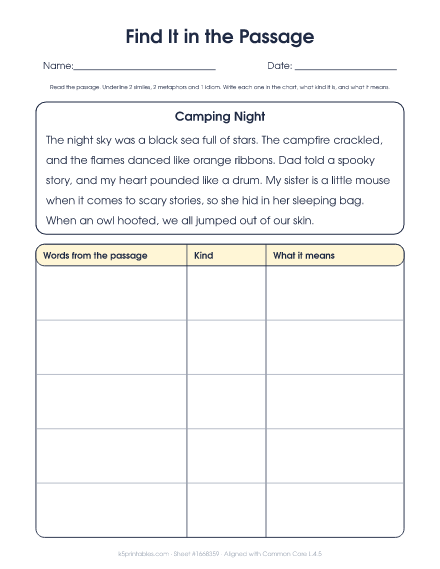
Find It in the Passage
Four short passages, like "Snow Day" and "Camping Night," each with 2 similes, 2 metaphors and 1 idiom to find, label and explain. The answer key marks each one and gives its meaning.
Print the whole packet
One copy of every sheet above, in order. Tap + for more copies (up to 10).
For the parent or teacher
What it is
Figurative language says something in a colorful way, so the words don't mean exactly what they say. A simile compares two things using like or as. A metaphor says one thing is another. An idiom is a phrase whose meaning is different from its words, like "a piece of cake" for something easy. Adages and proverbs are old sayings that give advice, like "Look before you leap."
What comes next
The Theme and summary topic in 4th grade Reading also works on figuring out meanings that a story doesn't state directly.
How to teach it
- Teach in order or jump to whatever your student needs. A student may know many idioms and still be learning to spot similes and metaphors.
- Look for like or as to spot a simile. A metaphor makes the same kind of comparison without those words.
- Ask what the two things being compared have in common. That's usually the meaning.
- Use the rest of the sentence as a clue to what an idiom means.
- Point out figurative language in books, songs and everyday talk.
Common mistakes
- Reading an idiom literally, like picturing real beans for "spill the beans."
- Calling every sentence with like a simile, even when like means "enjoy," as in "I like pizza."
- Missing a metaphor because it doesn't use like or as.
- Knowing a saying by heart but not when it fits a real situation.