Adding Endings Chart
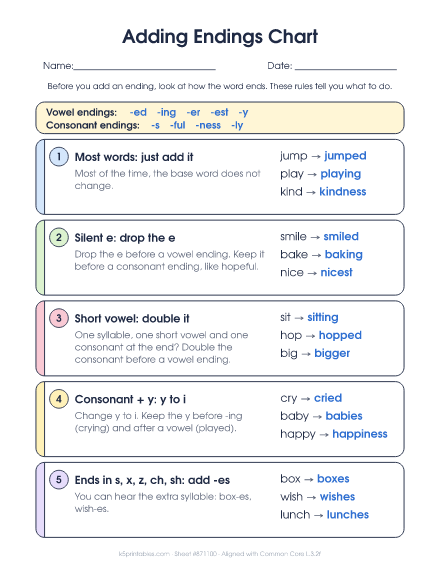
Before you add an ending, look at how the word ends. These rules tell you what to do.
Need more than one? Tap + for extra copies (up to 10).
How to do it
- Look at the vowel endings and consonant endings at the top.
- Read each rule and its examples.
- Find the rule that matches how your word ends.
Teaching tip
The rules mostly matter for vowel endings like -ed and -ing. Start there. This sheet is aligned with Common Core L.3.2f.
About this chart
Five rules for adding endings (just add, drop the e, double the consonant, change y to i, and add -es) with three examples each.
What kids practice
Third graders learn that English spelling follows patterns more often than it seems. When they add an ending like -ed or -ing, the base word sometimes changes: hope becomes hoping, sit becomes sitting and cry becomes cried. Some sounds also have two spellings, and the right one depends on where the sound is in the word, like ck right after a short vowel (duck) but k after a consonant (milk). These sheets practice both kinds of rules.
Watch for
- Keeping the silent e, like hopeing or makeing.
- Forgetting to double, like runing or stoped.
- Adding -s to words that end in y, like babys or puppys.
- Using ck after a consonant or two vowels, like milck or boock.
It's free to print, as many copies as you need. See the full spelling patterns guide for 3rd grade.
More sheets in this set
- See it all
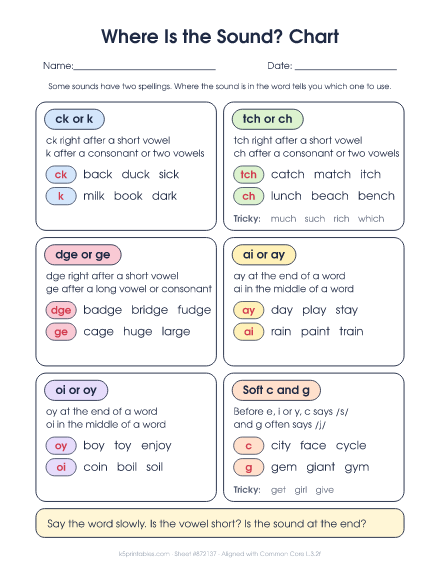 2. Where Is the Sound? Chartck or k, tch or ch, dge or ge, ai or ay, oi or oy, and soft c and g, each with its rule, examples and tricky words.
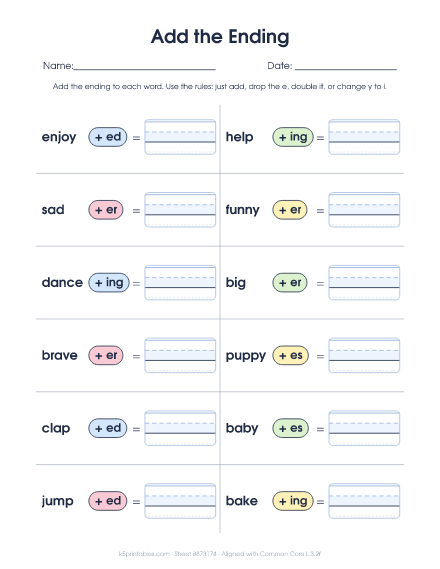 3. Add the EndingBase words and endings like hop + ed and happy + ness. Write each new word, using all four ending rules.
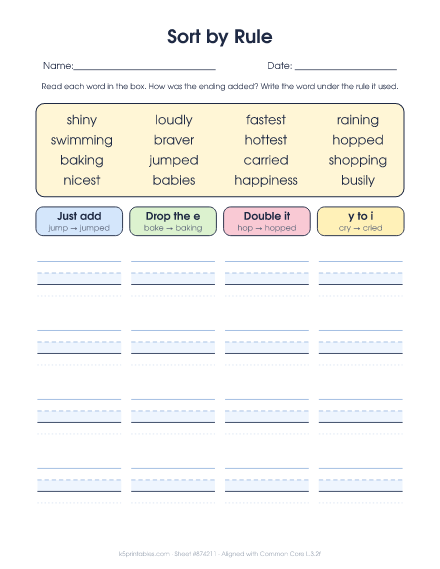 4. Sort by RuleA word bank of words with endings to sort by the rule each one used.
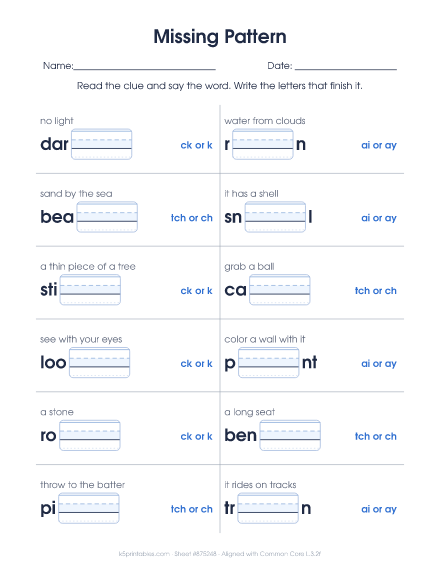 5. Missing PatternWords with a missing pattern, like bri__ (dge or ge) and tr__n (ai or ay), with a clue for each one.
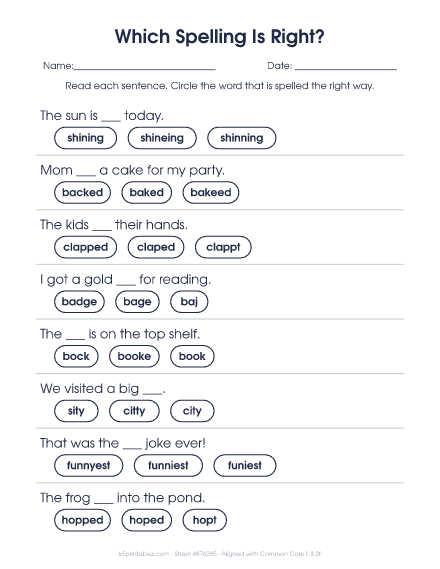 6. Which Spelling Is Right?Sentences with three spellings to choose from, like bridge, brige and bridj.
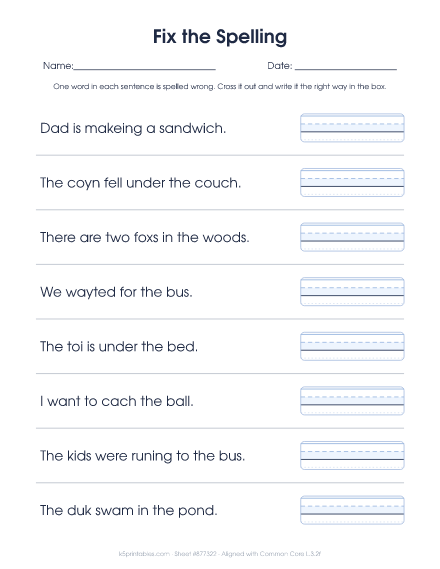 7. Fix the SpellingSentences with one misspelled word each, like runing or babys. Cross it out and write it correctly.