Spelling patterns worksheets
Aligned with Common Core L.3.2f
Printable third-grade spelling worksheets: rules for adding endings (drop the e, double the consonant, change y to i), spellings that depend on where a sound is, like ck or k and dge or ge, and mixed spelling practice.
The worksheets
- See it all
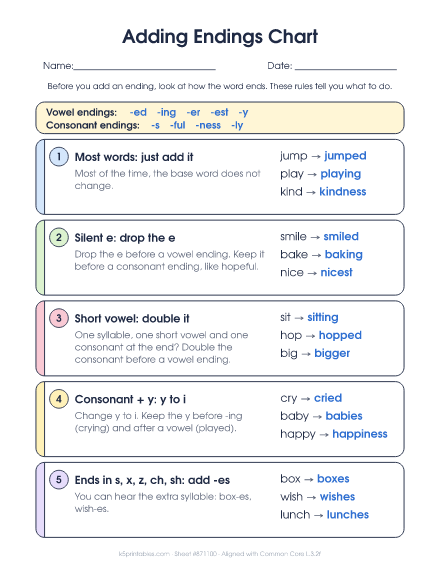
Adding Endings Chart
Five rules for adding endings (just add, drop the e, double the consonant, change y to i, and add -es) with three examples each.
- See it all
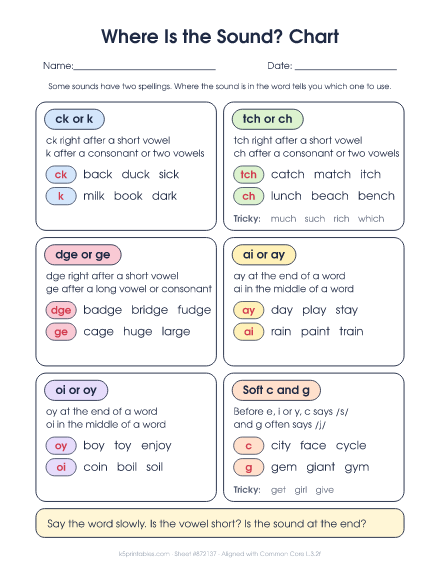
Where Is the Sound? Chart
ck or k, tch or ch, dge or ge, ai or ay, oi or oy, and soft c and g, each with its rule, examples and tricky words.
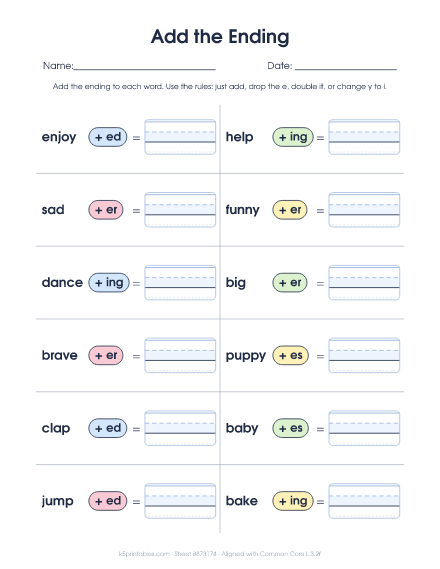
Add the Ending
Base words and endings like hop + ed and happy + ness. Write each new word, using all four ending rules.
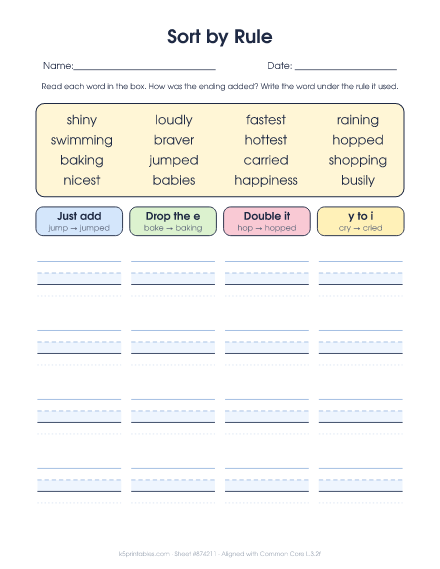
Sort by Rule
A word bank of words with endings to sort by the rule each one used.
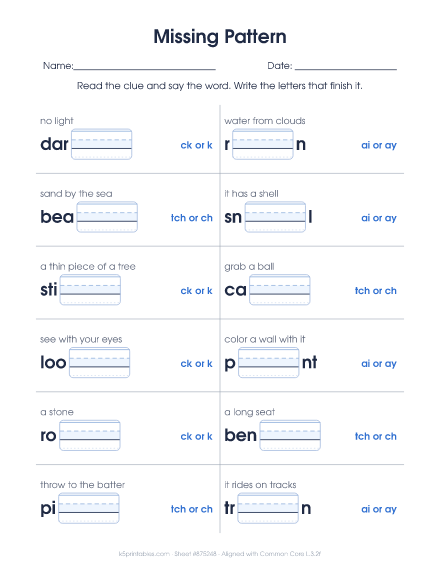
Missing Pattern
Words with a missing pattern, like bri__ (dge or ge) and tr__n (ai or ay), with a clue for each one.
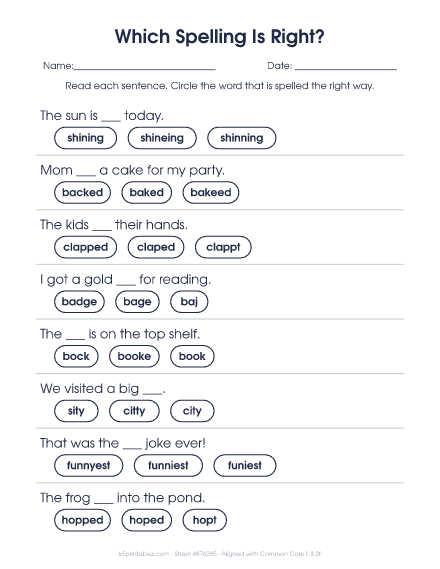
Which Spelling Is Right?
Sentences with three spellings to choose from, like bridge, brige and bridj.
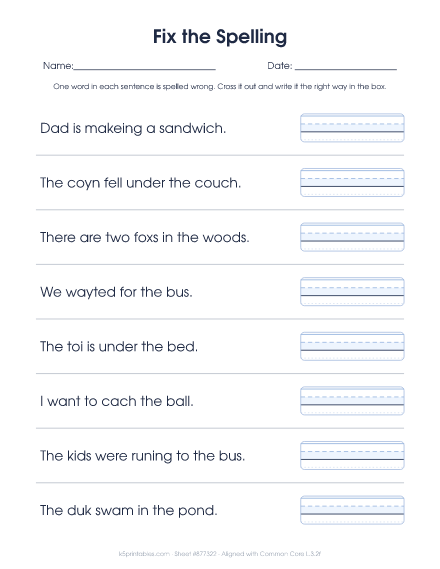
Fix the Spelling
Sentences with one misspelled word each, like runing or babys. Cross it out and write it correctly.
Print the whole packet
One copy of every sheet above, in order. Tap + for more copies (up to 10).
For the parent or teacher
What it is
Third graders learn that English spelling follows patterns more often than it seems. When they add an ending like -ed or -ing, the base word sometimes changes: hope becomes hoping, sit becomes sitting and cry becomes cried. Some sounds also have two spellings, and the right one depends on where the sound is in the word, like ck right after a short vowel (duck) but k after a consonant (milk). These sheets practice both kinds of rules.
What comes next
Opinion, informative and story writing.
How to teach it
- Teach one ending rule at a time, then mix them once each one feels easy.
- Have your child say the word slowly and listen for a short vowel before deciding.
- Ask "Does the ending start with a vowel?" before dropping an e or doubling a letter.
- Keep a list of tricky words that break the rules, like much, such, get and girl.
- When you see a pattern in a book or on a sign, point it out together.
Common mistakes
- Keeping the silent e, like hopeing or makeing.
- Forgetting to double, like runing or stoped.
- Adding -s to words that end in y, like babys or puppys.
- Using ck after a consonant or two vowels, like milck or boock.