Wake-Up Moves Card
Activities often used by occupational therapists. Do them the way your child's therapist shows you.
Need more than one? Tap + for extra copies (up to 10).
How to do it
- Look at the two pictures for each move.
- Follow the numbered steps.
- Fill in Repeat and How often with your therapist.
Tip
Try a minute of wake-up moves right before homework on a sleepy afternoon.
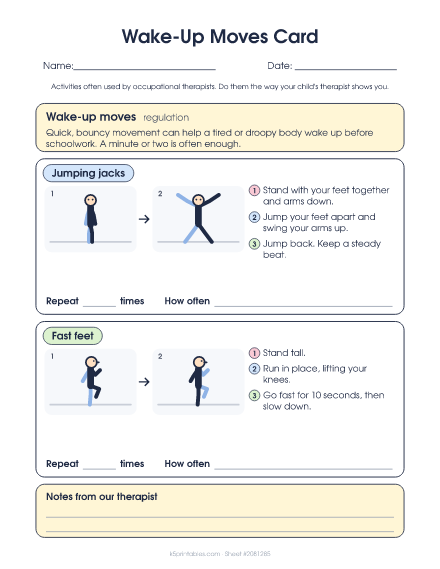
About this worksheet
Jumping jacks and Fast feet, two quick wake-up moves often used by occupational therapists, with pictures, steps and blanks for your child's therapist to fill in.
What it is
Regulation means getting the body and mind to the right level for what's happening, calm enough to focus but awake enough to join in. Movement, deep pressure and slow breathing can help a busy body settle, and quick, bouncy movement can help a tired body wake up. Occupational therapists often build these into a child's day. These sheets show activities they commonly use. Every child is different, so use them the way your child's therapist suggests.
Watch for
- Trying a new calming idea for the first time during a meltdown. Practice first on a good day.
- Breathing too fast or too hard. Slow and gentle works better.
- Using the energy colors to judge a child. Every level is okay; the goal is noticing and finding what helps.
- Pain, dizziness or headaches. Stop and check with your child's therapist or doctor.
It's free to print, as many copies as you need. See the full movement and regulation guide.
We made these printables to support the work you're doing with your child's occupational therapist. They're meant to go alongside professional care, not replace it. If an activity causes pain, dizziness or headaches, stop and check with your child's therapist or doctor.
More sheets in this set
- See it all
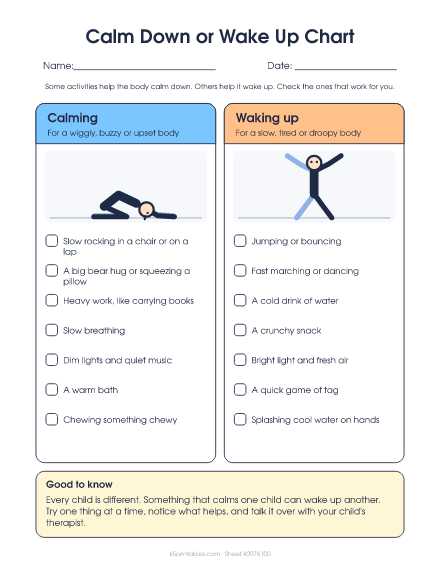 1. Calm Down or Wake Up ChartA two-column chart of activities that often help the body calm down, like slow rocking and deep pressure, or wake up, like jumping and a cold drink, with boxes to check.
- See it all
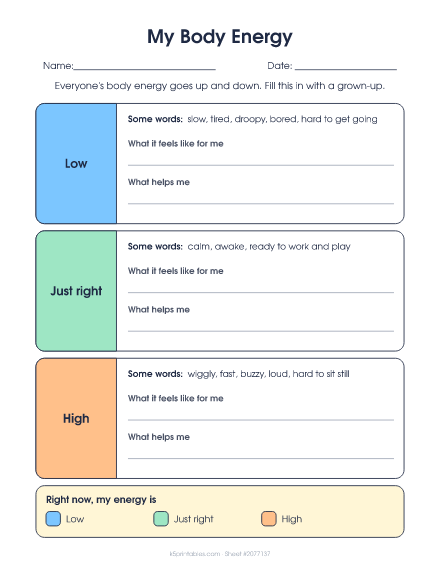 2. My Body EnergyThree color bands, low, just right and high, with words for each and lines to write what it feels like and what helps, plus a Right now, my energy is check box.
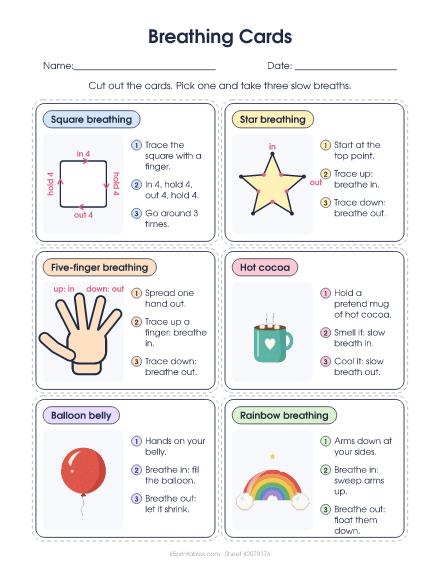 3. Breathing CardsSix cut-apart breathing cards with pictures: square breathing, star breathing, five-finger breathing, hot cocoa, balloon belly and rainbow breathing.
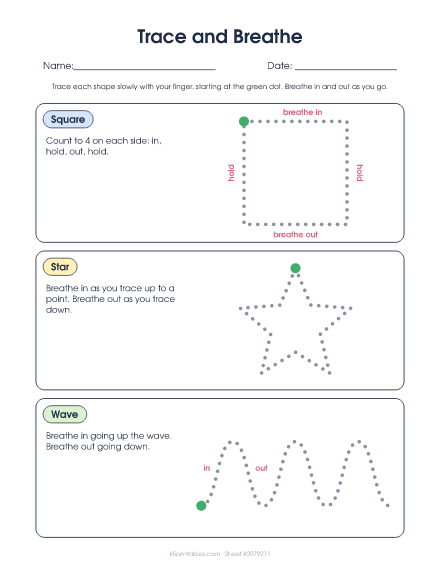 4. Trace and BreatheThree big dotted shapes, a square, a star and a wave, to trace slowly with a finger while breathing in and out.
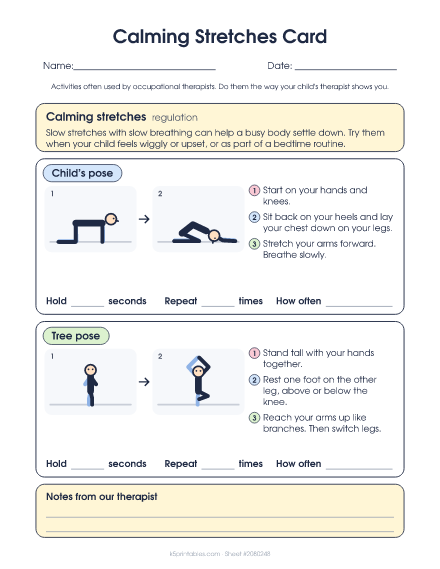 5. Calming Stretches CardChild's pose and Tree pose, two calming stretches often used by occupational therapists, with pictures, steps and blanks for your child's therapist to fill in.
- See it all
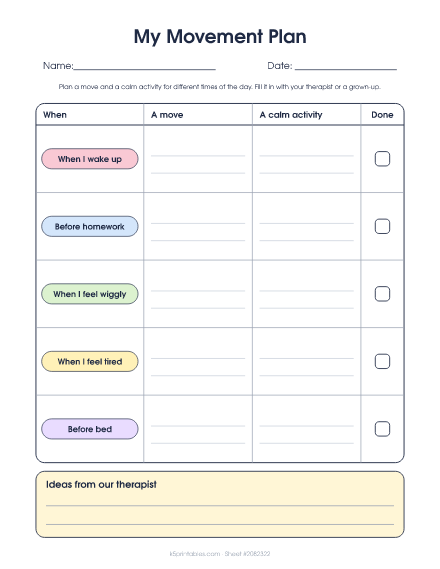 7. My Movement PlanA daily plan with a move and a calm activity for waking up, before homework, feeling wiggly, feeling tired and before bed, plus room for your therapist's ideas.
Helpful supplies (affiliate links)
Simple supplies that go with these activities. Check with your child's therapist about what's right for your child.
Mini trampoline with handle
Bouncing for movement breaks.
Find it on AmazonExpanding breathing ball
Open and close it with slow breaths.
Find it on AmazonVisual timer
Shows how much time is left.
Find it on AmazonWobble cushion
A cushion that lets kids move while seated.
Find it on Amazon