Clip It! Count Cards
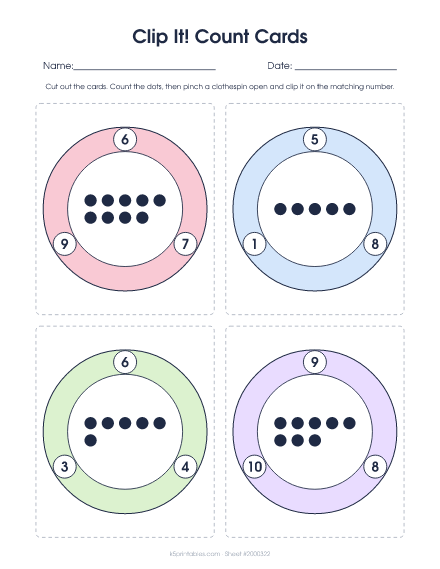
Cut out the cards. Count the dots, then pinch a clothespin open and clip it on the matching number.
Fresh sheet anytime. Tap New sheet or reload for a different one. Tap + for up to 10.
This is sheet #200024601.
How to do it
- Cut out the four cards.
- Count the dots on a card.
- Pinch a clothespin open and clip it on the matching number.
Tip
Print on card stock, or glue the cards to cardboard, so they hold up to lots of clipping.
About this worksheet
Four round counting cards with 1 to 10 dots. Clip a clothespin on the matching number around the edge. You get a new set of numbers each time you print.
What it is
Hand strength comes in two kinds: grip, where the whole hand squeezes, and pinch, where the thumb presses against the fingertips. Coordination includes using both hands together, with one doing the work and the other helping. Occupational therapists often build both with everyday play and simple hand exercises. Some of these exercises are also used after hand injuries or surgery. If your child has had one, only do what their therapist has given you.
Watch for
- Going too hard too soon. Putty, rubber bands and weights are only for when a therapist suggests them.
- Letting the helper hand rest in the lap during two-handed jobs. Remind it to hold and steady.
- Rushing through hand shapes. Slow, full movements matter more than speed.
- Pain, swelling or tired, sore hands. Stop and check with your child's therapist or doctor.
It's free to print, as many copies as you need. See the full hand strength and coordination guide.
We made these printables to support the work you're doing with your child's occupational therapist. They're meant to go alongside professional care, not replace it. If an activity causes pain, dizziness or headaches, stop and check with your child's therapist or doctor.
More sheets in this set
- See it all
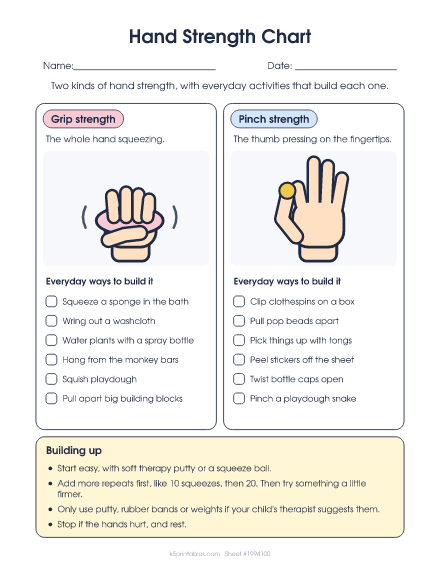 1. Hand Strength ChartA chart of the two kinds of hand strength, grip and pinch, each with a picture and six everyday activities to check off, plus tips for building up slowly.
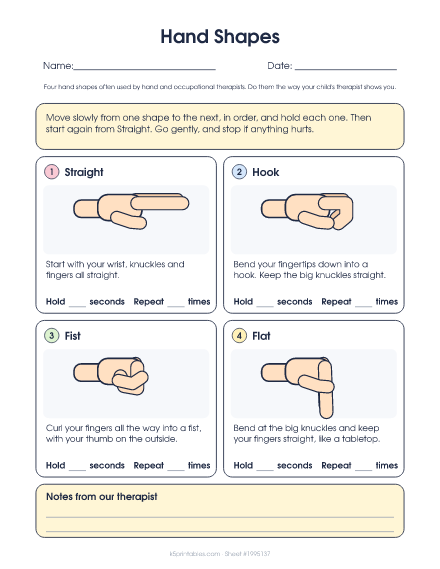 2. Hand ShapesFour hand shapes, Straight, Hook, Fist and Flat, drawn from the side with a short how-to, Hold and Repeat blanks, and room for notes from your child's therapist.
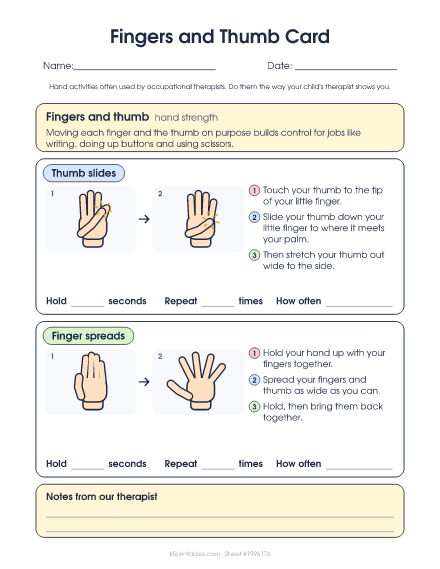 3. Fingers and Thumb CardThumb slides and Finger spreads, two hand exercises often used by occupational therapists, with pictures, steps and blanks for your child's therapist to fill in.
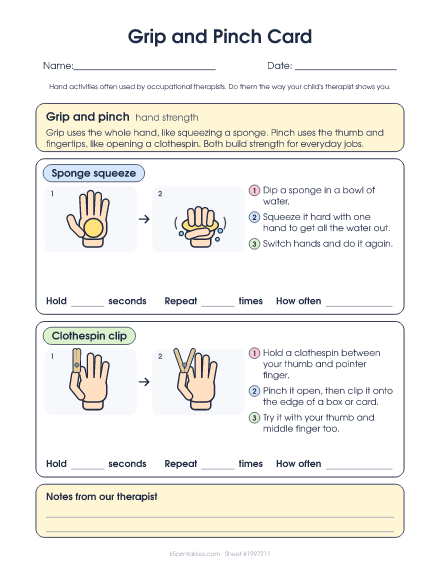 4. Grip and Pinch CardSponge squeeze for grip and Clothespin clip for pinch, two activities often used by occupational therapists, with pictures, steps and blanks for your child's therapist to fill in.
- See it all
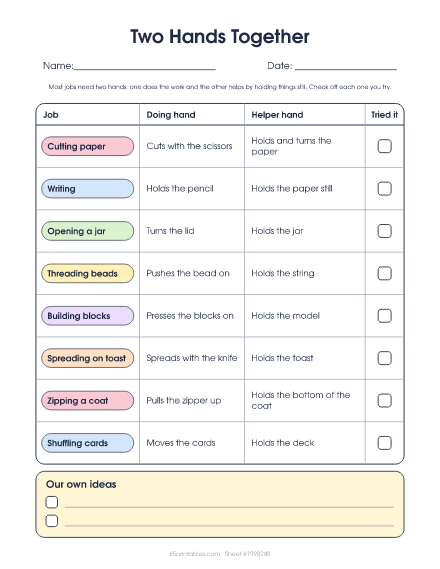 5. Two Hands TogetherA checklist of eight everyday jobs that need two hands, like cutting, writing and opening a jar, showing what the doing hand and the helper hand each do.
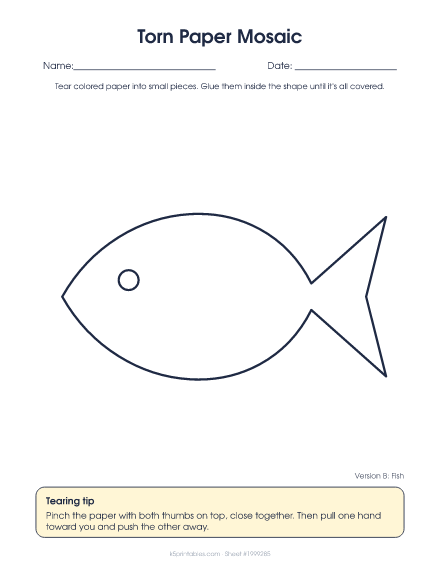 6. Torn Paper MosaicA big outline to fill with torn paper pieces, in four versions: an apple, a fish, a star and a house. Tearing uses both hands, and sticking uses a pinch.
Helpful supplies (affiliate links)
Simple supplies that go with these activities. Check with your child's therapist about what's right for your child.
Therapy putty
Roll it into a ball to squeeze, then pinch, pull and roll it.
See it on AmazonSqueeze balls
A swap for putty. You only need one or the other.
See it on AmazonSmall sponges
For the sponge squeeze on the Grip and Pinch Card.
Find it on AmazonClothespins
For the Clip It Count Cards.
Find it on Amazon