Early Sounds Chart
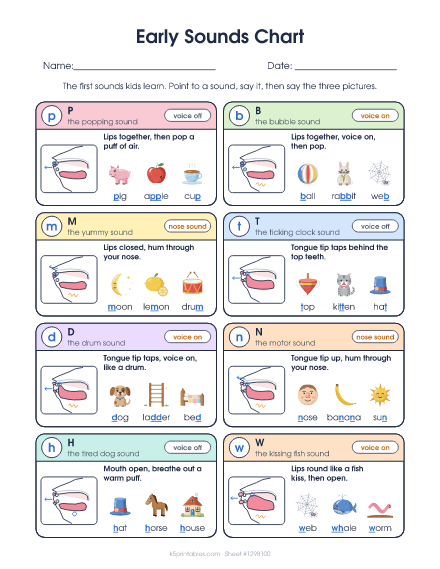
The first sounds kids learn. Point to a sound, say it, then say the three pictures.
Need more than one? Tap + for extra copies (up to 10).
How to do it
- Point to a sound and say it by itself.
- Look at the mouth picture and read how to make it.
- Say the three picture words with a clear sound.
Teaching tip
Practice in front of a mirror so your child can see their lips and tongue.
About this chart
The p, b, m, t, d, n, h and w sounds at a glance, each with a mouth picture, how to make it, voice on or off and three picture words.
What kids practice
These are the first speech sounds most children learn, usually by about age 3: p (as in pig), b (ball), m (moon), t (top), d (dog), n (nose), h (hat) and w (web). They are made with the lips, the tongue tip or a puff of breath. Kindergartners who are still working on them might say d for t, b for p, or leave sounds off the ends of words (ca for cat). Common Core doesn't cover speech sounds, so these sheets have no Common Core code.
Watch for
- Leaving off the last sound, like ca for cat. Stretch the end of the word together.
- Mixing up voice on and voice off pairs, like p and b or t and d. Feel the throat buzz.
- Practicing too fast. Slow, clear tries teach the mouth better than quick ones.
- If your child is hard to understand or gets frustrated when talking, ask your pediatrician or a speech-language pathologist for a check.
It's free to print, as many copies as you need. See the full early sounds p b m t d n h w guide for kindergarten.
More sheets in this set
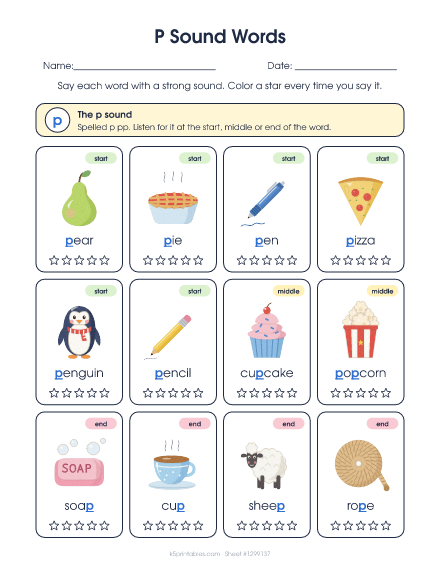 2. P Sound WordsPicture words like pig, apple and cup with the p sound at the start, middle and end, to say five times each.
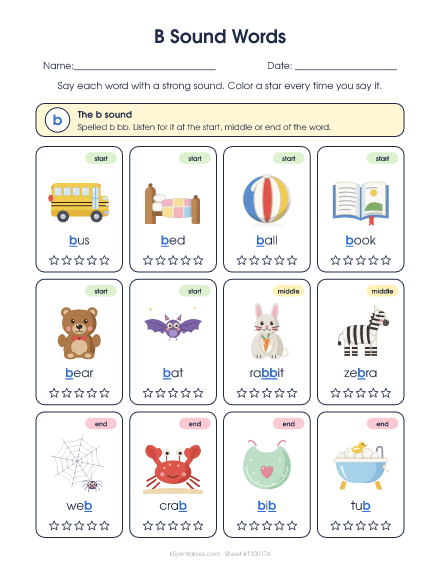 3. B Sound WordsPicture words like ball, rabbit and web with the b sound at the start, middle and end, to say five times each.
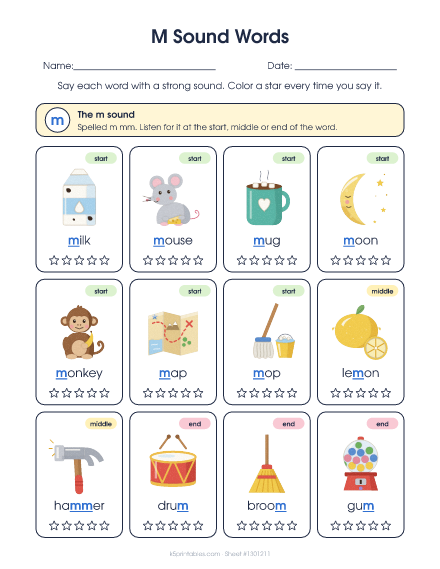 4. M Sound WordsPicture words like moon, lemon and drum with the m sound at the start, middle and end, to say five times each.
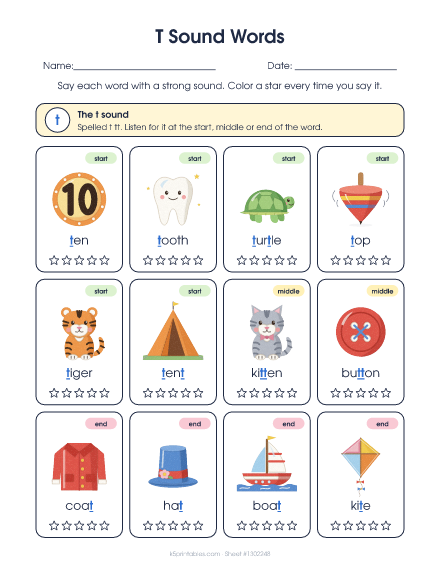 5. T Sound WordsPicture words like top, kitten and hat with the t sound at the start, middle and end, to say five times each.
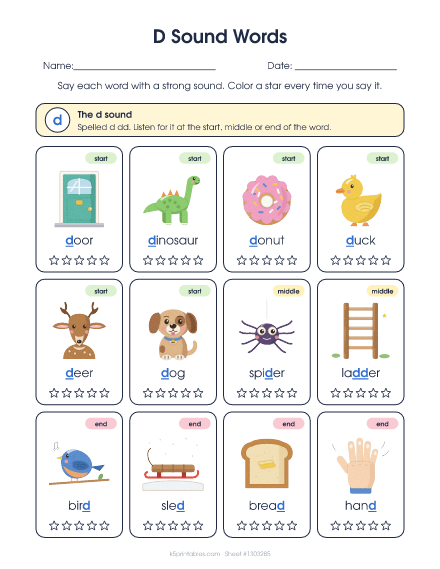 6. D Sound WordsPicture words like dog, ladder and bed with the d sound at the start, middle and end, to say five times each.
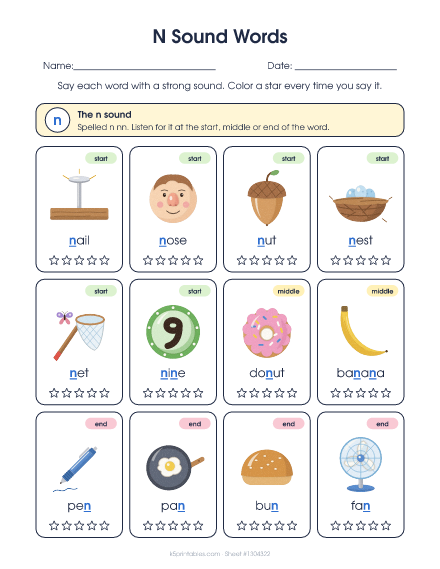 7. N Sound WordsPicture words like nose, banana and sun with the n sound at the start, middle and end, to say five times each.
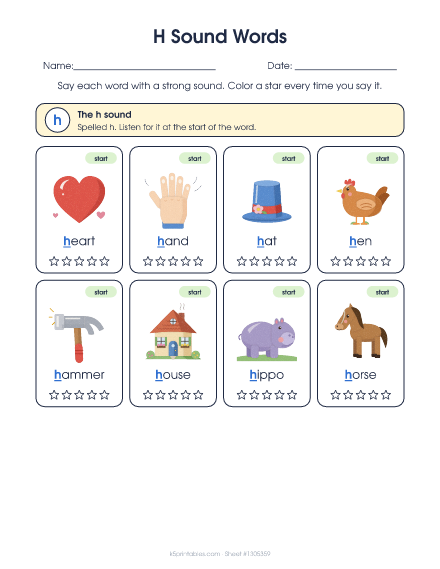 8. H Sound WordsPicture words like hat, horse and house with the h sound at the start, to say five times each.
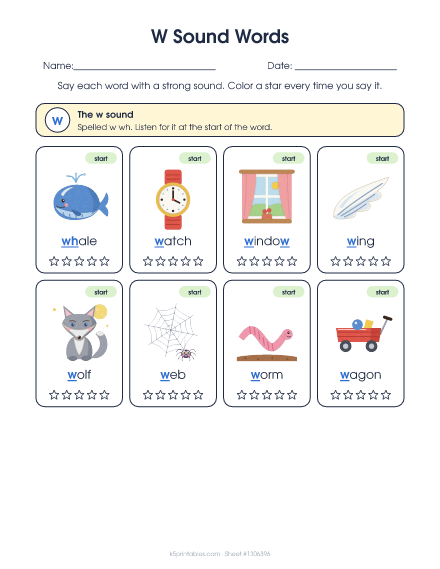 9. W Sound WordsPicture words like web, whale and worm with the w sound at the start, to say five times each.
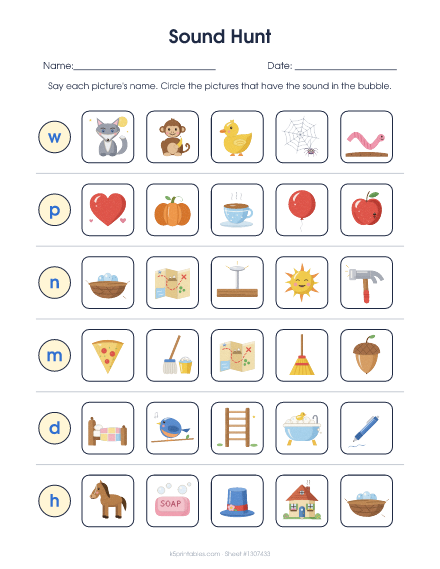 10. Sound HuntRows of pictures to say out loud and circle the ones that have the sound.
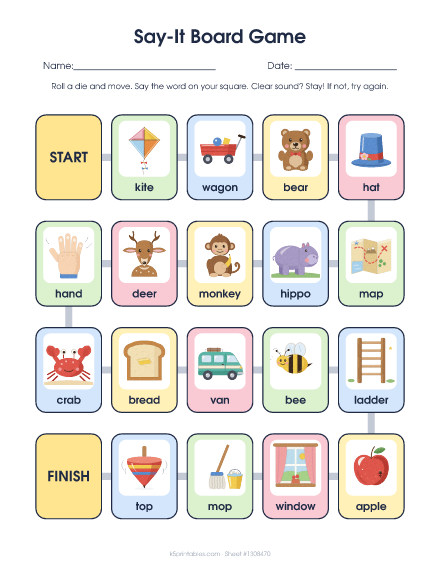 11. Say-It Board GameA board game path of picture words with all eight early sounds.