How to Read a Short Story Chart
Five steps for reading a short story: look, point, sound it out, snap the sight words, and read it again.
Need more than one? Tap + for extra copies (up to 10).
How to do it
- Look at the picture.
- Point to each word and sound it out.
- Snap the sight words, then read it again.
Teaching tip
Go over the five steps together before reading a new story. This sheet is aligned with Common Core RF.K.4.
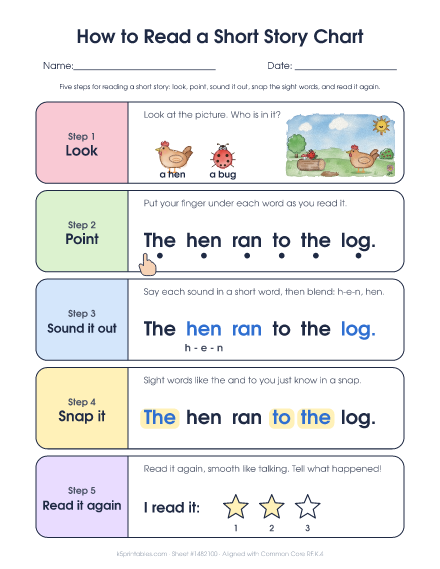
About this chart
Five steps for reading a short story, shown with "The hen ran to the log."
What kids practice
CVC stories are short stories made almost entirely of consonant-vowel-consonant words, like hen, sat and mud, plus a few first sight words, like the, a and to. Every word is one a kindergartner can sound out with the phonics they already know, so they read the whole story on their own. Each story has its own watercolor picture that shows exactly what the words say, and each short vowel, a, e, i, o and u, has its own page of three stories.
Watch for
- Guessing from the picture instead of reading. Read the words first, then check the picture.
- Skipping little words like a and the. Point to every word.
- Stopping after one read. Coloring a star for each read makes rereading fun.
It's free to print, as many copies as you need. See the full CVC stories phonics guide for kindergarten.
More sheets in this set
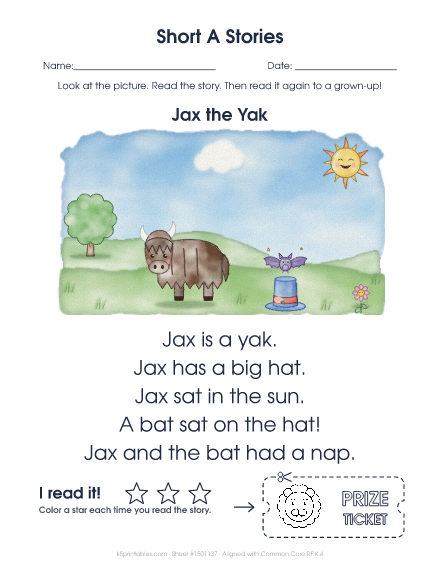 2. Short A StoriesThree short a stories, "Max and the Van," "Pat the Rat" and "Jax the Yak," full of words like cat, rat, van and hat, each with a painted storybook picture.
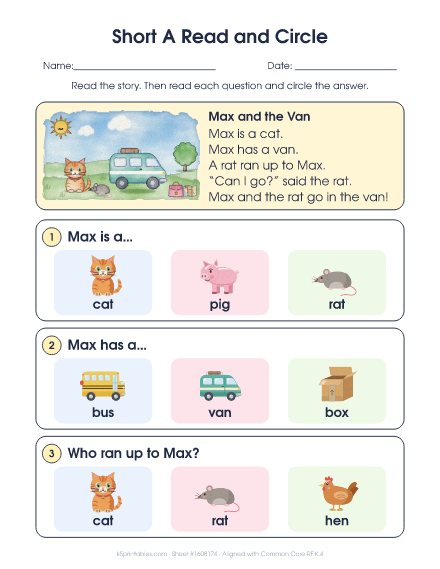 3. Short A Read and CircleA short a story ("Max and the Van," "Pat the Rat" and "Jax the Yak") with a small copy of its picture, then questions to answer by circling a word or picture. Fewer, Standard or More give 2, 3 or 4 questions. Includes an answer key.
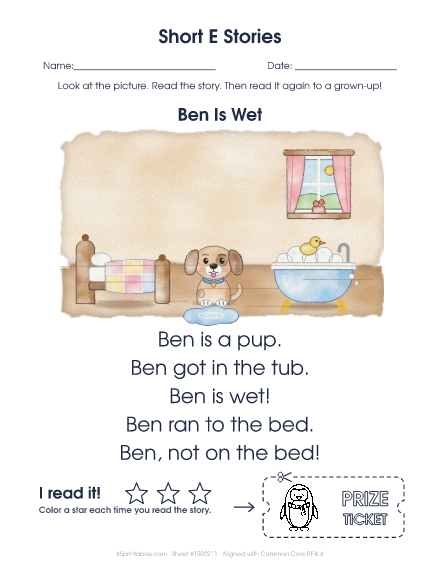 4. Short E StoriesThree short e stories, "Peg the Hen," "Ben Is Wet" and "Jen and the Net," full of words like hen, egg, wet and net, each with a painted storybook picture.
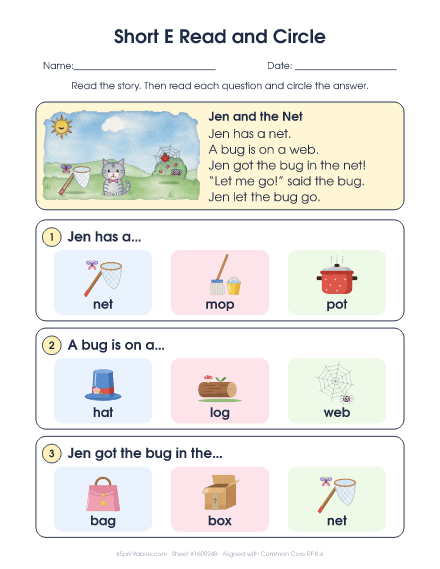 5. Short E Read and CircleA short e story ("Peg the Hen," "Ben Is Wet" and "Jen and the Net") with a small copy of its picture, then questions to answer by circling a word or picture. Fewer, Standard or More give 2, 3 or 4 questions. Includes an answer key.
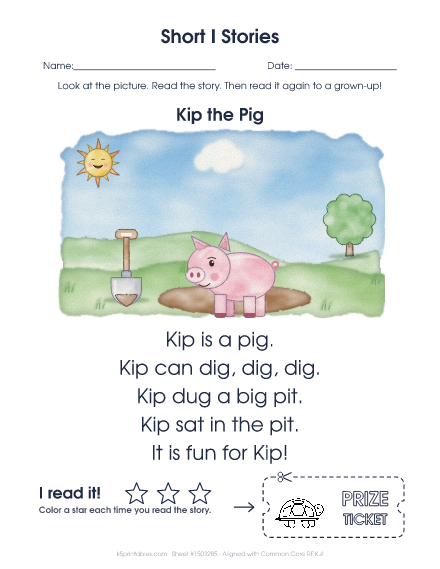 6. Short I StoriesThree short i stories, "Kip the Pig," "Bix and the Wig" and "Liz and the Figs," full of words like pig, dig, wig and six, each with a painted storybook picture.
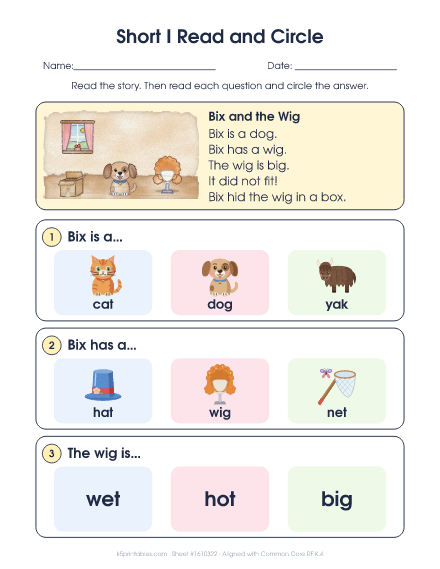 7. Short I Read and CircleA short i story ("Kip the Pig," "Bix and the Wig" and "Liz and the Figs") with a small copy of its picture, then questions to answer by circling a word or picture. Fewer, Standard or More give 2, 3 or 4 questions. Includes an answer key.
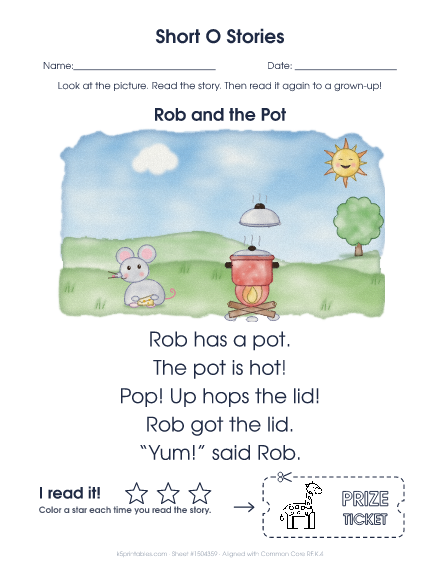 8. Short O StoriesThree short o stories, "Tod the Fox," "Dot and the Mop" and "Rob and the Pot," full of words like fox, box, mop and hot, each with a painted storybook picture.
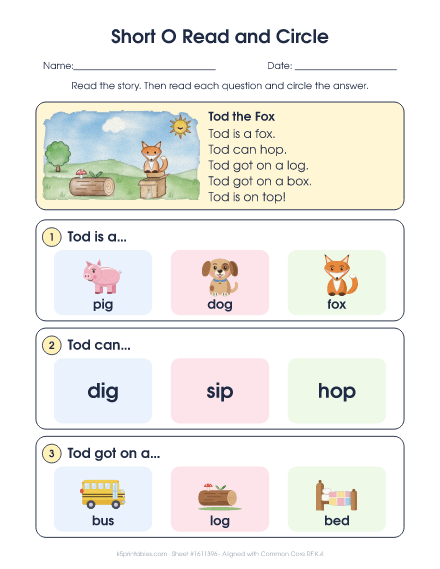 9. Short O Read and CircleA short o story ("Tod the Fox," "Dot and the Mop" and "Rob and the Pot") with a small copy of its picture, then questions to answer by circling a word or picture. Fewer, Standard or More give 2, 3 or 4 questions. Includes an answer key.
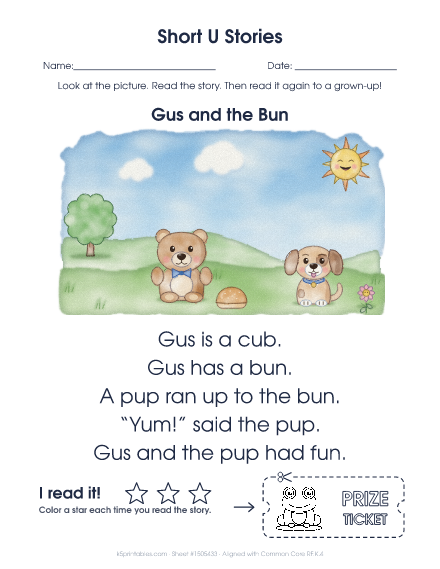 10. Short U StoriesThree short u stories, "The Hen and the Bug," "Gus and the Bun" and "Fun on the Bus," full of words like bug, mud, sun and bus, each with a painted storybook picture.
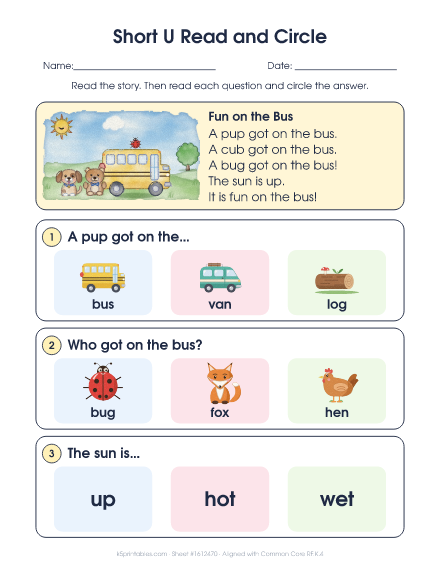 11. Short U Read and CircleA short u story ("The Hen and the Bug," "Gus and the Bun" and "Fun on the Bus") with a small copy of its picture, then questions to answer by circling a word or picture. Fewer, Standard or More give 2, 3 or 4 questions. Includes an answer key.