Perfect Tenses Chart
The three perfect tenses on a timeline, clue words, and common irregular past participles.
Need more than one? Tap + for extra copies (up to 10).
How to do it
- Read each perfect tense and how to form it.
- Look at the timeline for each one.
- Read the clue words and the irregular past participles.
Teaching tip
Keep the chart nearby while your student works on the other pages. This sheet is aligned with Common Core L.5.1b.
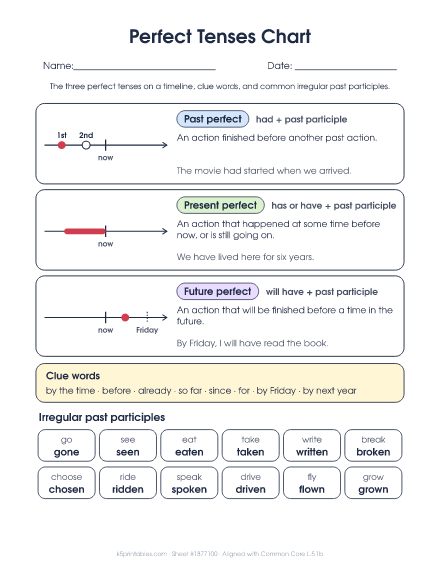
About this chart
Past, present and future perfect, each with how to form it, when to use it, a timeline and an example, plus clue words and twelve irregular past participles.
What kids practice
The perfect tenses use a form of have with the past participle. The past perfect (had walked) shows an action finished before another past action. The present perfect (has or have walked) shows an action that happened at some time before now or is still going on. The future perfect (will have walked) shows an action that will be finished before a time in the future. Fifth graders also learn to keep their verb tenses consistent.
Watch for
- Using the simple past instead of the past participle, like "has went" or "had ate."
- Using have with a singular subject, like "She have finished."
- Switching tenses in the middle of a sentence, like "We went to the park and play soccer."
- Using the past perfect when there is only one past event.
It's free to print, as many copies as you need. See the full perfect tenses guide for 5th grade.
More sheets in this set
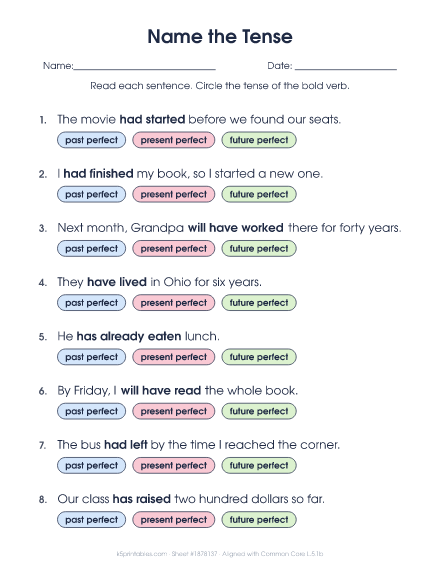 2. Name the TenseSentences with a bold verb in the past, present or future perfect to name. Fewer, Standard or More give 6, 8 or 10. Includes an answer key.
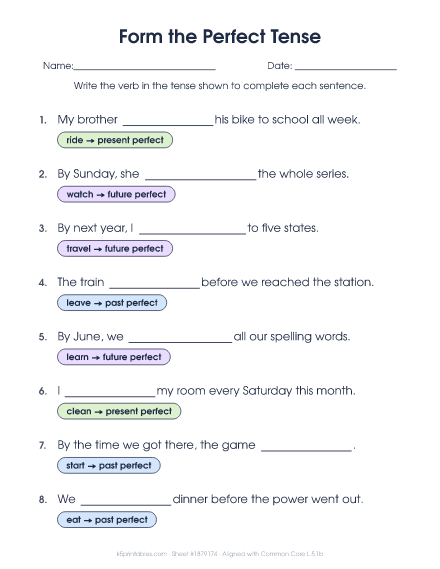 3. Form the Perfect TenseSentences with a blank, a verb and a perfect tense to write it in, like start in the past perfect. Fewer, Standard or More give 6, 8 or 10. Includes an answer key.
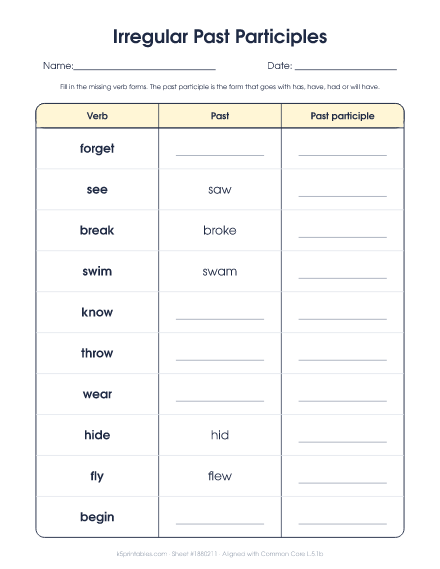 4. Irregular Past ParticiplesA table of irregular verbs like go, went, gone with the past participle and some past forms to fill in. Fewer, Standard or More give 8, 10 or 12 verbs. Includes an answer key.
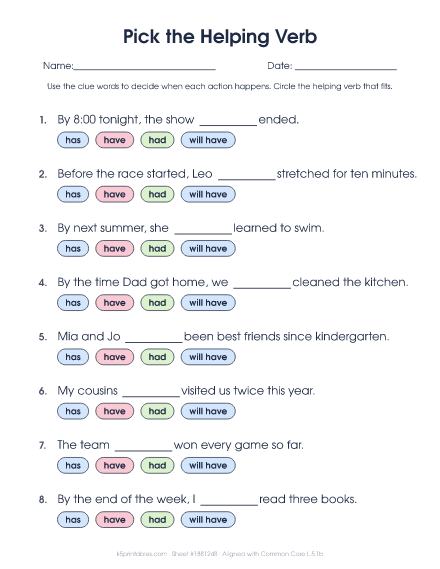 5. Pick the Helping VerbSentences with a blank and four helping verbs to choose from, using clue words like by the time and so far. Fewer, Standard or More give 6, 8 or 10. Includes an answer key.
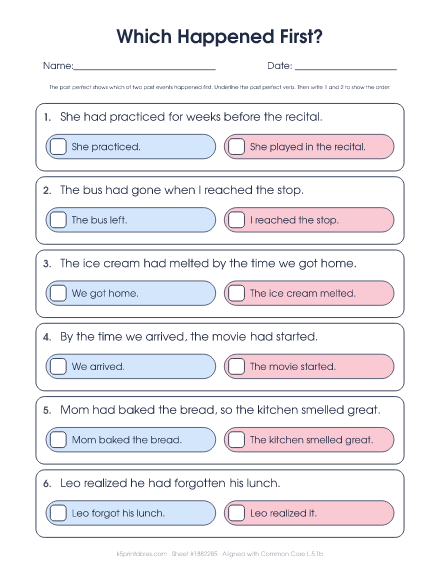 6. Which Happened First?Sentences with two past events, like "By the time we arrived, the movie had started," and the events to number in order. Fewer, Standard or More give 4, 6 or 8. Includes an answer key.
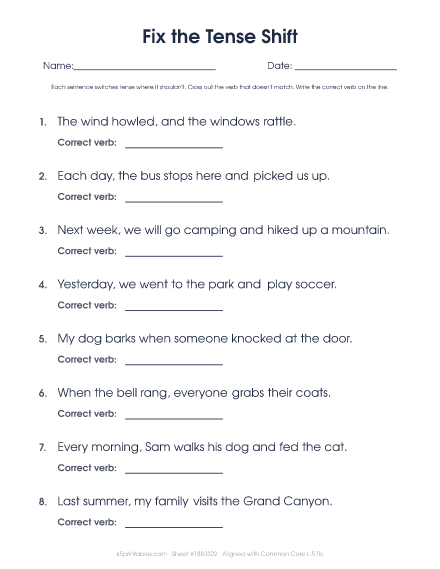 7. Fix the Tense ShiftSentences where one verb switches tense, like "We went to the park and play soccer," to fix. Fewer, Standard or More give 6, 8 or 10. Includes an answer key.