Talking to Someone
Each sentence talks to someone by name. Add commas to set off the name.
Fresh sheet anytime. Tap New sheet or reload for a different one. Tap + for up to 10.
This is sheet #188824601.
How to do it
- Read the sentence.
- Find the name of the person being spoken to.
- Add commas to set off the name.
Teaching tip
A name in the middle of a sentence needs a comma on both sides. This sheet is aligned with Common Core L.5.2.
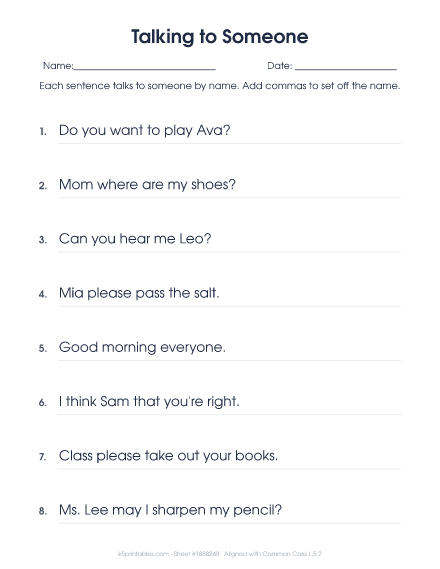
About this worksheet
Sentences that speak to someone by name at the start, middle or end. Fewer, Standard or More give 6, 8 or 10. Includes an answer key.
What kids practice
Commas tell a reader where to pause and which words go together. Fifth graders use commas between items in a list, after an opener like "After lunch," or "However," after yes and no, before a tag question like "isn't it?" and around the name of someone being spoken to. They also learn to underline or italicize the titles of long works, like books and movies, and to put the titles of short works, like songs and poems, in quotation marks.
Watch for
- Leaving out the comma after an opener, especially a long one.
- Forgetting the second comma when a name comes in the middle of a sentence.
- Putting a comma before every and, even when it isn't joining items or sentences.
- Putting the title of a book in quotation marks or the title of a song in italics.
It's free to print, with Fewer, Standard or More on the page and an answer key. See the full comma rules guide for 5th grade.
More sheets in this set
- See it all
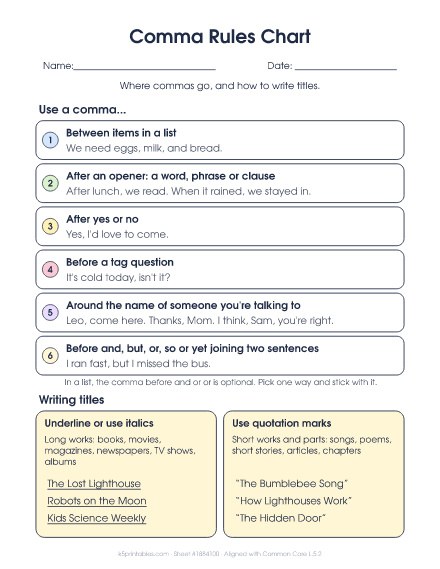 1. Comma Rules ChartSix places to use a comma, each with an example, a note that the comma before and in a list is optional, and how to write the titles of long and short works.
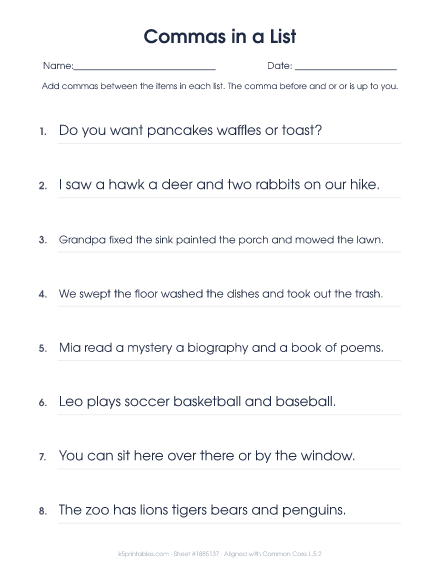 2. Commas in a ListSentences with lists of words and phrases that need commas. The answer key shows the comma before and or or in gray because it's optional. Fewer, Standard or More give 6, 8 or 10 sentences.
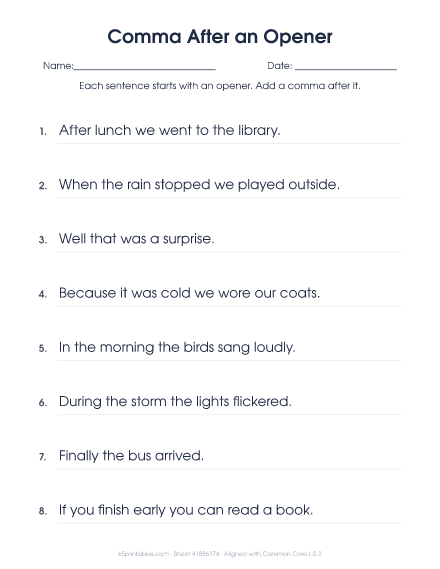 3. Comma After an OpenerSentences that start with a word, phrase or clause like "However," "In the morning," or "When the rain stopped," and need a comma. Fewer, Standard or More give 6, 8 or 10. Includes an answer key.
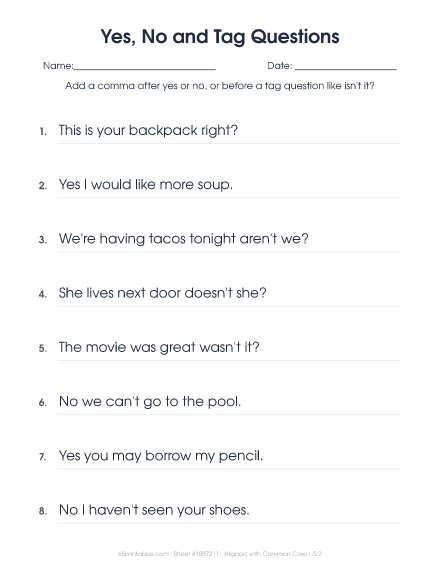 4. Yes, No and Tag QuestionsSentences that start with yes or no or end with a tag question like "isn't it?" Fewer, Standard or More give 6, 8 or 10. Includes an answer key.
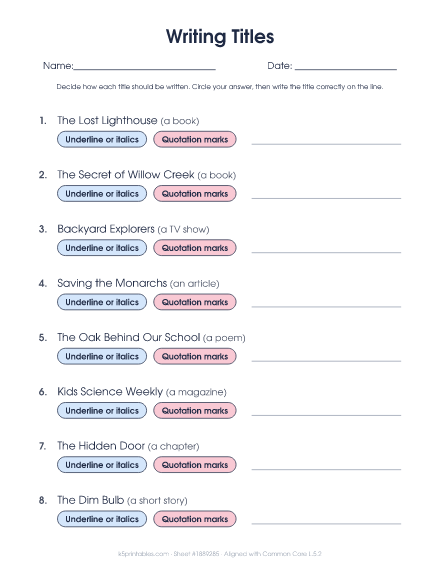 6. Writing TitlesMade-up titles of books, movies, magazines, songs, poems, stories and articles to sort and write correctly. Fewer, Standard or More give 6, 8 or 10. Includes an answer key.
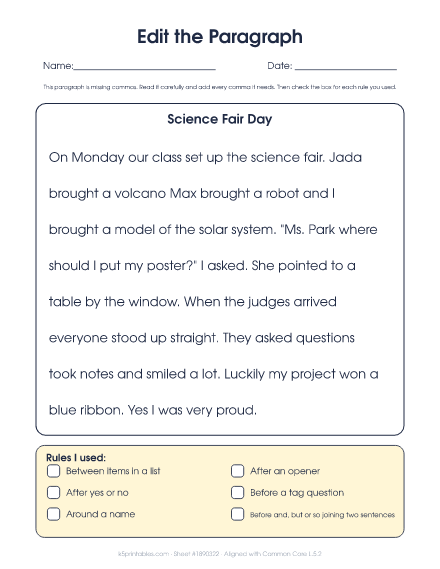 7. Edit the ParagraphThree short original paragraphs with commas missing for lists, openers, yes and no, tag questions, names and joined sentences. New sheet gives a different paragraph. Includes an answer key.