Theme and point of view worksheets
Aligned with Common Core RL.5.2
Printable fifth-grade theme and point of view worksheets: a chart, sorting strong theme statements, finding the theme of a poem, two stories with one theme, first person and third person limited or omniscient, one event told by two narrators, and a narrator's word choice.
The worksheets
- See it all
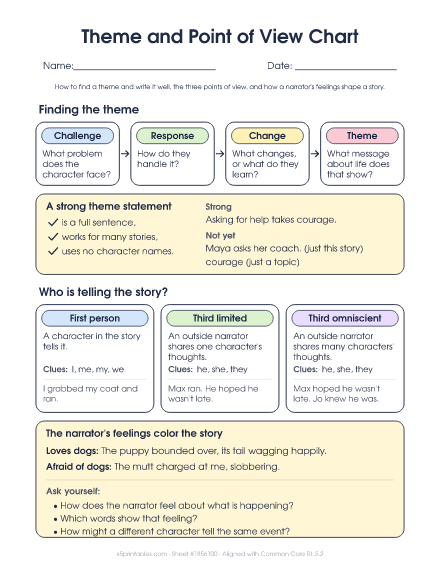
Theme and Point of View Chart
Four steps from a character's challenge to the theme, what makes a strong theme statement, first person, third person limited and third person omniscient with clues and examples, and how a narrator's feelings color a story.
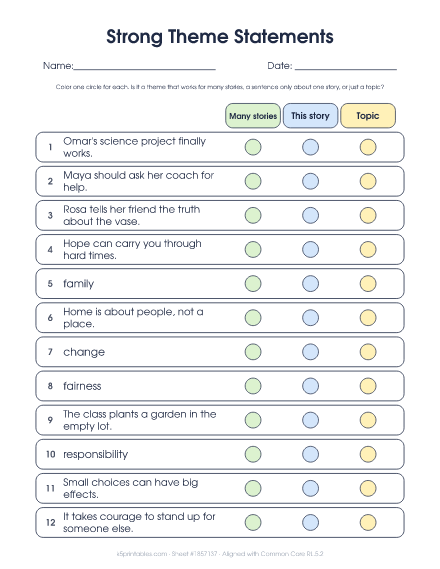
Strong Theme Statements
Theme statements, sentences about one story and single-word topics mixed together, to sort into three columns. Fewer, Standard or More give 9, 12 or 15. Includes an answer key.
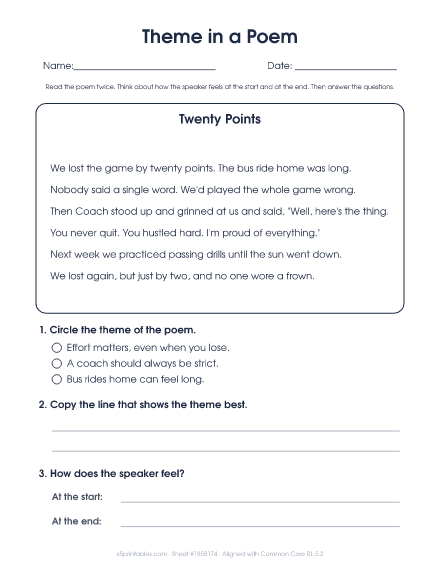
Theme in a Poem
Four original poems where the speaker reflects on something that happened, each with three theme choices, a line to copy and how the speaker's feelings change. New sheet gives a different poem. Includes an answer key.
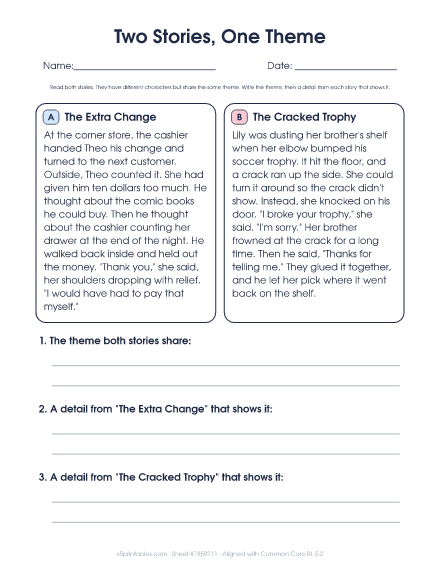
Two Stories, One Theme
Three pairs of short original stories with different characters and the same theme, with lines to write the theme and a detail from each story. New sheet gives a different pair. The answer key has example answers.
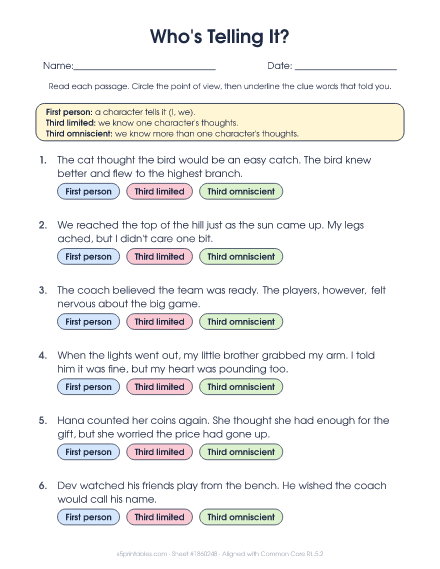
Who's Telling It?
Short passages in first person, third person limited and third person omniscient, with a key to the three at the top. Fewer, Standard or More give 4, 6 or 8 passages. The answer key underlines the clues.
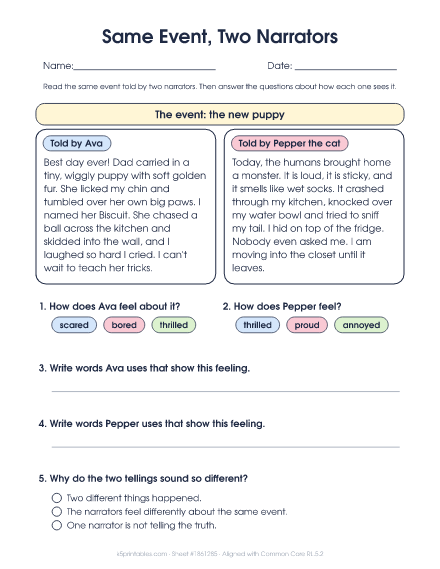
Same Event, Two Narrators
One event told by two narrators who feel differently about it, like a new puppy told by a kid and by the family cat, with questions about each narrator's feelings and word choice. New sheet gives a different event. Includes an answer key.
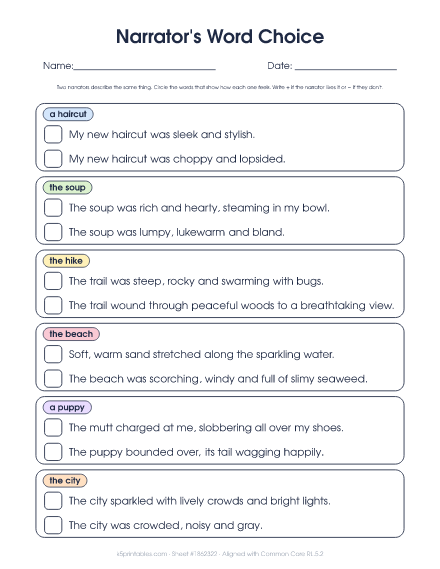
Narrator's Word Choice
Pairs of sentences describing the same thing, one by a narrator who likes it and one by a narrator who doesn't. Fewer, Standard or More give 4, 6 or 7 pairs. Includes an answer key.
Print the whole packet
One copy of every sheet above, in order. Tap + for more copies (up to 10).
For the parent or teacher
What it is
A theme is a story's message about life. Fifth graders find it by looking at how a character responds to a challenge, or how the speaker of a poem feels about something, and they write it as a sentence that could fit many stories. They also look at who is telling the story: a character (first person), or an outside narrator who shares one character's thoughts (third person limited) or many characters' thoughts (third person omniscient). A narrator's feelings shape the words they use, so the same event can sound very different depending on who tells it.
What comes next
Figurative language.
How to teach it
- Teach in order or jump to whatever your student needs. A student may find a theme easily and still be building the habit of writing it without character names.
- Ask what the character's challenge was, how they handled it and what changed. The theme usually grows out of the answers.
- Test a theme statement by asking if it could fit a different story with different characters.
- When reading together, stop and ask who is telling the story and whose thoughts you know.
- Retell a scene from another character's point of view and talk about which words change.
Common mistakes
- Giving a topic, like "courage," instead of a full theme sentence.
- Writing a theme that only fits this story, like "Maya should ask her coach for help."
- Calling any story with he or she third person omniscient, even when only one character's thoughts are shared.
- Treating a narrator's description as plain fact without noticing how the narrator feels.