Poems to Read Aloud
Read the poem to yourself first. Then read it out loud 3 times, following the tips. Check a box after each read.
Fresh sheet anytime. Tap New sheet or reload for a different one. Tap + for up to 10.
This is sheet #185324601.
How to do it
- Read the poem to yourself first.
- Read the tip on how to read it.
- Read it out loud 3 times and check a box after each read.
Teaching tip
Let your student perform the poem for someone once it sounds the way they want it to. This sheet is aligned with Common Core RF.5.4b.
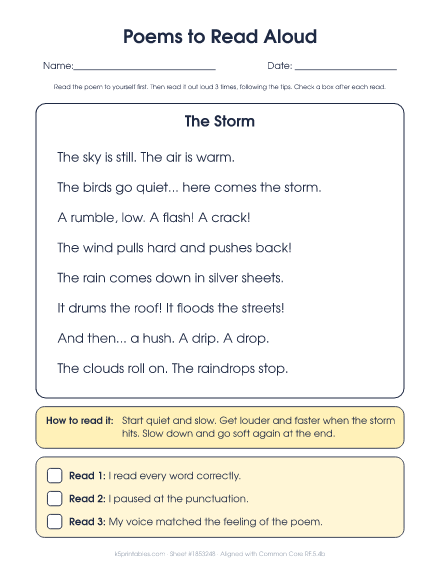
About this worksheet
Four original poems, each with a tip on how to read it and a three-read checklist for accuracy, punctuation and feeling. New sheet gives a different poem.
What kids practice
Reading with expression means reading out loud so it sounds like real talking, with the voice showing what the words mean. Fifth graders learn how punctuation changes the voice, how stressing one word can change what a sentence means, and how to match a character's tone. They practice on poems and on longer passages, reading each one more than once.
Watch for
- Reading every sentence in the same flat voice, even questions and exclamations.
- Rushing past commas, ellipses and dashes.
- Using a big dramatic voice that doesn't fit what is happening.
- Speeding up to read more words and leaving the expression behind.
It's free to print, as many copies as you need. See the full reading with expression guide for 5th grade.
More sheets in this set
- See it all
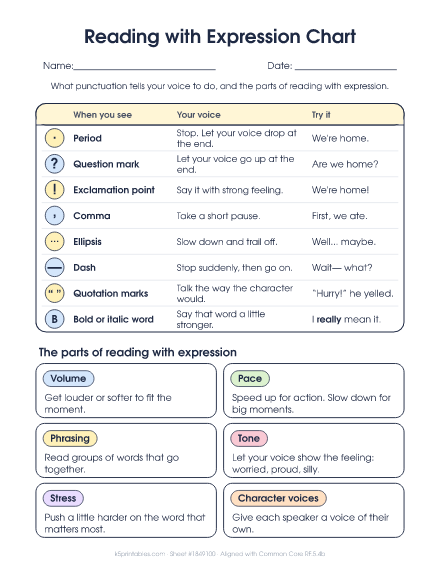 1. Reading with Expression ChartEight punctuation marks, each with what it tells your voice to do and a line to try, plus six parts of reading with expression: volume, pace, phrasing, tone, stress and character voices.
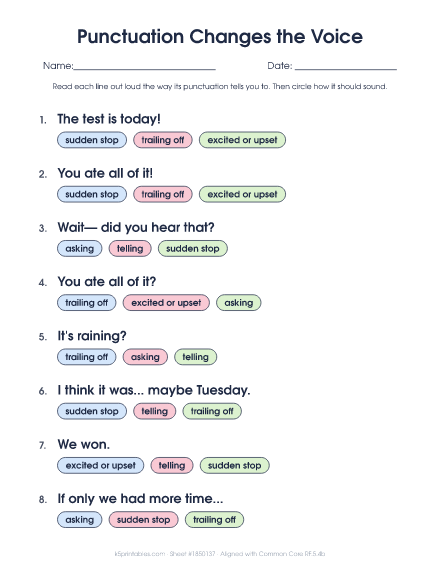 2. Punctuation Changes the VoiceLines to read out loud, including some that differ only by their end mark, like "We won." and "We won?" Students circle telling, asking, excited or upset, trailing off, or sudden stop. Fewer, Standard or More give 6, 8 or 10 lines. Includes an answer key.
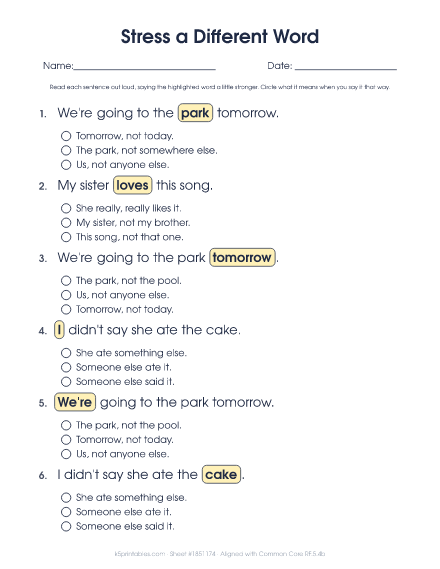 3. Stress a Different WordThe same sentences read with a different word highlighted each time, and three meanings to choose from. Fewer, Standard or More give 4, 6 or 8 sentences. Includes an answer key.
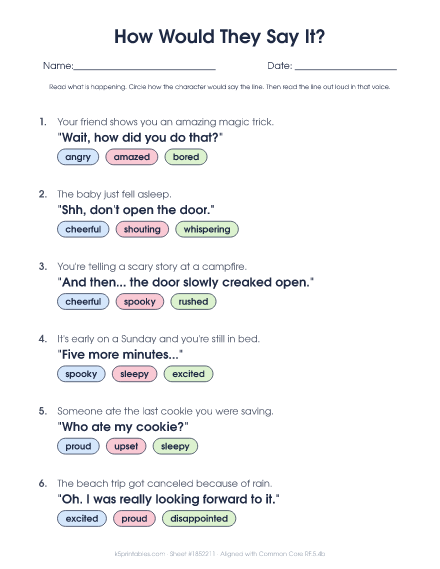 4. How Would They Say It?Short situations, each with a line of dialogue and three tones to choose from, like nervous, proud or disappointed. Fewer, Standard or More give 4, 6 or 8 lines. Includes an answer key.
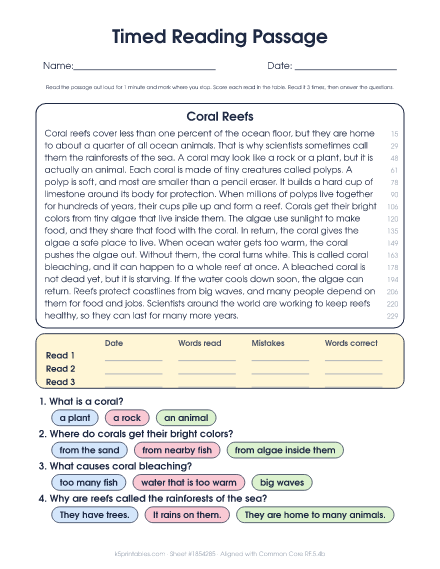 6. Timed Reading PassageSix passages of about 225 words, three stories with lots of dialogue and three nonfiction, with a running word count on each line, a score table for three reads and four questions. New sheet gives a different passage. Includes an answer key.
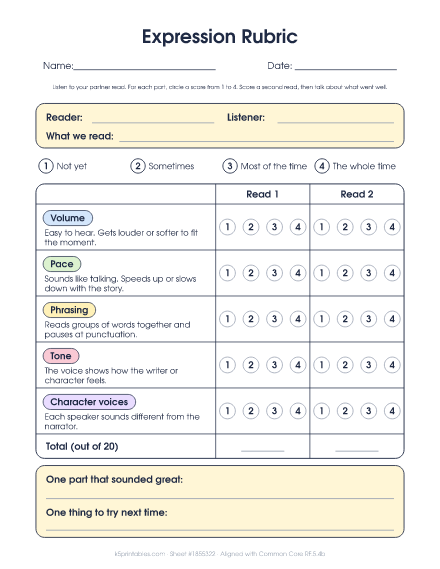 7. Expression RubricA partner rubric for volume, pace, phrasing, tone and character voices, scored from 1 to 4 on two reads, with a total and lines for one part that sounded great and one thing to try next time.