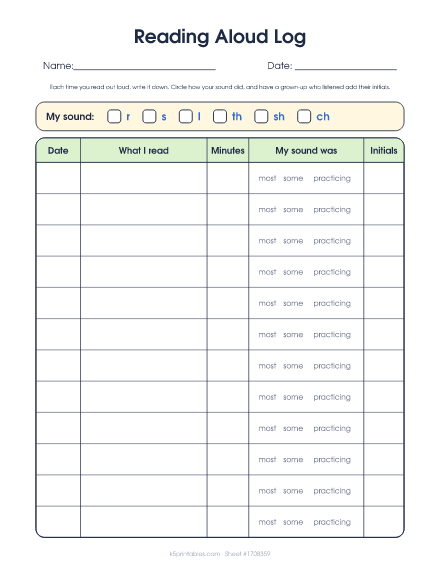
Reading Aloud Log
Each time you read out loud, write it down. Circle how your sound did, and have a grown-up who listened add their initials.
Need more than one? Tap + for extra copies (up to 10).
How to do it
- Write the date and what you read.
- Write how many minutes you read.
- Circle how your sound did and get a grown-up's initials.
Teaching tip
A few minutes of reading aloud most days helps more than one long session a week.
About this worksheet
A log for 12 reading sessions, with the date, what was read, minutes, how the sound did, and a grown-up's initials.
What kids practice
Carryover is the step after a student can say a sound correctly in single words: using it in phrases, sentences, reading aloud and everyday conversation. These sheets cover the later-developing sounds r, s, l, th, sh and ch together. Your student checks the sound they're working on and practices that one. For practice with a single sound in words, see the articulation topics in earlier grades.
Watch for
- Moving to conversation before the sound is steady in sentences.
- Reading fast, which makes sounds slip.
- Correcting every slip in conversation, which can make talking feel like a test. Pick short practice times instead.
- Practicing only on worksheets and not in real talk.
It's free to print, as many copies as you need. See the full sounds in sentences and reading aloud guide for 4th grade.
More sheets in this set
- See it all
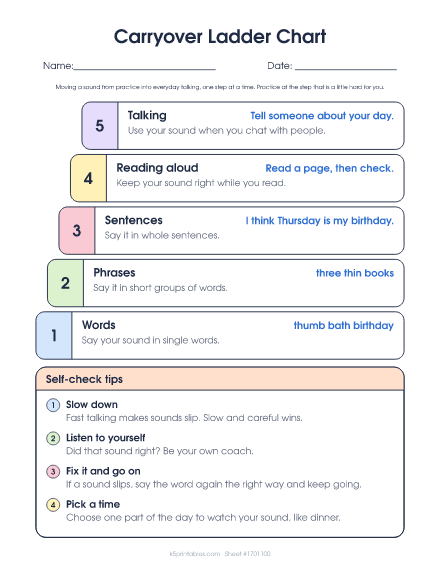 1. Carryover Ladder ChartThe five steps of carryover, from single words to everyday talking, with an example of each and four self-check tips.
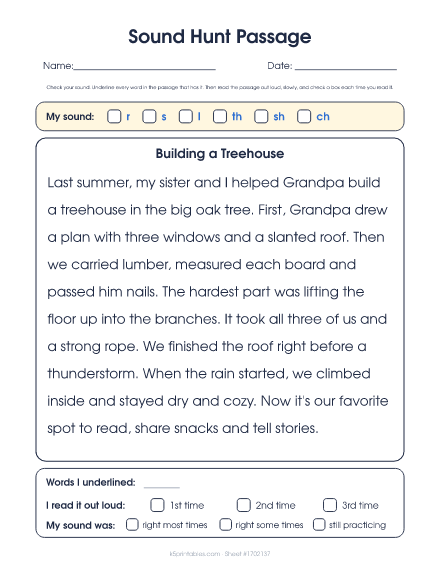 2. Sound Hunt PassageSix short passages full of r, s, l, th, sh and ch words, to underline your sound and read aloud three times.
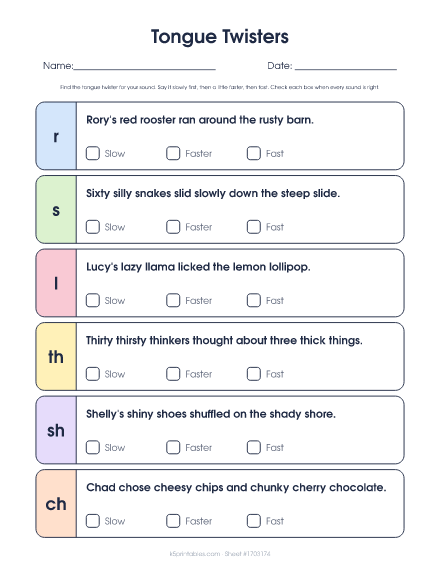 3. Tongue TwistersA tongue twister for each sound, r, s, l, th, sh and ch, to say at three speeds. There are two sets.
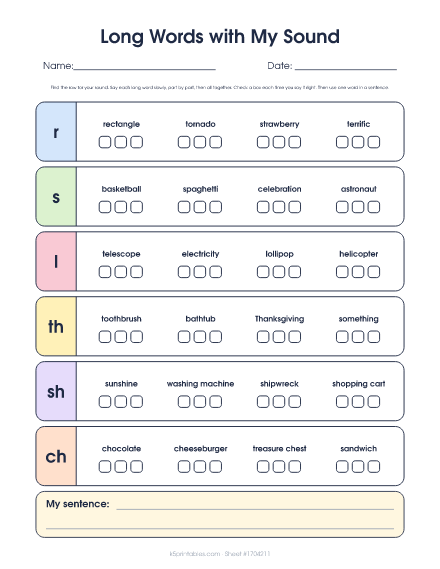 4. Long Words with My SoundLong words for each sound, like refrigerator, celebration, helicopter, thermometer, dishwasher and chocolate, to say three times each, plus a line for a sentence.
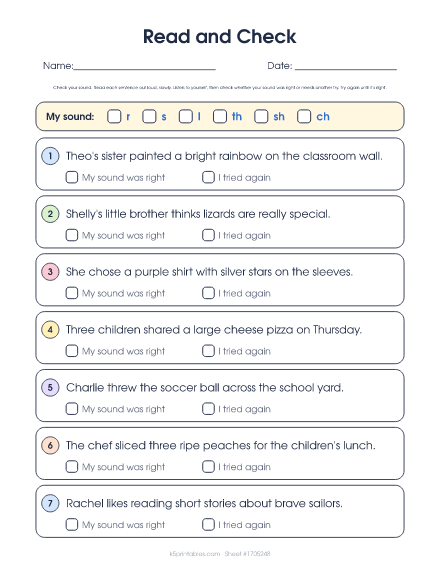 5. Read and CheckSentences full of the later sounds to read aloud one at a time, with a self-check for each. Fewer, Standard or More give 6, 7 or 8.
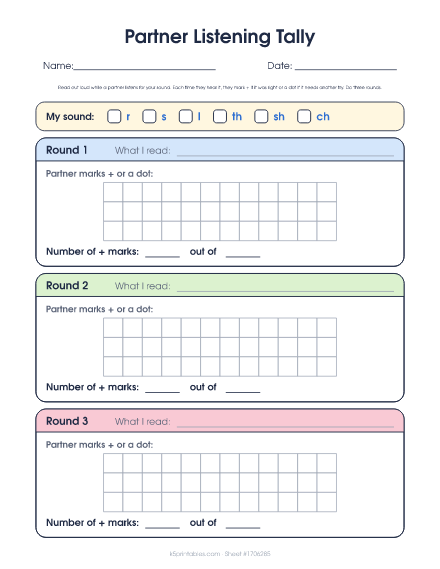 6. Partner Listening TallyThree rounds of tally boxes for a partner to mark while your student reads aloud, with a count for each round.
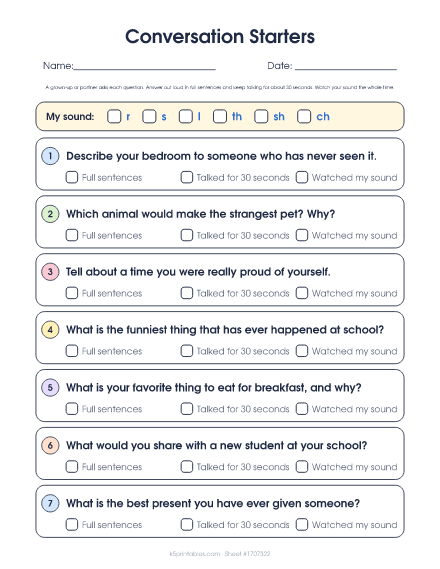 7. Conversation StartersQuestions like "If you could have any superpower, what would you choose?" to answer out loud while watching your sound. Fewer, Standard or More give 6, 7 or 8.