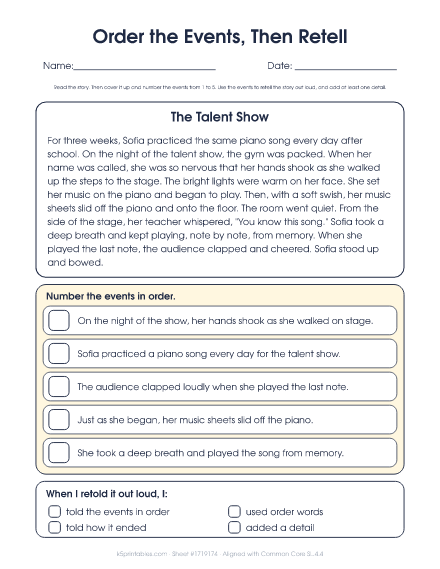
Order the Events, Then Retell
Read the story. Then cover it up and number the events from 1 to 5. Use the events to retell the story out loud, and add at least one detail.
Fresh sheet anytime. Tap New sheet or reload for a different one. Tap + for up to 10.
This is sheet #171924601.
How to do it
- Read the story, then cover it up.
- Number the five events in order.
- Retell the story out loud and check off what you did.
Teaching tip
Have your student number the events without looking back at the story, then check. This sheet is aligned with Common Core SL.4.4.
About this worksheet
A short story, five mixed-up events to number in order and a quick checklist for retelling it out loud. Includes an answer key.
What kids practice
Retelling means telling the important parts of a story in order, in your own words. By 4th grade, a good retell does more than list what happened. It names who the story is about, where it happens and the problem, tells the important events in order and explains how it ended. It also adds a few details, like how a character felt, something someone said or what they could see or hear, so the listener can picture it. These sheets are about telling a story out loud, clearly and in order.
Watch for
- Telling every little thing instead of the important parts.
- Leaving out the problem or the ending.
- Telling events out of order, or jumping back with "Oh, and before that..."
- Retelling in a flat list with no details, so the listener can't picture it.
- Reading the story word for word instead of using their own words.
It's free to print, with an answer key. See the full retelling with detail guide for 4th grade.
More sheets in this set
- See it all
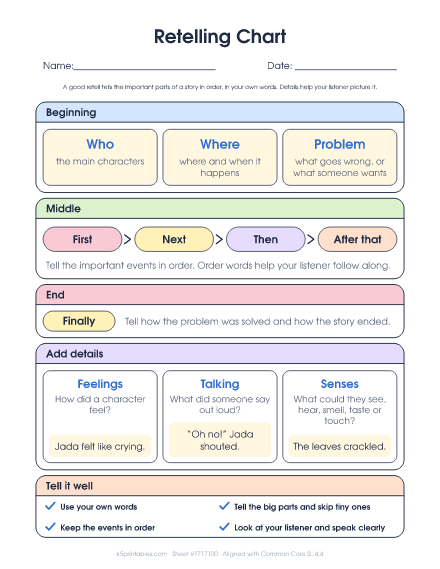 1. Retelling ChartThe parts of a retell (beginning, middle and end), order words, three kinds of details with examples, and tips for telling it well.
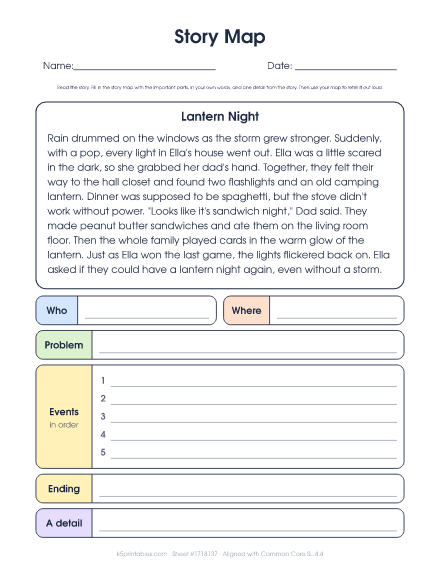 2. Story MapA short story with a story map for who, where, the problem, five events, the ending and a detail. New sheet changes the story, and the answer key shows example answers.
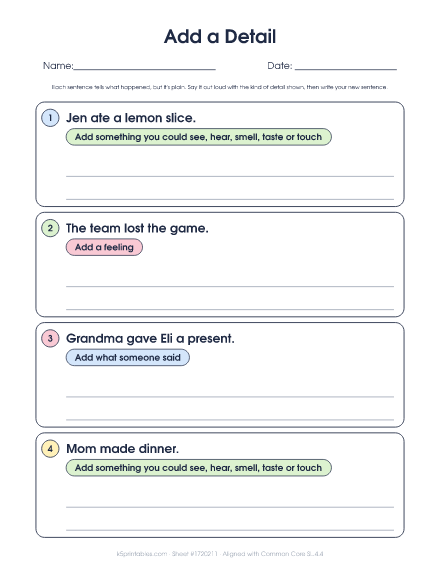 4. Add a DetailPlain sentences to build up with a feeling, something someone said or a sense detail. Fewer has 3, Standard has 4 and More has 5. The answer key shows one example for each.
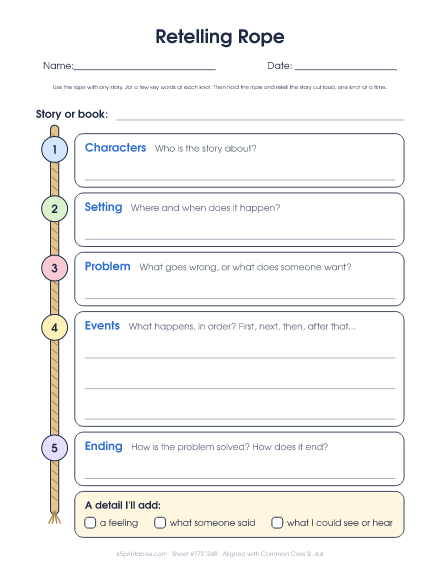 5. Retelling RopeA rope with five knots for characters, setting, the problem, the events and the ending, plus a detail to add. Works with any story.
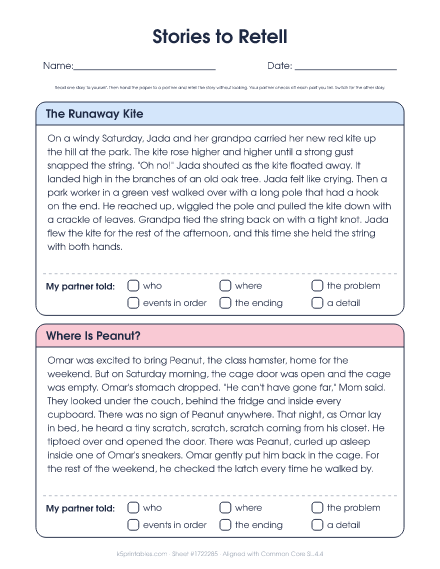 6. Stories to RetellTwo short stories per page, each with a checklist for a partner to mark while you retell. New sheet changes the stories.
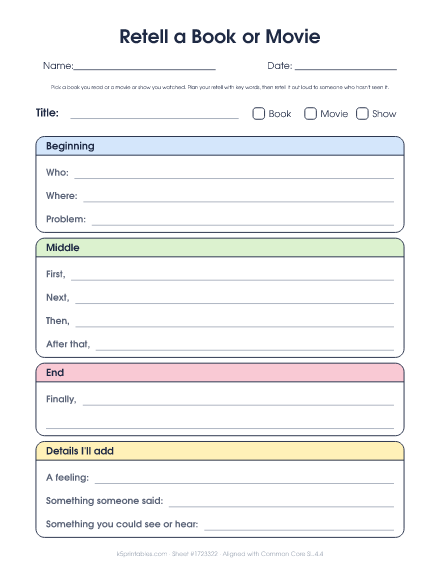 7. Retell a Book or MovieA planner for retelling any book, movie or show, with lines for the beginning, middle and end and three details to add.
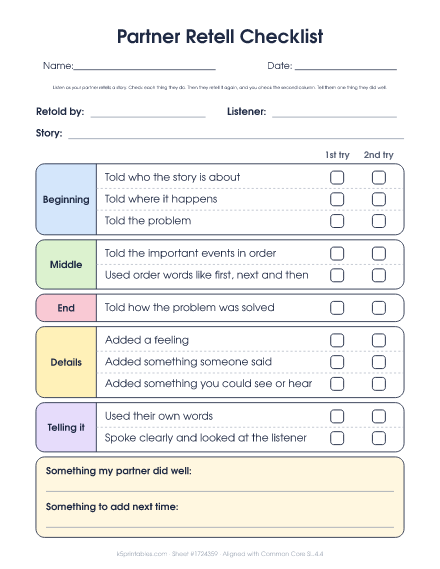 8. Partner Retell ChecklistA listener's checklist for the beginning, middle, end, details and how the story was told, with two columns for a first and second try.