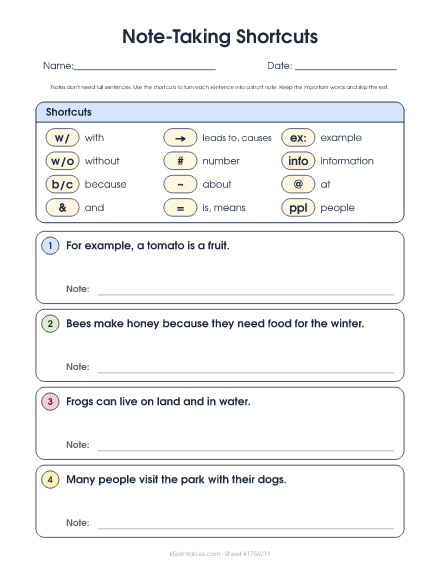
Note-Taking Shortcuts
Notes don't need full sentences. Use the shortcuts to turn each sentence into a short note. Keep the important words and skip the rest.
Fresh sheet anytime. Tap New sheet or reload for a different one. Tap + for up to 10.
This is sheet #175624601.
How to do it
- Read the shortcuts.
- Read each sentence and pick out the important words.
- Write a short note using the shortcuts.
Teaching tip
There's more than one good note. If it keeps the important facts, it works.
About this worksheet
Twelve note-taking shortcuts like w/, b/c and ~, then sentences to turn into short notes. Fewer has 3, Standard has 4 and More has 5. The answer key shows one example for each.
What kids practice
These are supports for kids who find handwriting slow, tiring or hard to read, even when their ideas are strong. By 4th grade, kids are asked to write more and take notes, and the effort of forming letters can crowd out the thinking. These sheets offer ways to get ideas down with less strain: saying ideas first, word banks so spelling doesn't slow the pencil, shortcuts for notes, grid paper that keeps math digits lined up, paper with a shaded writing space, and keyboard practice as another way to write. These sheets can help many children, with or without dysgraphia. They are not a test and not a diagnosis. If writing worries you, talk with your child's teacher or doctor.
Watch for
- Judging the ideas by how messy the handwriting looks.
- Asking for long copying jobs that tire the hand before the real writing starts.
- Crowding math digits so columns drift and answers come out wrong.
- Skipping breaks during long writing.
- Treating typing as cheating. It's another way to write.
It's free to print, with Fewer, Standard or More on the page and an answer key. See the full handwriting helpers (dysgraphia-friendly) guide for 4th grade.
More sheets in this set
- See it all
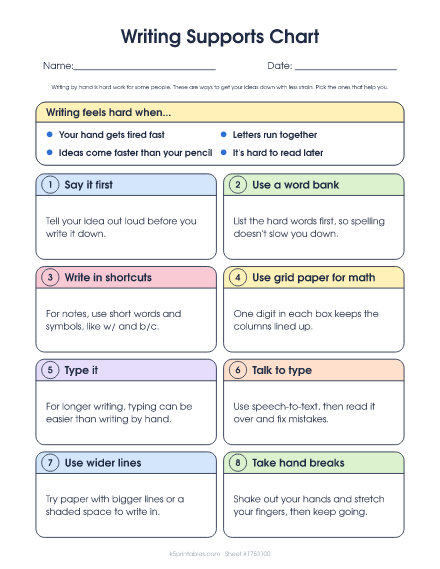 1. Writing Supports ChartSigns that writing feels hard and eight supports to try, like saying it first, using a word bank, writing in shortcuts, grid paper, typing, speech-to-text, wider lines and hand breaks.
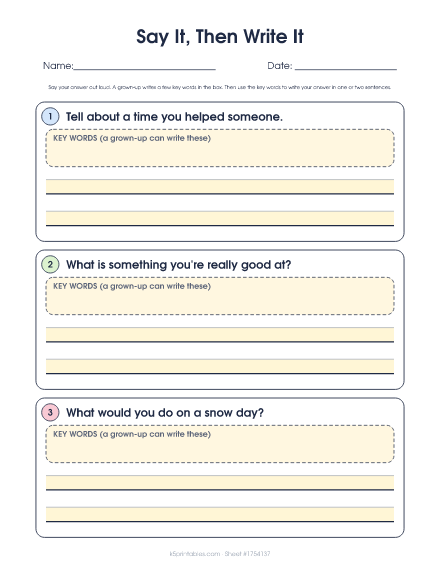 2. Say It, Then Write ItThree questions, each with a box for a grown-up to write key words and shaded lines to write the answer. New sheet changes the questions.
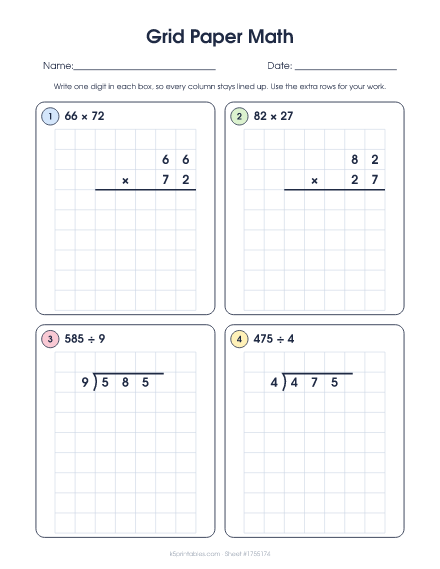 3. Grid Paper MathTwo-digit by two-digit multiplication and three-digit by one-digit division on large grid boxes. Fewer has 2 problems, Standard has 4 and More has 6. The answer key shows all the work.
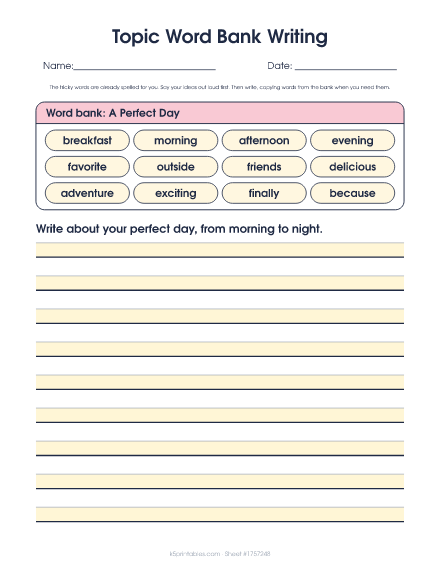 5. Topic Word Bank WritingA word bank of twelve tricky topic words, a writing prompt and shaded lines. New sheet changes the topic.
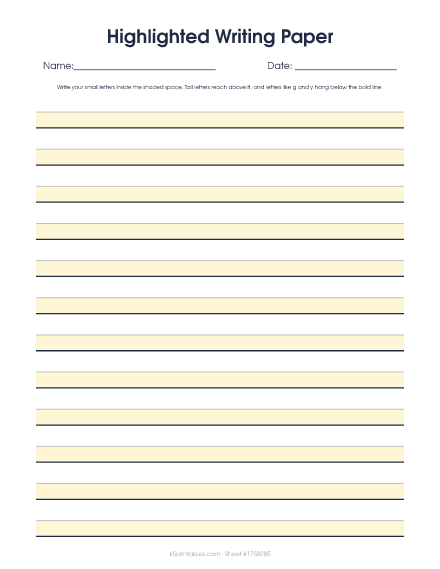 6. Highlighted Writing PaperWriting paper with a shaded writing space and a bold baseline. Fewer has the largest lines, Standard is medium and More has the smallest.
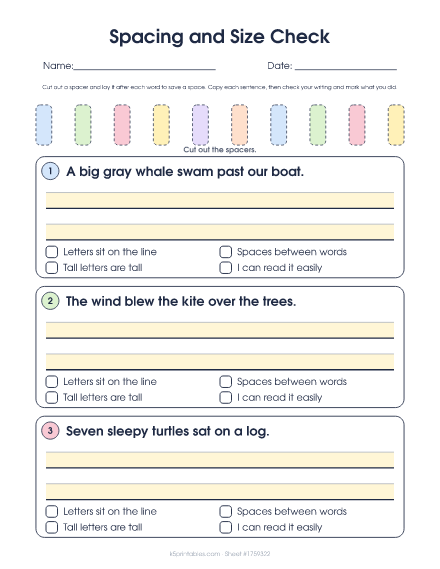 7. Spacing and Size CheckCut-out spacers, three sentences to copy on shaded lines and a four-part check for each one.
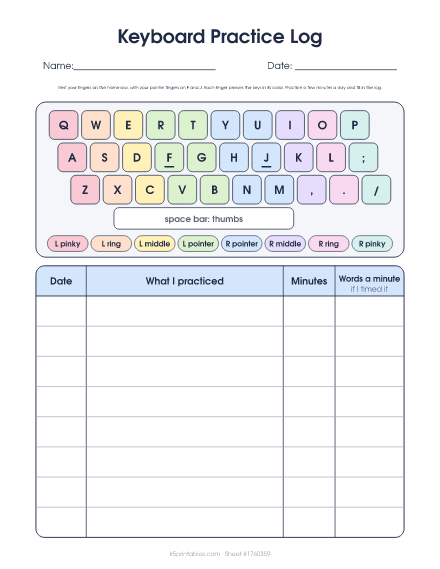 8. Keyboard Practice LogA keyboard chart with each key colored by the finger that presses it, plus a log for practice minutes and words a minute.