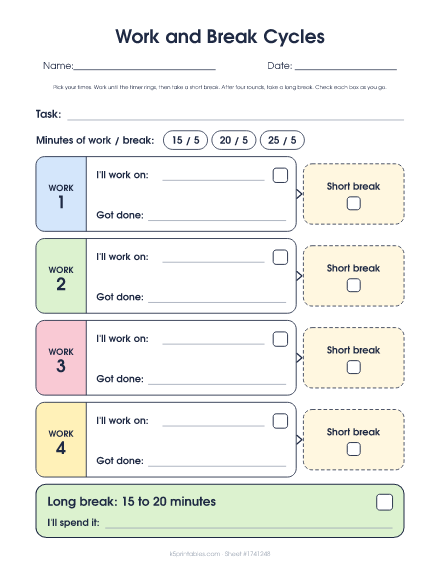
Work and Break Cycles
Pick your times. Work until the timer rings, then take a short break. After four rounds, take a long break. Check each box as you go.
Need more than one? Tap + for extra copies (up to 10).
How to do it
- Pick your work and break times.
- Work until the timer rings, then take a short break.
- After four rounds, take a long break.
Teaching tip
Most kids do better starting with 15 minutes of work and building up.
About this worksheet
Four rounds of work and short breaks, followed by a long break, with 15, 20 or 25 minutes of work and 5-minute breaks.
What kids practice
These are tools for kids who find it hard to start, plan, stay with or finish their work. In 4th grade, assignments get longer and kids are expected to manage more of their own time. These sheets move from rewards toward self-management. Kids try different ways to work with time, like short sprints, work and break cycles, starting with just 5 minutes, doing the hardest thing first and planning in time blocks. They also notice what pulls their attention away and what helps. Writing is kept light, mostly checking and circling. These sheets can help many children, with or without ADHD. They are not a test and not a diagnosis. If attention worries you at home and at school, talk with your child's doctor or teacher.
Watch for
- Making the work blocks too long to start. Ten minutes that work beat thirty that don't.
- Skipping the breaks. The break is part of the plan.
- Treating a "stopped" or a low focus rating as failing. It's information for next time.
- Adding a lot of writing. The point is to make work easier to manage, not to add more.
- Treating trouble with focus as laziness. Your child is working hard to pay attention.
It's free to print, as many copies as you need. See the full focus helpers (adhd-friendly) guide for 4th grade.
More sheets in this set
- See it all
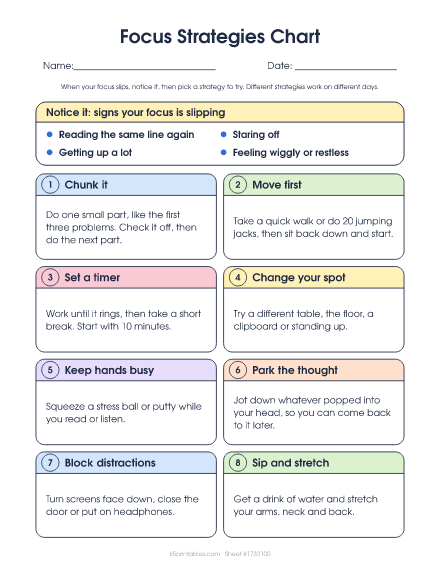 1. Focus Strategies ChartSigns your focus is slipping and eight strategies to try: chunk it, move first, set a timer, change your spot, keep hands busy, park the thought, block distractions, and sip and stretch.
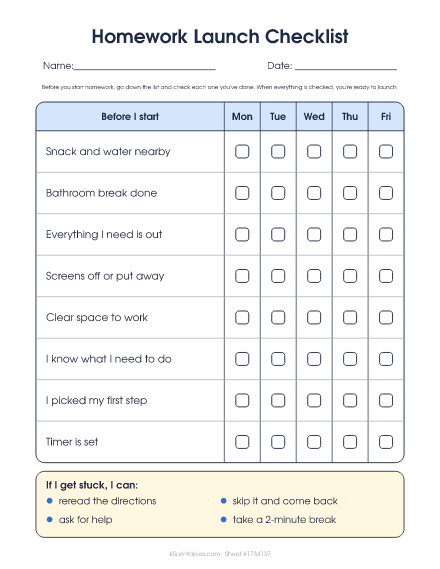 2. Homework Launch ChecklistEight quick things to do before starting homework, with a column for each weekday, plus what to do if you get stuck.
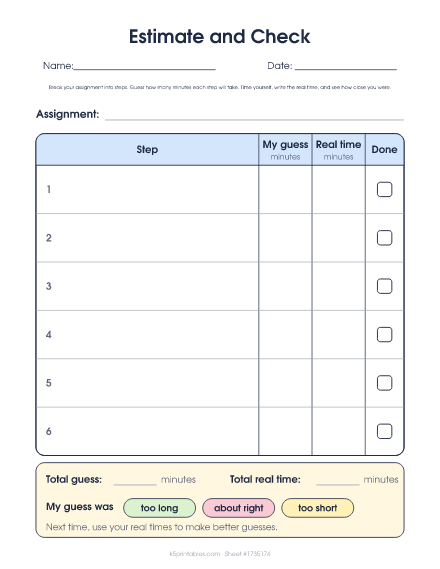 3. Estimate and CheckA table for steps, guessed minutes, real minutes and a done box, with totals and a circle for whether the guess was too long, about right or too short. Fewer has 5 steps, Standard has 6 and More has 8.
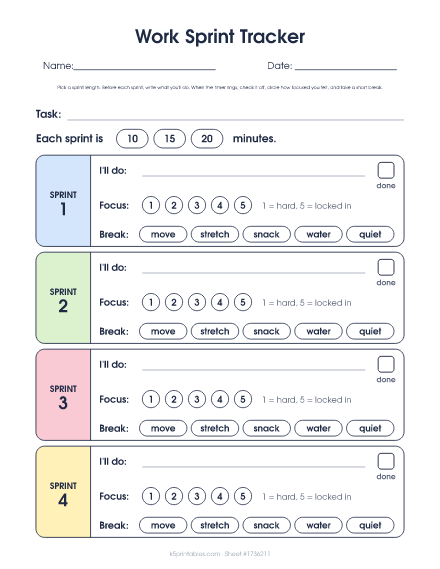 4. Work Sprint TrackerWork sprints of 10, 15 or 20 minutes, each with a plan, a done box, a 1 to 5 focus rating and a break to circle. Fewer has 3 sprints, Standard has 4 and More has 5.
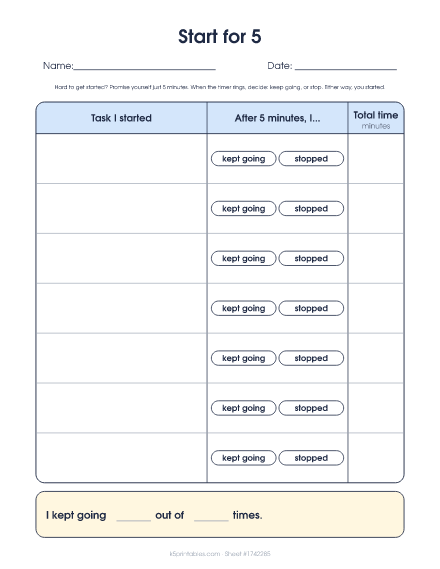 6. Start for 5A log for starting tasks with a 5-minute promise, circling whether you kept going or stopped, and adding up how often you kept going.
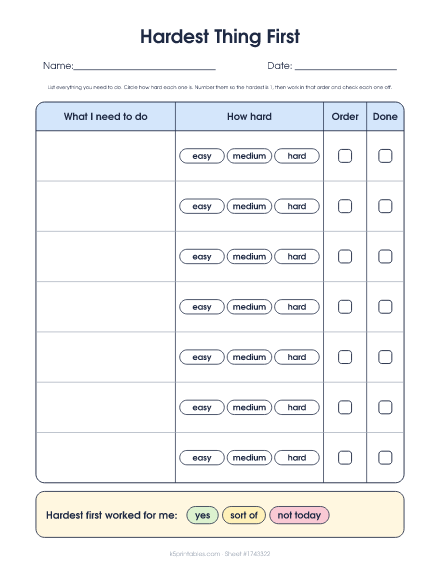 7. Hardest Thing FirstA task list with easy, medium or hard to circle, a box to number the order and a done box, plus whether doing the hardest first worked.
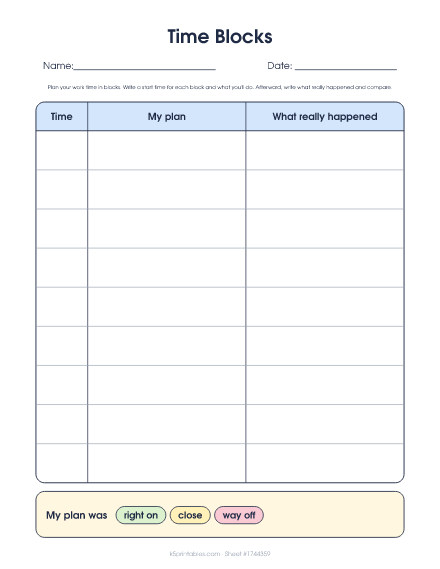 8. Time BlocksA plan for work time in blocks, side by side with what really happened, and a circle for how close the plan was.
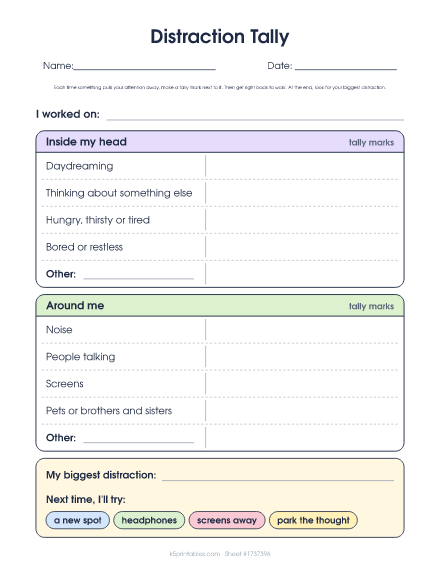 9. Distraction TallyTally distractions inside your head and around you during one work session, then pick a strategy for next time.
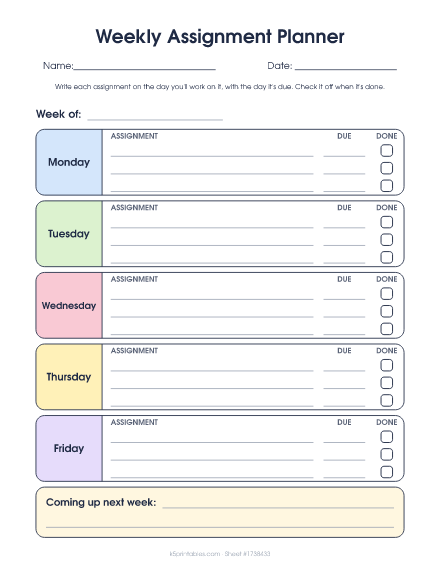 10. Weekly Assignment PlannerMonday to Friday, with lines for assignments, due dates and done boxes, plus a spot for what's coming up next week.
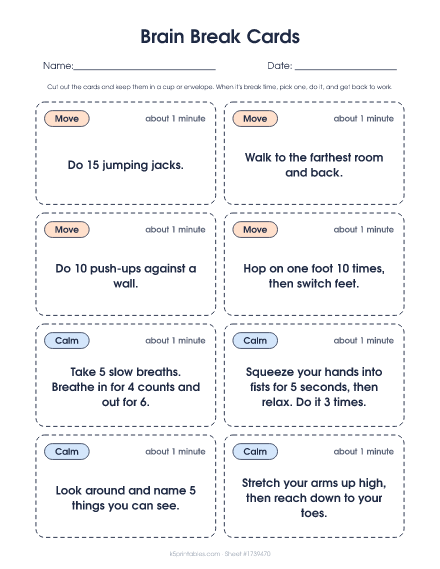 11. Brain Break CardsEight cut-apart break cards, each about a minute, with a mix of moving and calming breaks. New sheet switches to a second set of eight.
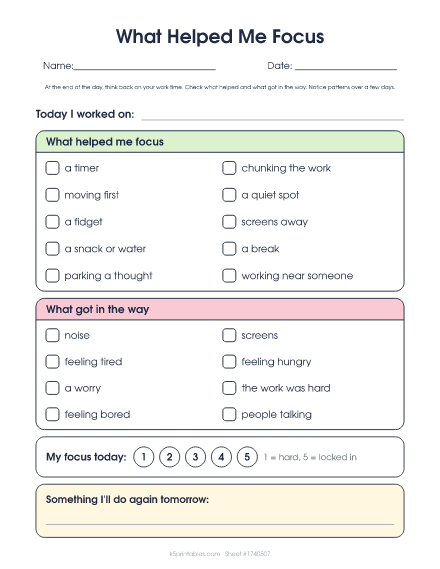 12. What Helped Me FocusAn end-of-day check of what helped focus, what got in the way and a 1 to 5 focus rating, plus one thing to do again.