Verb Tenses Chart
A verb's tense tells when something happens: in the past, now or in the future.
Need more than one? Tap + for extra copies (up to 10).
How to do it
- Look at past, present and future on the timeline.
- Read the example for each.
- Read the irregular verbs out loud.
Teaching tip
Keep this chart out while doing the other tense sheets. This sheet is aligned with Common Core L.3.1e.
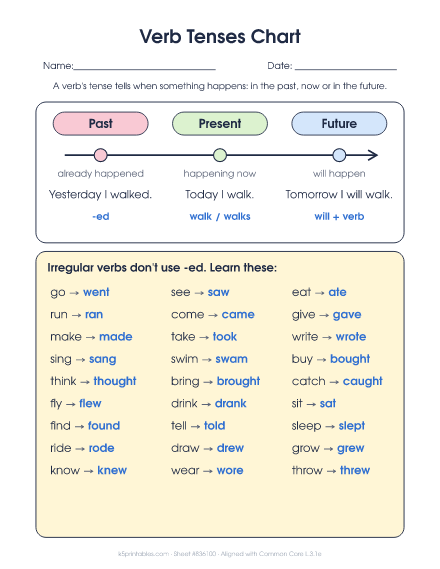
About this chart
Past, present and future on a timeline, plus 27 common irregular verbs like go and went.
What kids practice
A verb's tense tells when something happens. Past tense already happened (walked), present tense is happening now (walks) and future tense will happen (will walk). Most past tense verbs end in -ed, but irregular verbs change in other ways, like go and went, or catch and caught. Third graders form and use all three tenses.
Watch for
- Adding -ed to irregular verbs, like runned or bringed.
- Switching tenses in the middle of a story.
- Spelling mistakes with -ed, like bakeed instead of baked.
It's free to print, as many copies as you need. See the full verb tenses guide for 3rd grade.
More sheets in this set
- See it all
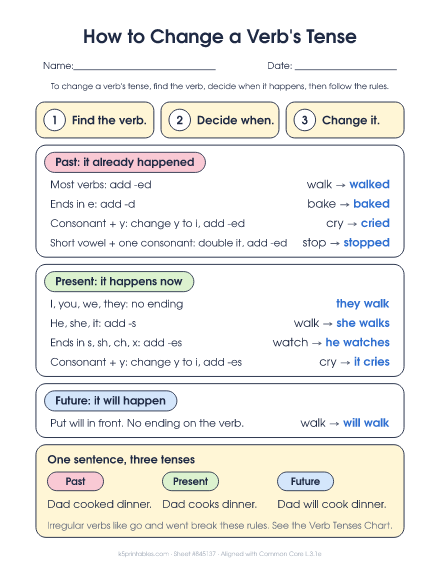 2. How to Change a Verb's TenseThe steps for changing tense, the spelling rules for -ed, -s and -es endings, will for the future, and one sentence in all three tenses.
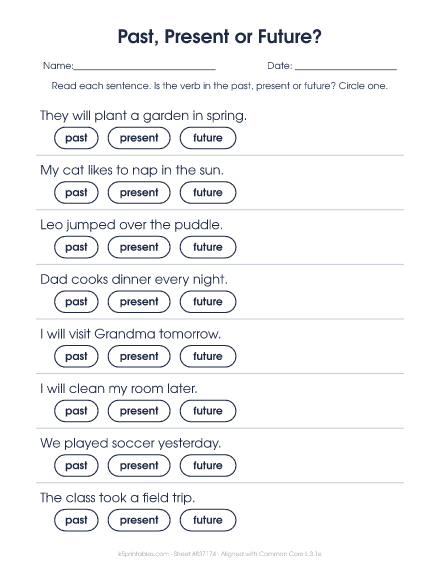 3. Past, Present or Future?Sentences to sort by tense, like "We played soccer yesterday."
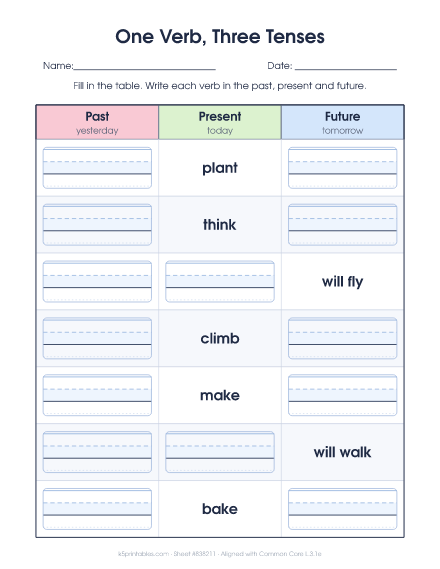 4. One Verb, Three TensesA table to fill in with each verb in the past, present and future, like walk, walked, will walk.
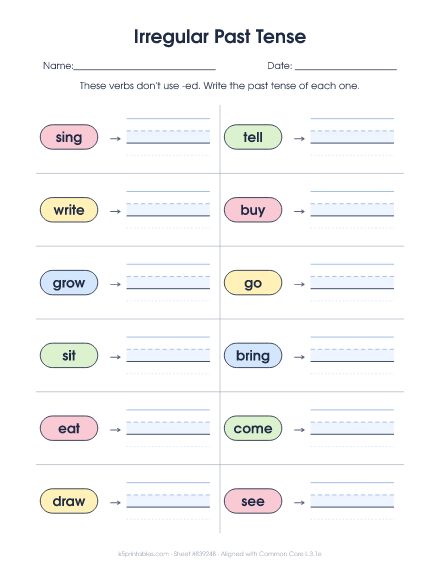 5. Irregular Past TenseWrite the past tense of irregular verbs like run, eat, bring and teach.
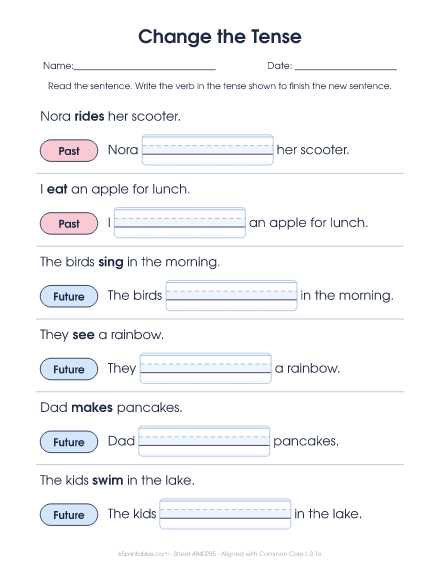 6. Change the TenseRewrite the verb in each sentence in the past or future, like "Dad makes pancakes" to "Dad made pancakes."