How and Why Chart
When you explain how, tell the steps in order. When you explain why, give a reason.
Need more than one? Tap + for extra copies (up to 10).
How to do it
- Read the order words and the example for explaining how.
- Read the reason words and the example for explaining why.
- Practice the four speaking tips.
Teaching tip
Keep the chart nearby when your child plans a talk or answers a why question. This sheet is aligned with Common Core SL.3.4.
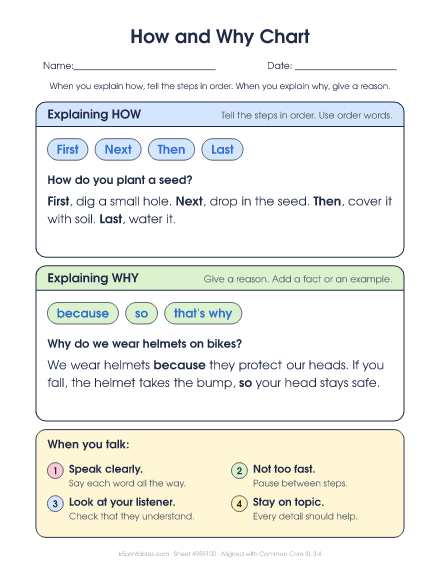
About this chart
Explaining how with first, next, then and last, explaining why with because and so, each with an example, plus four tips for speaking to a listener.
What kids practice
Explaining is a big part of how kids show what they know. Explaining how means telling the steps in order, using words like first, next, then and last. Explaining why means giving a reason with words like because and so, then adding a fact or example. In 3rd grade, kids are expected to tell about a topic or an experience with facts and details that fit, and to speak clearly at a pace their listener can follow.
Watch for
- Skipping steps. Something obvious to the speaker may be new to the listener.
- Giving a fact that is true but doesn't explain why. Coats come in many colors, but that isn't why we wear them.
- Talking too fast or too quietly. Pause between steps and check the listener's face.
- Wandering off topic. Each detail should connect to the topic.
- If your child has a hard time putting thoughts into words or being understood, ask a speech-language pathologist for a check.
It's free to print, as many copies as you need. See the full explaining how and why guide for 3rd grade.
More sheets in this set
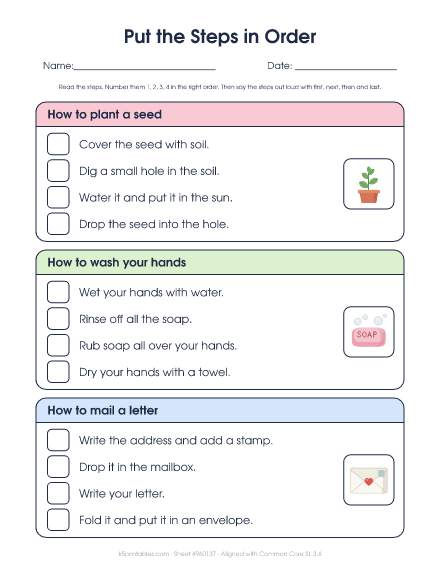 2. Put the Steps in OrderThree everyday how-to tasks with the steps mixed up, like brushing teeth or planting a seed. Includes an answer key.
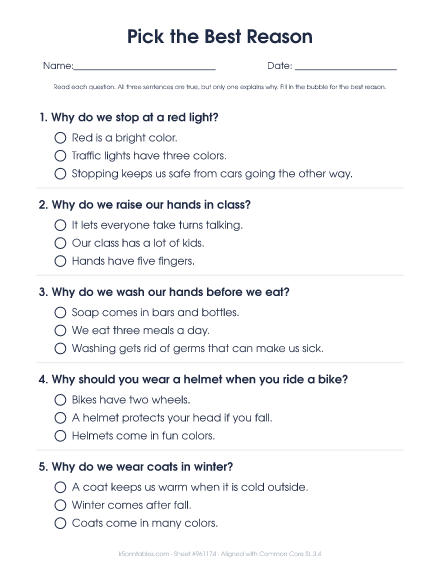 3. Pick the Best ReasonFive why questions, each with one real reason and two true facts that don't explain anything. Includes an answer key.
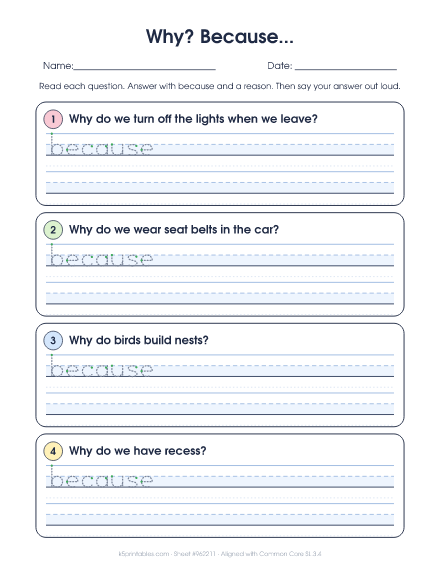 4. Why? Because...Four why questions with because to trace and handwriting lines for the reason. The answer key has example answers.
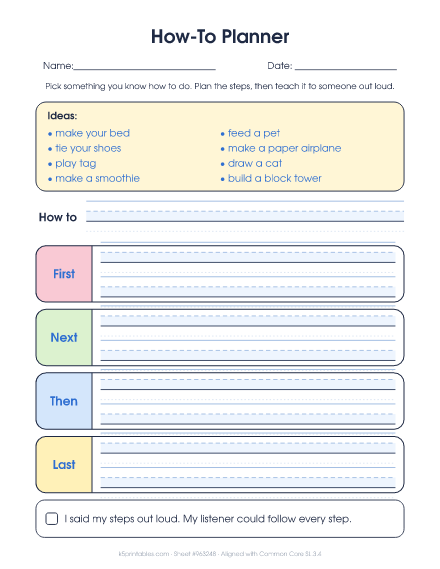 5. How-To PlannerA how-to planner with an idea list, a topic line and four step boxes, plus a check box for teaching it out loud.
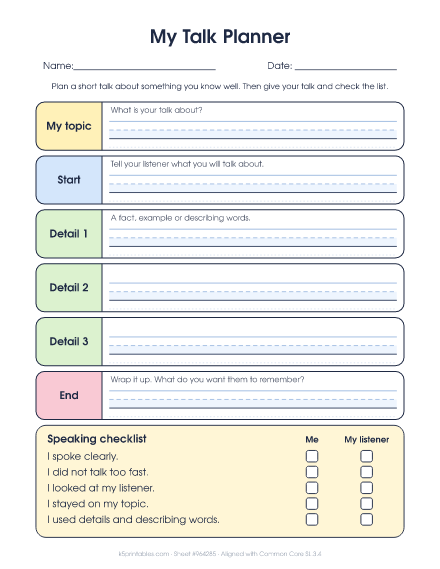 6. My Talk PlannerA planner for a short talk with a start, three details and an ending, plus a speaking checklist for the speaker and the listener.