Context Clues Chart
When you don't know a word, look at the words around it for clues.
Need more than one? Tap + for extra copies (up to 10).
How to do it
- Read each kind of clue.
- Look at the underlined clue in each example.
- Learn the clue words to watch for.
Teaching tip
Point out these clues when you read books together. This sheet is aligned with Common Core L.3.4a.
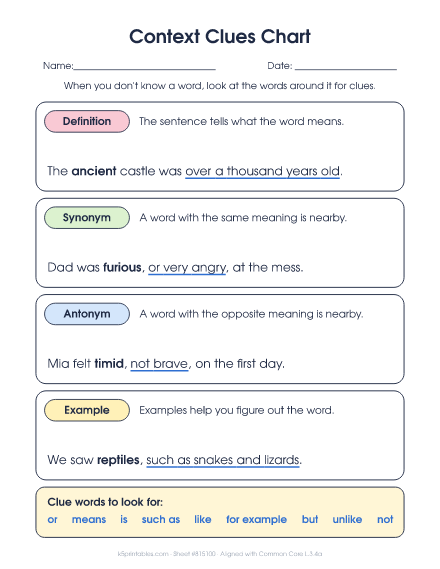
About this chart
Definition, synonym, antonym and example clues, each with a sample sentence and the clue underlined.
What kids practice
Context clues are the words around a new word that help explain what it means. A sentence might define the word, give a synonym or an opposite, or list examples. Third graders use these clues to figure out unknown words and to tell which meaning a multiple-meaning word has in a sentence.
Watch for
- Guessing from the first letters of the word instead of the clues.
- Missing an opposite clue, like "not brave," and guessing the reverse meaning.
- Using only the most common meaning of a multiple-meaning word.
It's free to print, as many copies as you need. See the full context clues guide for 3rd grade.
More sheets in this set
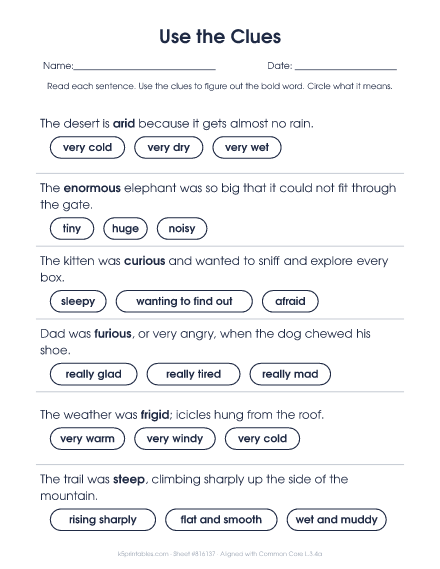 2. Use the CluesSentences with a bold word like enormous or timid. Circle its meaning from three choices.
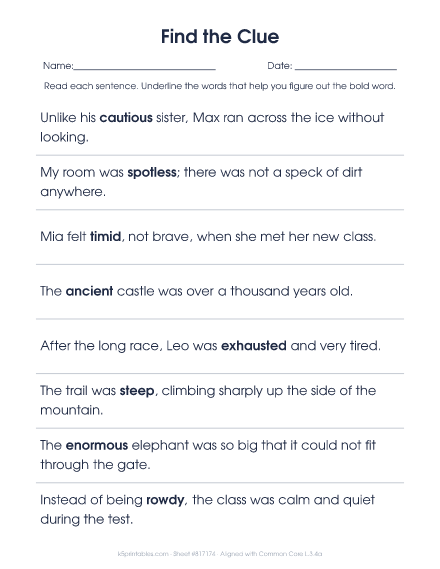 3. Find the ClueUnderline the words in each sentence that help explain the bold word.
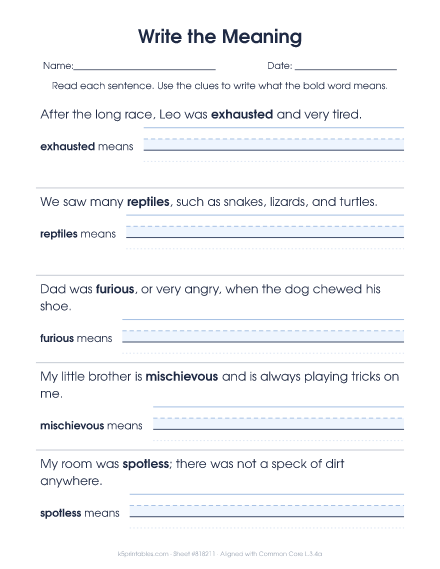 4. Write the MeaningWrite your own meaning for each bold word on a handwriting line.
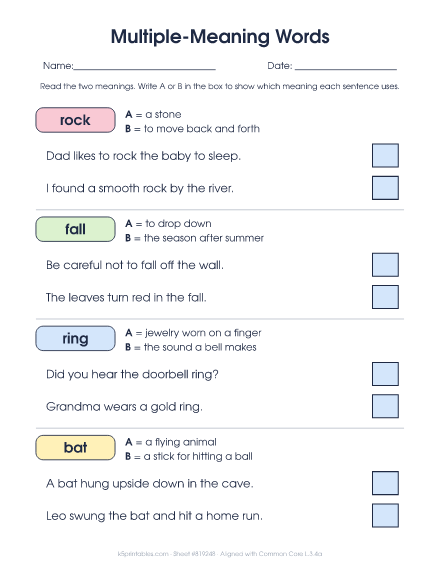 5. Multiple-Meaning WordsWords like bat, bark and trunk used two ways. Decide which meaning each sentence uses.