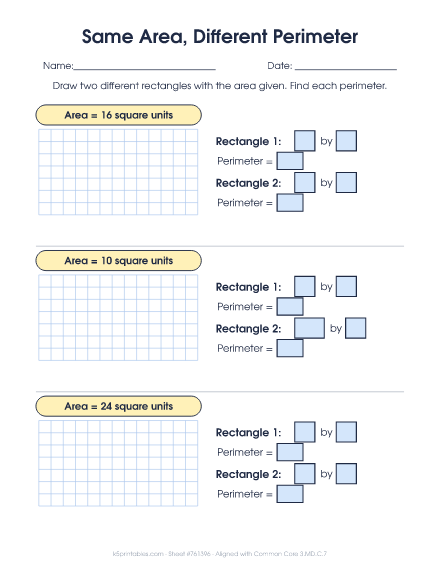
Same Area, Different Perimeter
Draw two different rectangles with the area given. Find each perimeter.
Fresh sheet anytime. Tap New sheet or reload for a different one. Tap + for up to 10.
This is sheet #76124601.
How to do it
- Read the area.
- Draw two different rectangles on the grid with that area.
- Find the perimeter of each one.
Teaching tip
There is more than one right answer. Long, thin rectangles have bigger perimeters. This sheet is aligned with Common Core 3.MD.C.7.
About this worksheet
Draw two rectangles with the same area on grid paper and compare their perimeters.
What kids practice
Area is the amount of space inside a flat shape, measured in square units. Perimeter is the distance all the way around a shape, measured in units of length. Third graders find area by counting squares and then by multiplying length × width. They find perimeter by adding the side lengths, and learn that two shapes can have the same area but different perimeters.
Watch for
- Mixing up area and perimeter. Area is inside; perimeter is around.
- Adding only the two labeled sides of a rectangle instead of all four.
- Writing area in plain units instead of square units.
It's free to print, with Fewer, Standard or More on the page and an answer key. See the full area and perimeter guide for 3rd grade.
More sheets in this set
- See it all
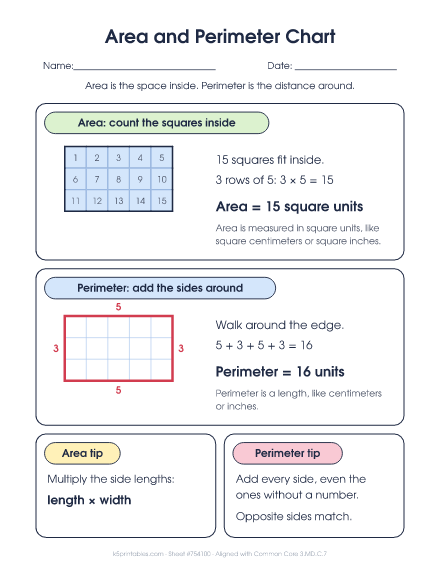 1. Area and Perimeter ChartThe same rectangle showing area (squares inside) and perimeter (sides around), with a tip for each.
- See it all
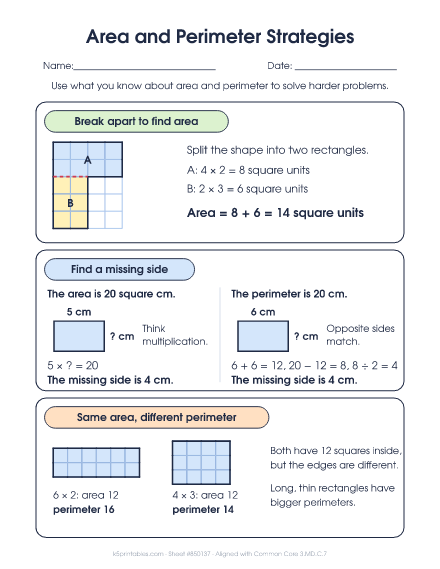 2. Area and Perimeter StrategiesBreaking shapes apart for area, finding a missing side from the area or perimeter, and same area with different perimeters.
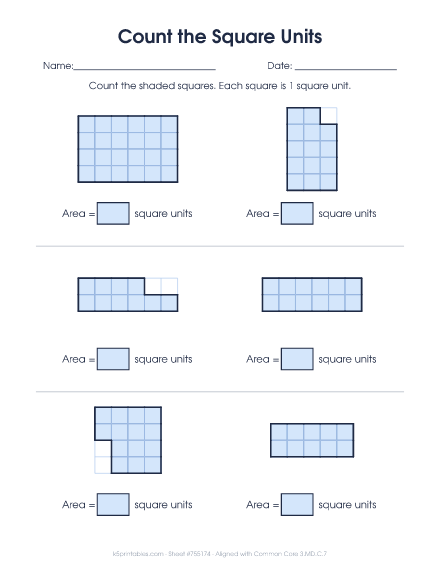 3. Count the Square UnitsShapes on grid paper. Count the shaded squares to find the area.
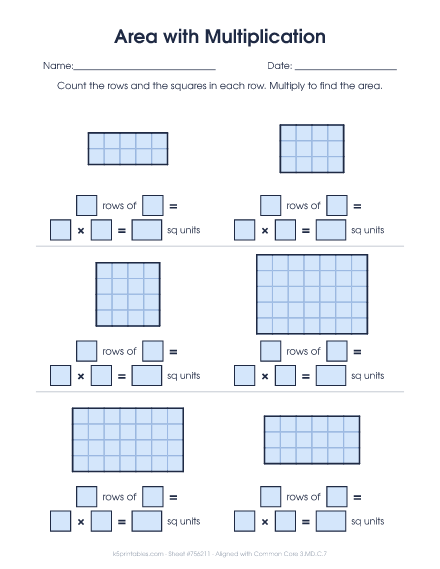 4. Area with MultiplicationRectangles on grid paper. Rows × squares in each row = area.
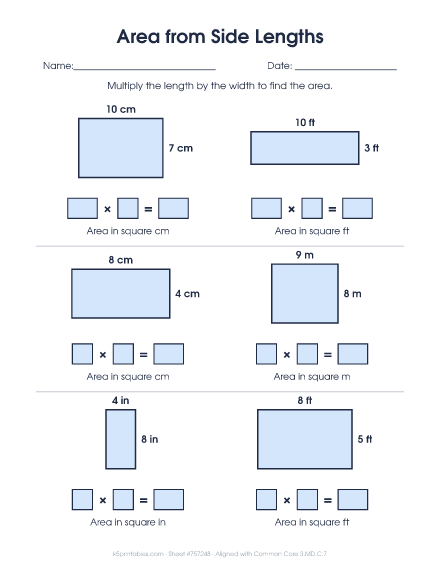 5. Area from Side LengthsRectangles with only the side lengths labeled, like 6 cm by 4 cm. Multiply to find the area.
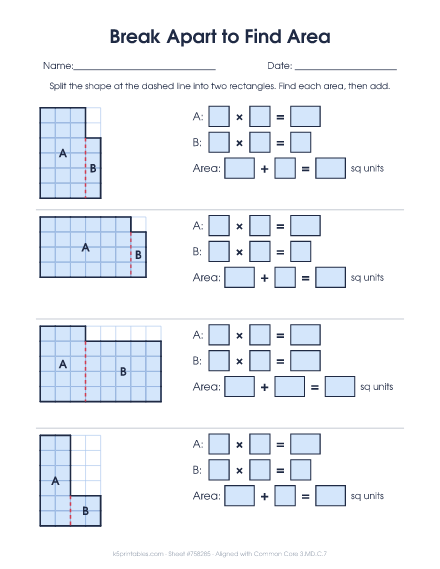 6. Break Apart to Find AreaL-shaped figures split into two rectangles. Find each area, then add.
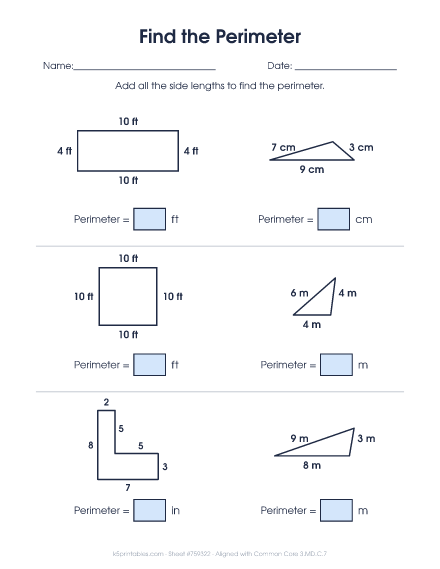 7. Find the PerimeterRectangles, triangles and L shapes with every side labeled. Add them for the perimeter.
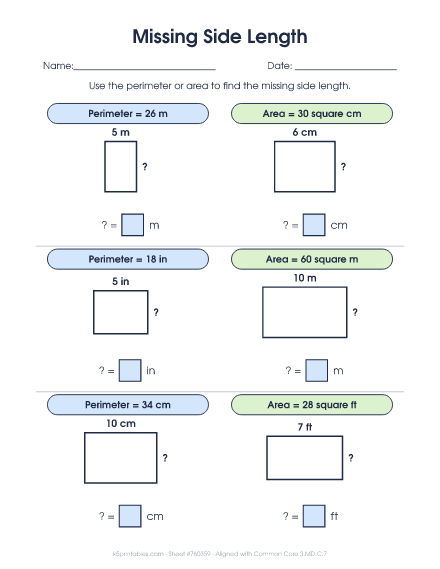 8. Missing Side LengthRectangles with the perimeter or area given and one side missing.