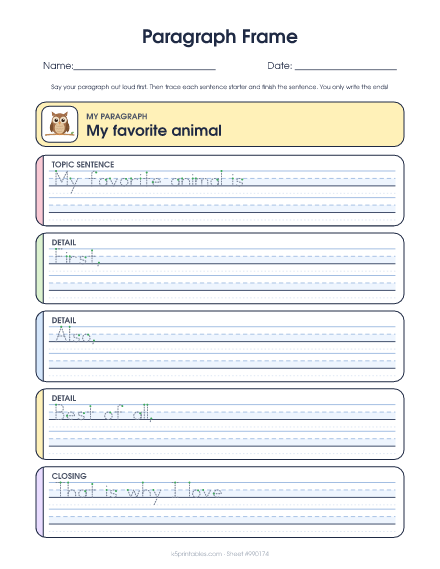
Paragraph Frame
Say your paragraph out loud first. Then trace each sentence starter and finish the sentence. You only write the ends!
Fresh sheet anytime. Tap New sheet or reload for a different one. Tap + for up to 10.
This is sheet #99024601.
How to do it
- Say your whole paragraph out loud first.
- Trace each sentence starter.
- Finish each sentence on the lines.
Teaching tip
It's fine to write a few words instead of a full sentence at first.
About this worksheet
A paragraph plan with a topic sentence, three details and a closing. Each part starts with a sentence starter to trace, so kids only write the ends. One of six topics.
What kids practice
In 3rd grade, kids write more: whole paragraphs, longer answers and 3-digit math. For kids who find handwriting slow, tiring or messy, including kids with dysgraphia, that can turn every assignment into a fight. These sheets lighten the load. Models are traced right above the writing line, sentence starters cut down how much kids write, colored chunks and boxes keep their place, and hand breaks are built in. They are not a test or a diagnosis. If writing is still much harder for your child than for other kids, talk with their teacher or ask about an evaluation with an occupational therapist.
Watch for
- Gripping the pencil too tightly. Shake out the hand and try a lighter pinch.
- Copying from far away, like the board. Keep the model right above the writing line.
- Long writing jobs with no breaks. Use the hand breaks on the stamina ladder.
- Numbers drifting out of their columns in math. Use the place-value boxes.
- Judging ideas by how neat they look. A messy page can still hold great thinking.
It's free to print, as many copies as you need. See the full handwriting helpers (dysgraphia-friendly) guide for 3rd grade.
More sheets in this set
- See it all
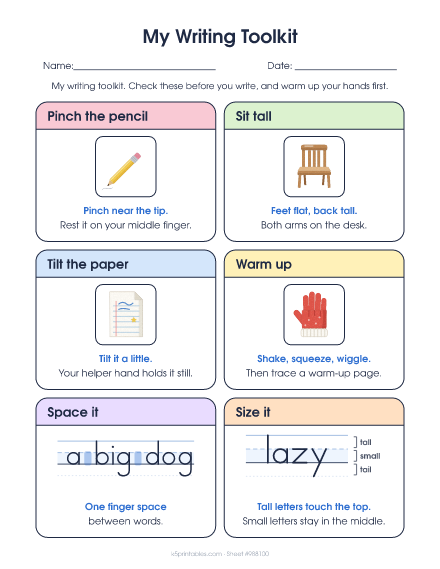 1. My Writing ToolkitA poster with six handwriting tools (pencil grip, sitting tall, paper tilt, warming up, spacing and letter size), with pictures and examples.
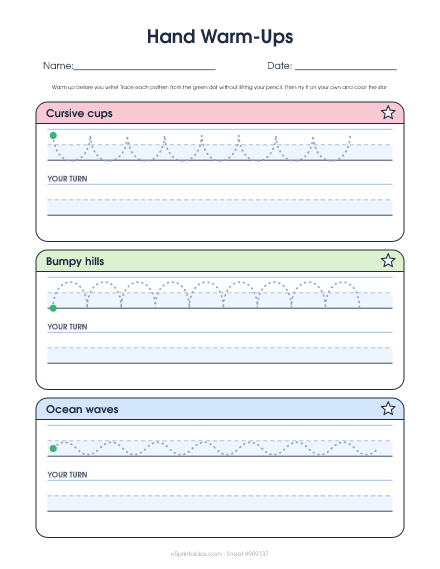 2. Hand Warm-UpsFun patterns to trace, like waves, loops, hills, zigzags and cups, with movements like the ones used in cursive. Three patterns per page and no letters to write.
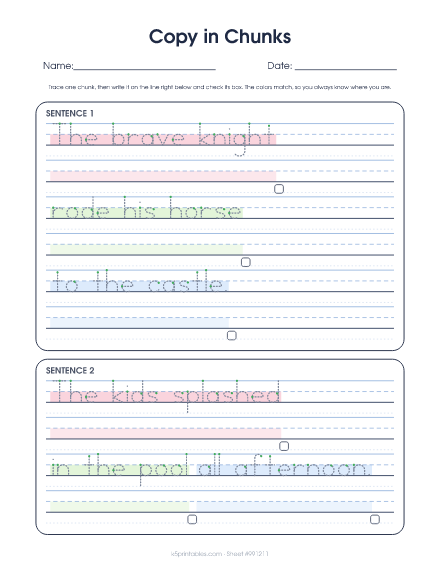 4. Copy in ChunksTwo sentences split into colored chunks. Each chunk is traced, then written right below it on a matching colored band.
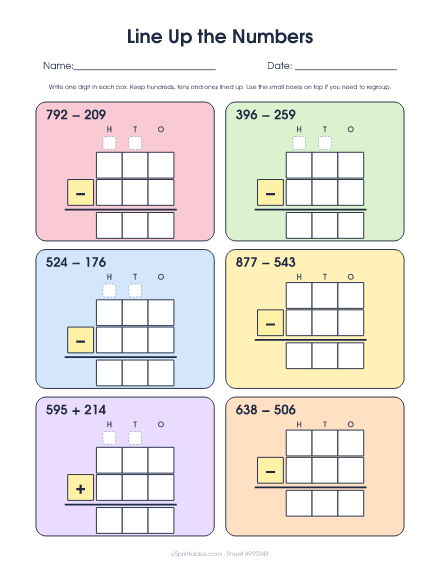 5. Line Up the Numbers3-digit adding and subtracting problems in big hundreds, tens and ones boxes. Regroup boxes show up only on problems that need them. Fewer and More change how many. Includes an answer key.
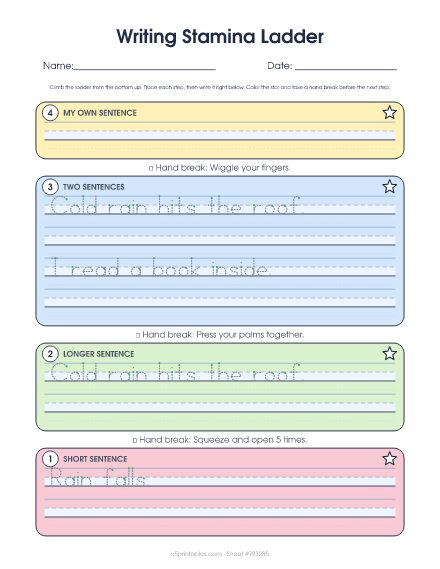 6. Writing Stamina LadderA four-step ladder from a short sentence to two sentences and then one of your own, with a star and a hand break at each step. One of six ladders.