Day and Night Sky Chart
The sky changes from day to night. Read about the sun, the moon and the stars.
Need more than one? Tap + for extra copies (up to 10).
How to do it
- Look at the day sky and the night sky.
- Name the moon shapes.
- Read the facts.
Teaching tip
Go outside at dusk and look for the first star.
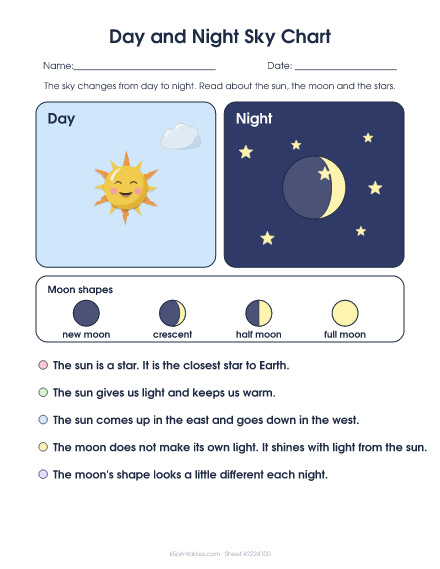
About this chart
The day and night sky, moon shapes from new to full, and simple facts about the sun and moon.
What kids practice
First graders notice patterns in the sky. The sun comes up in the east, is high at noon, and goes down in the west. The moon's shape seems to change from night to night, and we see the stars best at night.
Watch for
- Thinking the moon makes its own light. It reflects light from the sun.
- Thinking stars disappear in the day. They are there, but the sun is too bright to see them.
- Mixing up east and west. The sun comes up in the east.
It's free to print, as many copies as you need. See the full sun, moon and stars guide for 1st grade.
More sheets in this set
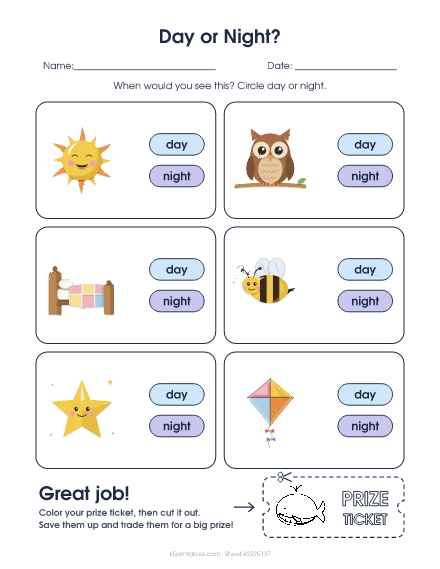 2. Day or Night?Sort pictures like the sun, a kite, the moon and an owl into day or night.
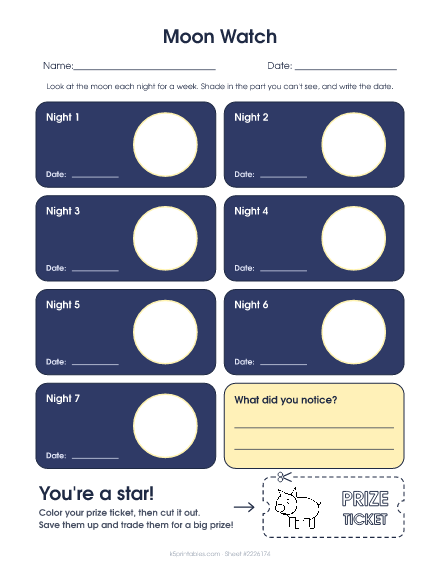 3. Moon WatchA one-week moon log with a circle to shade for each night and a space to write what you noticed.
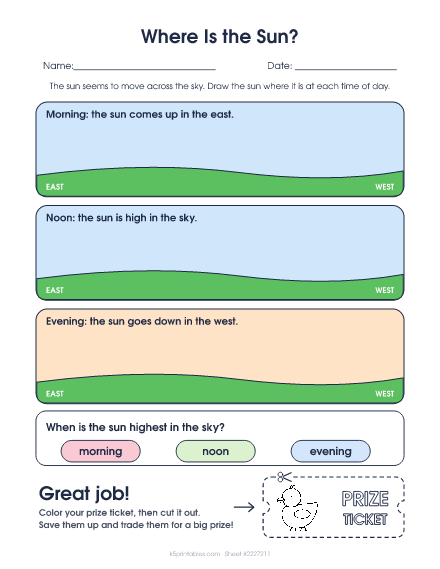 4. Where Is the Sun?Draw the sun low in the east in the morning, high at noon and low in the west in the evening.
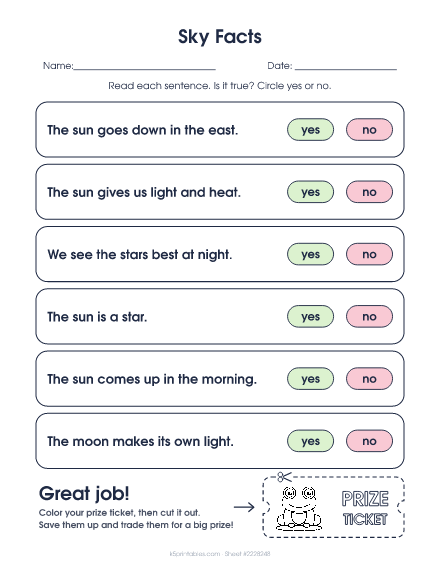 5. Sky FactsTrue or false sentences about the sun, moon and stars.
Helpful supplies (affiliate links)
Simple supplies that go with these sheets.
Flashlight
Follow the light for eye tracking games.
Find it on AmazonKids' binoculars
Look far away on a sense hunt.
Find it on AmazonKids' globe
Find the oceans, the land and where you live.
Find it on AmazonNonfiction books for kids
True books with headings, captions and diagrams.
Find it on Amazon