Short-vowel word families phonics worksheets
Aligned with Common Core RF.1.3b
Printable short vowel phonics worksheets for first grade: read and match pictures, sort words by family, real or silly words, read-down lists and read-and-draw sentences.
The worksheets
- See it all
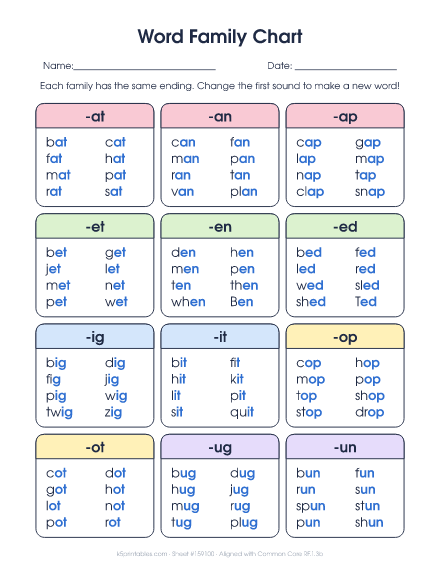
Word Family Chart
Twelve short-vowel word families with eight real words each, on one page.
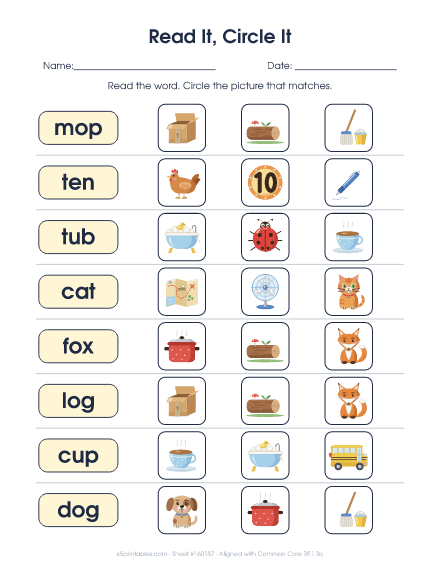
Read It, Circle It
Eight short-vowel words, each with three pictures that look alike or sound alike.
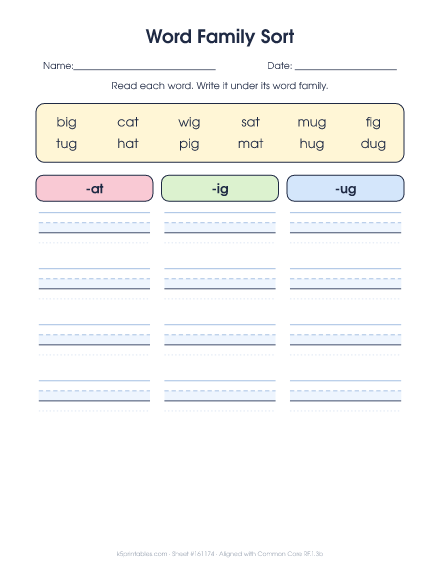
Word Family Sort
Twelve words to sort into three word families.
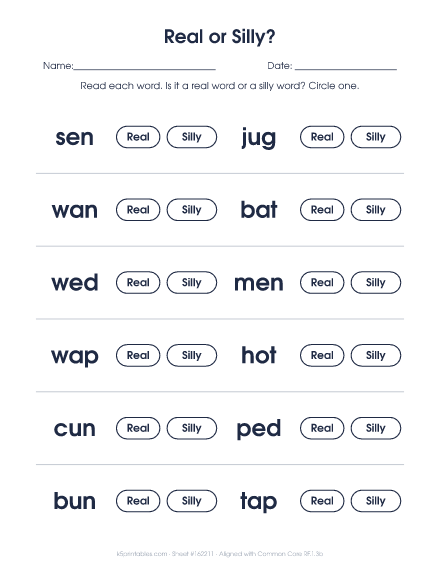
Real or Silly?
Twelve words from short-vowel families. Some are real and some are silly.
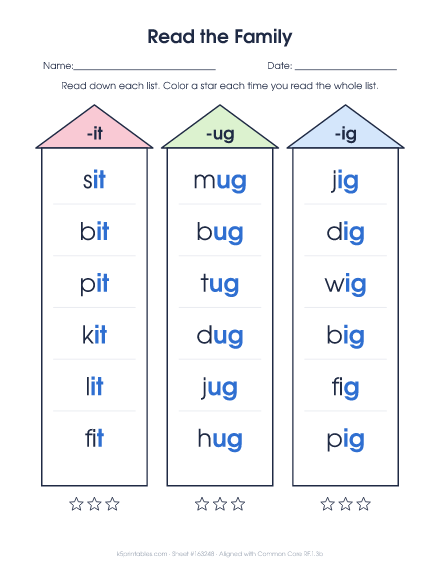
Read the Family
Three word family houses with six words each, the family chunk shown in blue.
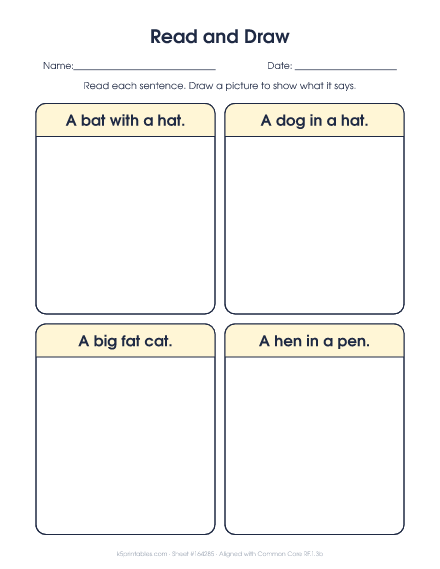
Read and Draw
Four silly decodable sentences like "A pig in a wig" to read and draw.
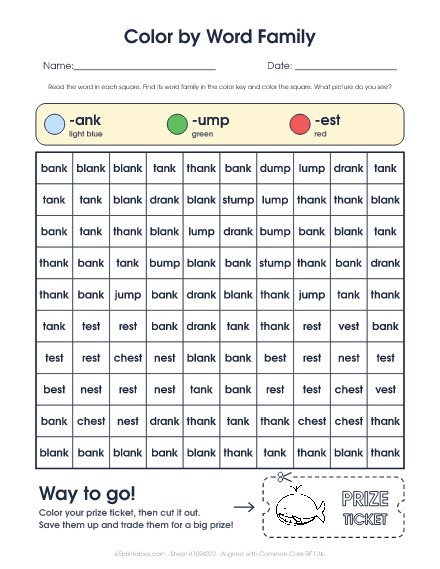
Color by Word Family
A hidden picture made of words from the -ack, -ing, -ill, -ank, -ump and -est families. Includes an answer key.
Print the whole packet
One copy of every sheet above, in order. Tap + for more copies (up to 10).
For the parent or teacher
What it is
A word family is a group of words that share the same ending chunk, like cat, hat and sat (the -at family). Once kids can read one word in a family, they can read the rest by changing the first sound. Short-vowel families (-at, -ig, -op, -ug, -en and more) are the first big step from sounding out letter by letter to reading chunks. Word families are a core part of first grade phonics.
What comes next
Blends and digraphs, where two letters work together at the start or end of a word.
How to teach it
- Read the chunk first. Point to -at and say "at". Then add the first sound: c... at, cat.
- Swap the first letter with magnetic letters or cards to make new words in the same family.
- Mix real and silly words. Reading silly words like zat proves your child is decoding, not guessing.
- Read the same lists more than once. Speed comes from repetition.
- Keep reading short, decodable sentences, so the words show up in real reading.
Common mistakes
- Guessing from the first letter (seeing c and saying cup for cat). Ask them to look at the whole word.
- Mixing up short e and short i, like reading pen as pin.
- Reading the chunk but forgetting the first sound. Have them slide a finger under the whole word.