Eye and visual exercises
Ages 5 to 12
Printable eye and visual exercise sheets for kids: a how-to guide, number and letter scanning grids, a b d p q grid, a near and far chart, a letter hunt, follow-the-path tracking, lazy 8 tracing and a balloon keep-up card. The grids and tracking pages come in four versions, so a laminated sheet prints the same every time.
The printables
- See it all
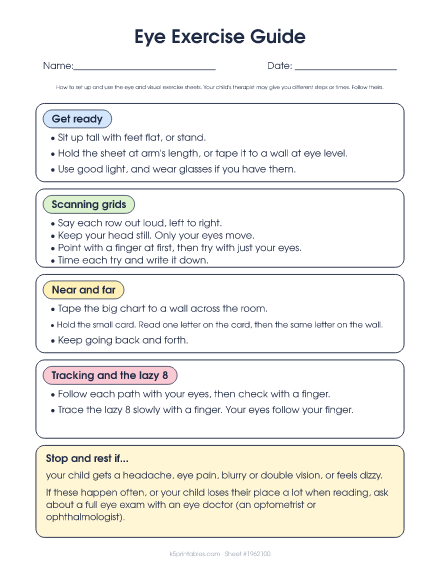
Eye Exercise Guide
How to set up and use the eye and visual exercise sheets: getting ready, scanning grids, near and far, tracking and the lazy 8, and when to stop and rest.
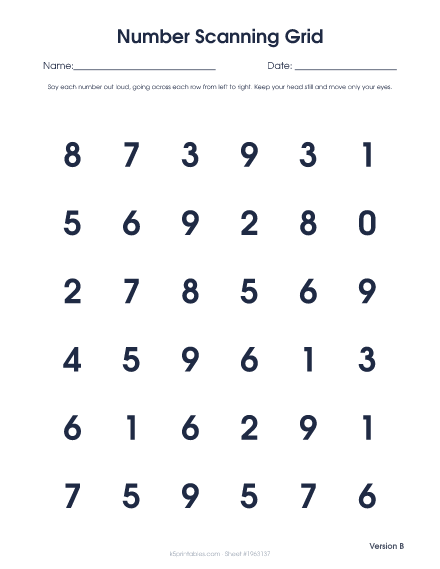
Number Scanning Grid
Six rows of large numbers to read across, left to right. Comes in four versions, A to D.
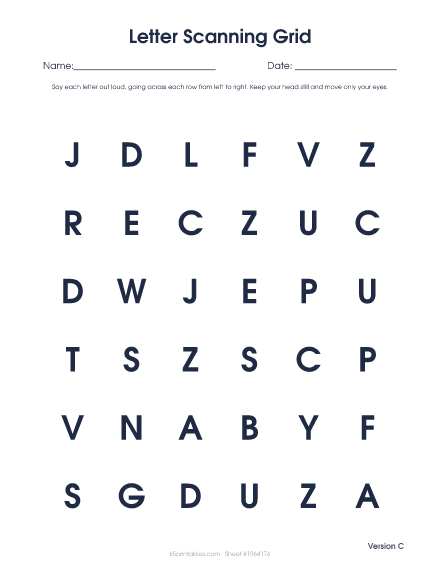
Letter Scanning Grid
Six rows of large capital letters to read across, left to right. Comes in four versions, A to D.
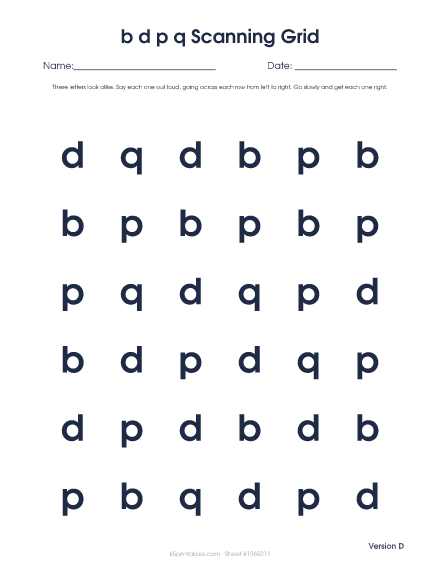
b d p q Scanning Grid
Six rows of the look-alike letters b, d, p and q to read across. Comes in four versions, A to D.
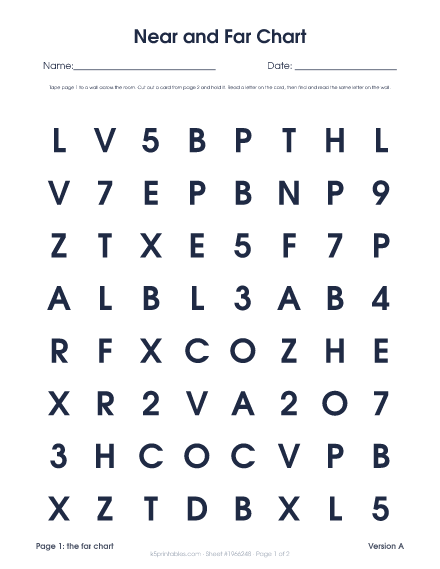
Near and Far Chart
Two pages: a large chart for the wall and four small matching cards to hold. Comes in four versions, A to D. Print the wall chart and the cards in the same version.
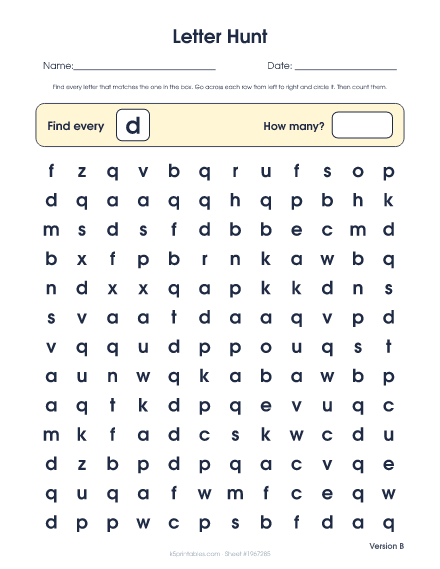
Letter Hunt
A page of letters with lots of look-alikes, to find and circle every b, d, p or q. Comes in four versions, A to D, each with a different letter. Includes an answer key.
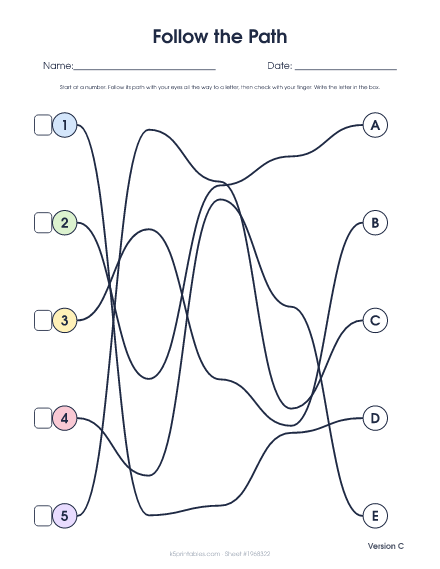
Follow the Path
Five crossing paths from numbers to letters, to follow with the eyes. Comes in four versions, A to D. Includes an answer key.
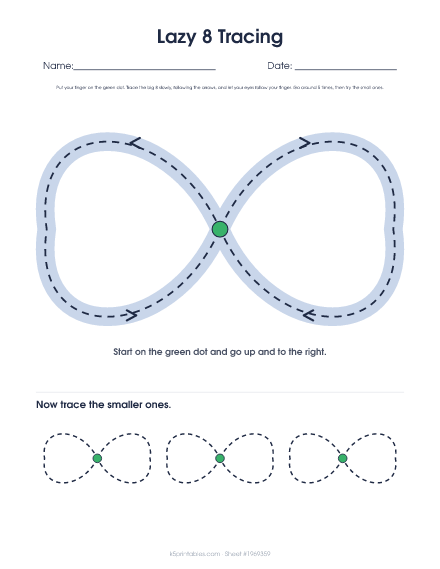
Lazy 8 Tracing
A large sideways 8 to trace with a finger while the eyes follow, plus three small ones.
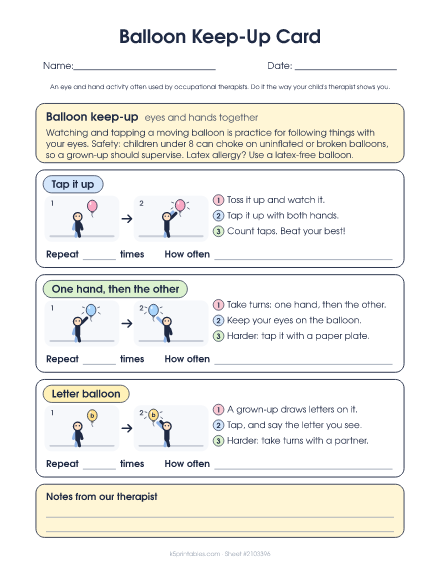
Balloon Keep-Up Card
Three balloon keep-up activities with pictures: tap it up, one hand then the other, and a letter balloon to call out while you tap. Includes balloon safety notes.
Print the whole packet
One copy of every sheet above, in order. Tap + for more copies (up to 10).
For the parent or teacher
What it is
These are visual scanning and tracking activities like the ones occupational therapists often send home: reading rows of numbers and letters while keeping the head still, switching focus between a near card and a far chart, finding one letter among look-alikes, following a path with the eyes, and tracing a lazy 8. They give practice moving the eyes smoothly and keeping your place. Use them the way your child's therapist suggests.
What comes next
The 1st grade Letter and number reversals topic has more b and d practice, and the 4th grade Reading helpers topic has reading guide strips.
How to use it
- Start with the Eye Exercise Guide. It explains how to set up and use each sheet.
- Keep sessions short, a few minutes at a time, and stop while it's still going well.
- Let your child point with a finger at first, then try with eyes only.
- Time each try and write it down. Look for steadier, smoother reading over time, not just speed.
- Laminate the sheets you use most. The version letter in the corner tells you which one to reprint.
- Follow your child's therapist's directions for how long and how often.
Watch for
- Turning the whole head instead of moving just the eyes.
- Skipping a row or reading one twice. A finger or a strip of paper under the row helps.
- Rushing for a faster time and making more mistakes.
- Headaches, eye pain, blurry or double vision, or dizziness. Stop and rest, and if it keeps happening, ask about an eye exam with an optometrist or ophthalmologist.
We made these printables to support the work you're doing with your child's occupational therapist. They're meant to go alongside professional care, not replace it. If an activity causes pain, dizziness or headaches, stop and check with your child's therapist or doctor.
Helpful supplies (affiliate links)
Simple supplies that go with these activities. Check with your child's therapist about what's right for your child.
Balloons
For the Balloon Keep-Up Card. A grown-up blows them up.
See it on AmazonFlashlight
Follow the light for eye tracking games.
Find it on AmazonSeek-and-find books
Find, name and describe things in busy pictures.
Find it on AmazonBean bags
Toss, catch and balance them.
Find it on Amazon