Executive function games
Ages 4 to 12
Printable executive function games for kids: a thinking skills chart, a play plan, story chain cards, freeze pose cards, Do the Opposite, a memory grid and a sort-it-two-ways card game.
The printables
- See it all
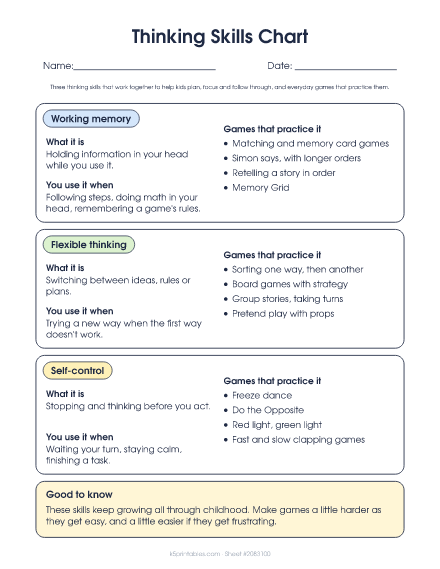
Thinking Skills Chart
A chart of three thinking skills, working memory, flexible thinking and self-control, with plain-words explanations and everyday games that practice each one.
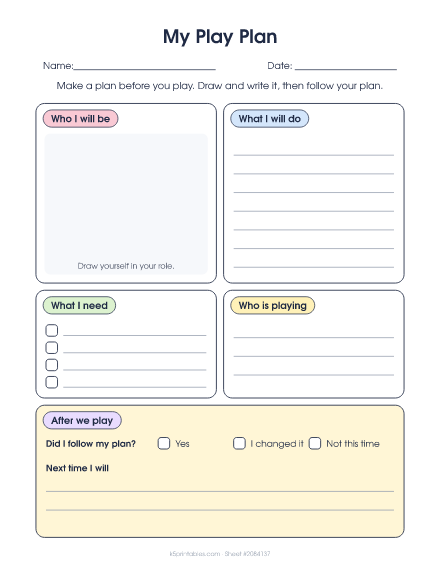
My Play Plan
A planning page for pretend play with boxes for who I will be, what I will do, what I need and who is playing, plus a look back after playing.
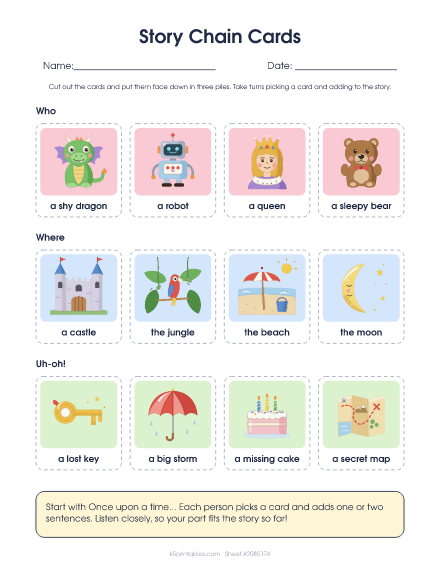
Story Chain Cards
Twelve picture cards in three piles, who, where and uh-oh, for building a group story one turn at a time.
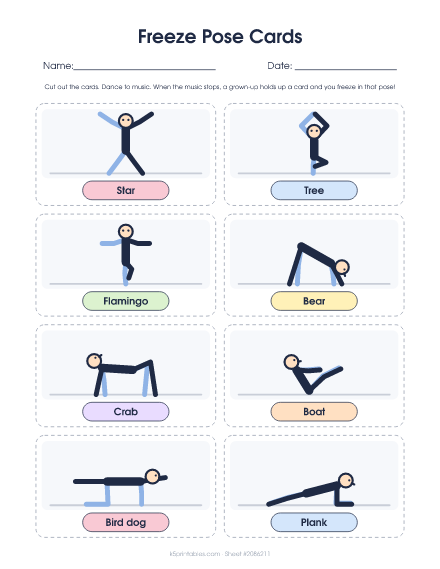
Freeze Pose Cards
Eight cut-apart pose cards for freeze dance: star, tree, flamingo, bear, crab, boat, bird dog and plank.
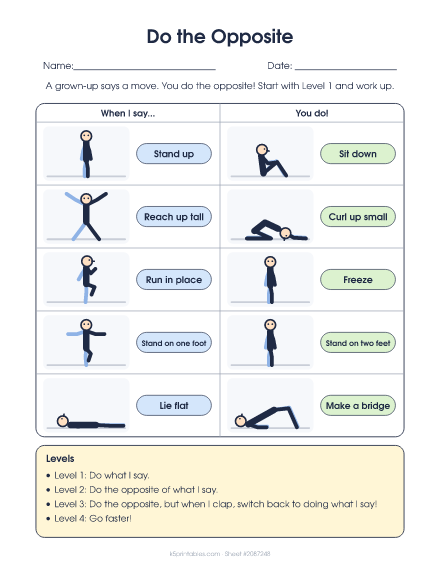
Do the Opposite
A movement game with five pairs of opposite moves, like stand up and sit down, with pictures and four levels from easy to tricky.
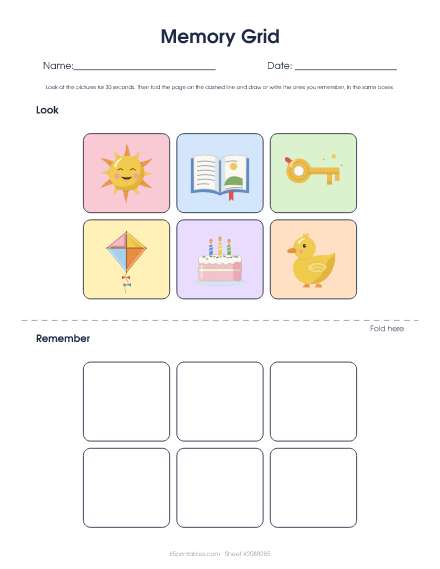
Memory Grid
A picture memory game with a grid to look at, a fold line and an empty grid to fill in. Each sheet has new pictures, and Fewer and More change the size of the grid.
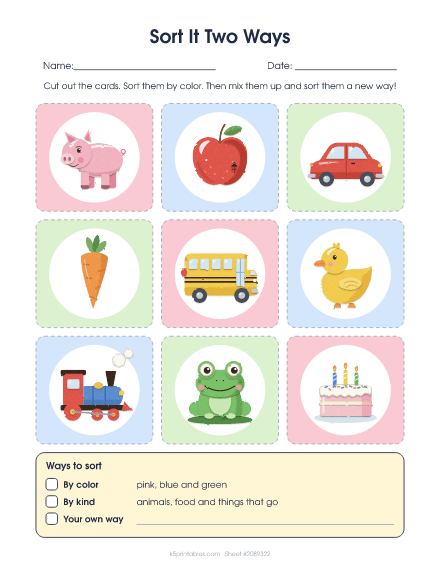
Sort It Two Ways
Nine picture cards in three colors and three kinds, animals, food and things that go, for sorting one way and then switching to another.
Print the whole packet
One copy of every sheet above, in order. Tap + for more copies (up to 10).
For the parent or teacher
What it is
Executive function is the set of thinking skills that help kids plan, focus, remember steps, switch gears and stop before they act. Three big ones are working memory, flexible thinking and self-control. Games are an easy, low-pressure way to practice them, and occupational therapists often use games like these with children. Every child is different, so use them the way your child's therapist suggests.
What comes next
The Movement and regulation topic in this section has breathing cards and a movement plan, and Learning Support in each grade has focus helpers for the school day.
How to use it
- Read the Thinking Skills Chart first, so you know which skill each game practices.
- Play each game the easy way first. Make it a little harder once it feels easy.
- Keep games short and fun. Stop while your child still wants to play.
- Talk about the thinking out loud, like "I'm making a plan" or "Let me try a new way."
- Use My Play Plan before pretend play, then look back at it together afterward.
Watch for
- Making a game too hard too fast. Success at an easy level builds confidence.
- Turning a game into a test. Keep the mood light and play along.
- Giving every answer. Wait a moment so your child has time to think.
- Only playing when your child is tired or upset. These games go best when everyone is calm.
We made these printables to support the work you're doing with your child's occupational therapist. They're meant to go alongside professional care, not replace it. If an activity causes pain, dizziness or headaches, stop and check with your child's therapist or doctor.
Helpful supplies (affiliate links)
Simple supplies that go with these activities. Check with your child's therapist about what's right for your child.
Picture memory game
Match pairs and remember where they are.
Find it on AmazonPlaying cards
For math facts games and memory games.
Find it on AmazonStrategy games for kids
Plan ahead and remember rules to win.
Find it on AmazonVisual timer
Shows how much time is left.
Find it on Amazon