Comparing length and weight worksheets
Aligned with Common Core K.MD.A.2
Printable kindergarten measurement worksheets: a longer, taller and heavier chart, longer or shorter, taller or shorter, heavy or light on a balance scale, and measure with cubes.
The worksheets
- See it all
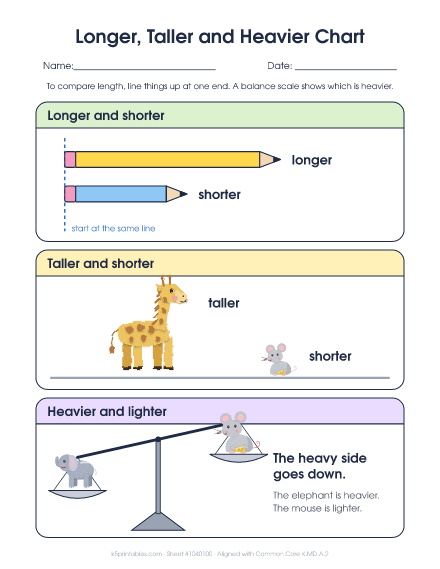
Longer, Taller and Heavier Chart
Pictures showing longer and shorter, taller and shorter, and heavier and lighter on a balance scale.
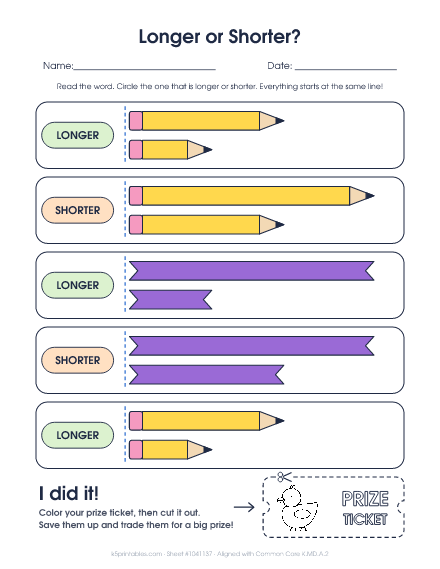
Longer or Shorter?
Pencils, ribbons and caterpillars lined up at a start line. The More setting compares three to find the longest or shortest.
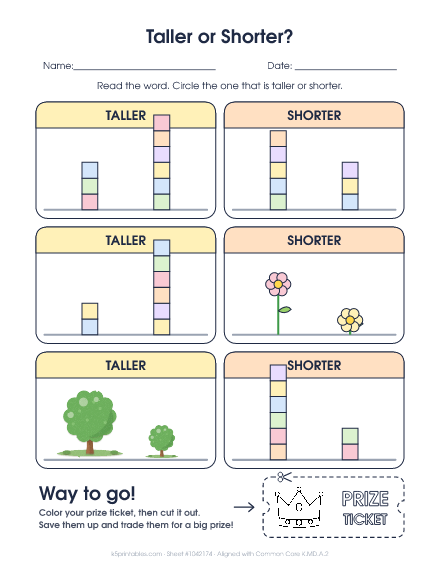
Taller or Shorter?
Six pairs of flowers, trees and block towers to compare by height.
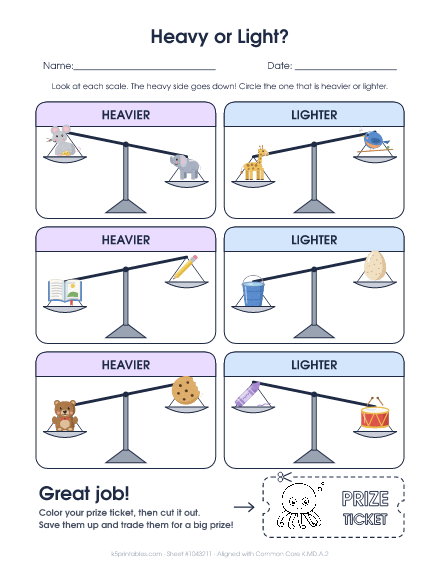
Heavy or Light?
Six balance scales with pairs like an elephant and a mouse.
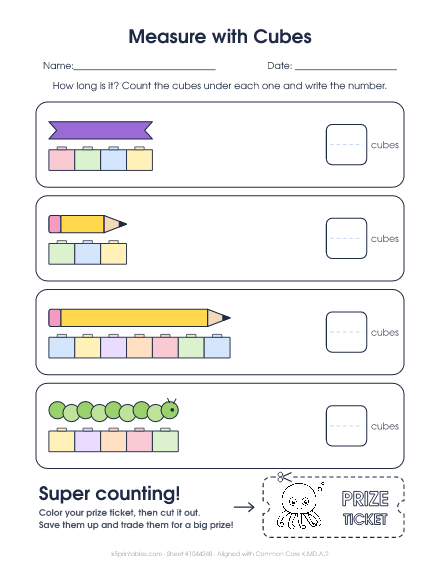
Measure with Cubes
Pencils, ribbons and caterpillars with cubes lined up underneath to count.
Print the whole packet
One copy of every sheet above, in order. Tap + for more copies (up to 10).
For the parent or teacher
What it is
Kindergartners compare two things to see which is longer, taller or heavier. They learn to line things up at one end before comparing length, and that the heavy side of a balance scale goes down.
What comes next
Sorting and picture graphs.
How to teach it
- Line things up at the same starting point, like two pencils on the edge of a table.
- Use real things. Which is taller, you or the chair?
- Hold one thing in each hand and guess which is heavier, then check with a simple scale.
- Measure with cubes or paper clips laid end to end with no gaps.
Common mistakes
- Comparing length without lining up the ends.
- Thinking bigger always means heavier.
- Leaving gaps between cubes when measuring.