Handwriting helpers (dysgraphia-friendly) worksheets
Printable handwriting helpers for kindergarten: a ready-to-write chart, finger warm-up cards, paths that get narrower, big dot-to-dot shapes, cutting strips and giant rainbow letters.
The worksheets
- See it all
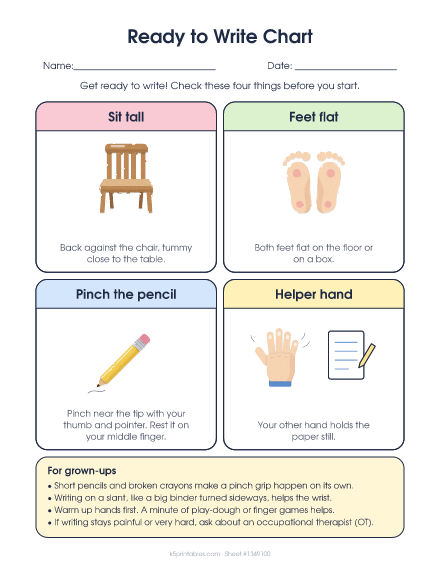
Ready to Write Chart
Four things to check before writing: sit tall, feet flat, pinch the pencil and a helper hand on the paper, plus tips for grown-ups.
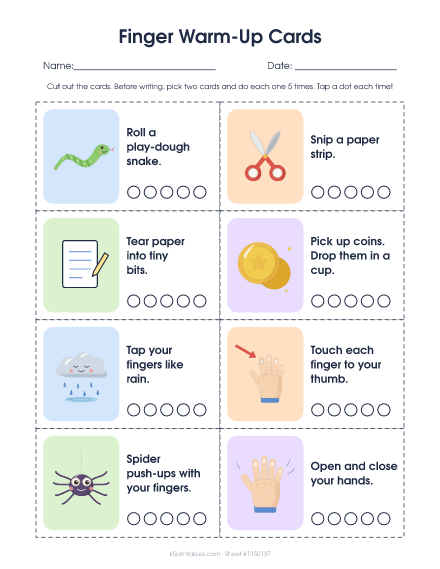
Finger Warm-Up Cards
Eight hand warm-ups like squeeze a sponge, roll a play-dough snake and tear paper into bits.
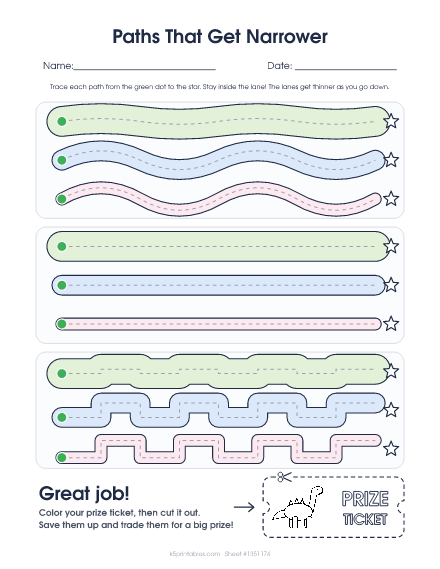
Paths That Get Narrower
Straight, wavy, zigzag, hill and step paths, each in three lanes that go from wide to narrow.
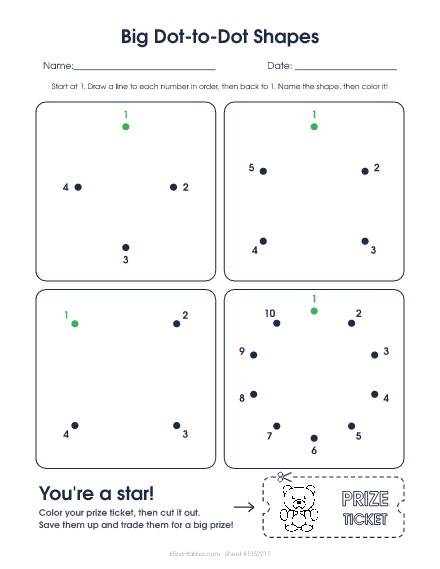
Big Dot-to-Dot Shapes
Four big numbered dot-to-dot shapes, like a square, triangle, house or star.
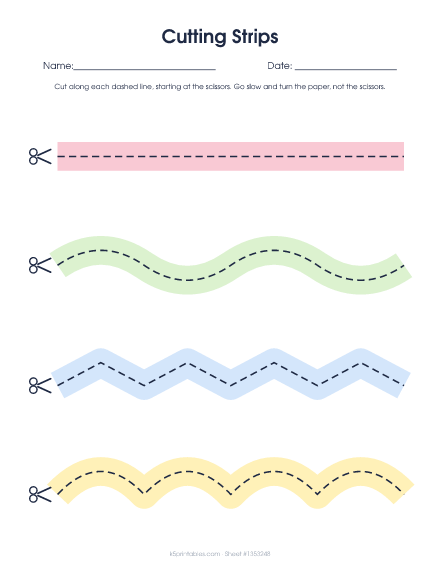
Cutting Strips
Wide colored strips with dashed lines to cut: straight, wavy, zigzag and hills. Fewer has easier lines, More has trickier ones.
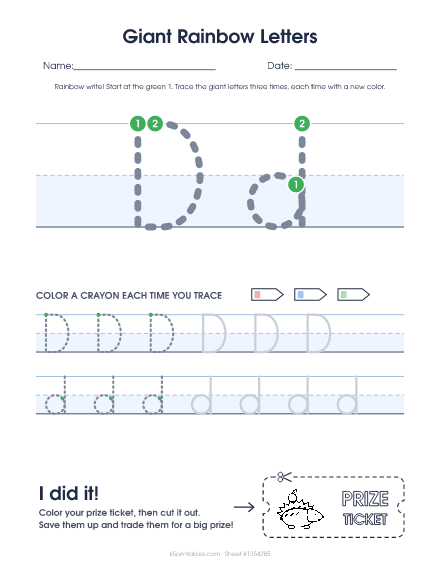
Giant Rainbow Letters
One giant uppercase and lowercase letter with numbered start dots, plus a row of each to trace and write. Reload for a new letter.
Print the whole packet
One copy of every sheet above, in order. Tap + for more copies (up to 10).
For the parent or teacher
What it is
These sheets build the hand strength, control and habits that make writing easier. They warm up little hands, practice staying in the lines, and teach where each letter starts. They help many children, with or without dysgraphia. They are not a test and not a diagnosis. Messy, slow writing is normal in kindergarten.
What comes next
Use these helpers alongside the kindergarten writing topics, like Pre-writing strokes and tracing.
How to teach it
- Warm up first. A minute of finger games or play-dough helps hands get ready.
- Check the setup. Sitting tall, feet flat and a pinch grip make writing easier.
- Go big before small. Big paths and giant letters come before small lines.
- Keep it short. A few minutes of careful practice beats a long, tired page.
Common mistakes
- Starting letters at the bottom. Point to the green start dot every time.
- Gripping the pencil with a fist. Try a short pencil or broken crayon so a pinch grip happens on its own.
- Pushing through tired, sore hands. Take a break and come back.
- Waiting a long time to ask for help. If writing stays painful or very hard, ask about an occupational therapist (OT).