Reading helpers (dyslexia-friendly) worksheets
Printable reading supports for fourth graders: a stuck-on-a-word bookmark, flexing vowel sounds, checking word endings, passages with long words split into parts, read-with-me and audiobook logs, reading guide strips and a what-helps-me-read page to share with a teacher.
The worksheets
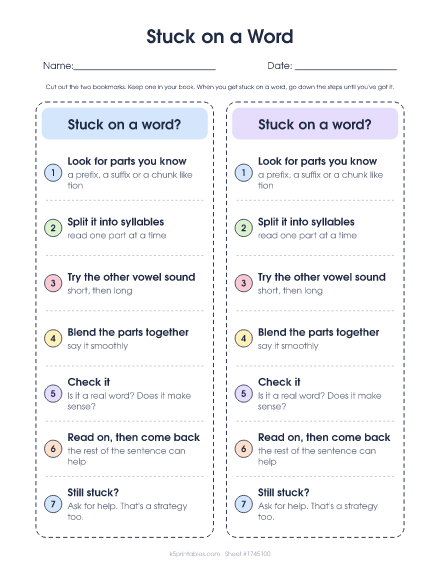
Stuck on a Word
Two cut-out bookmarks with seven steps for tricky words, from looking for parts you know to reading on and asking for help.
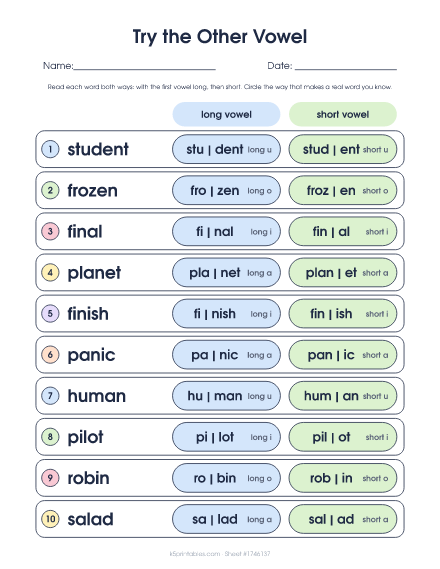
Try the Other Vowel
Two-syllable words like ro|bot and cab|in, shown split both ways, to read and pick the real word. Fewer has 8, Standard has 10 and More has 12. Includes an answer key.
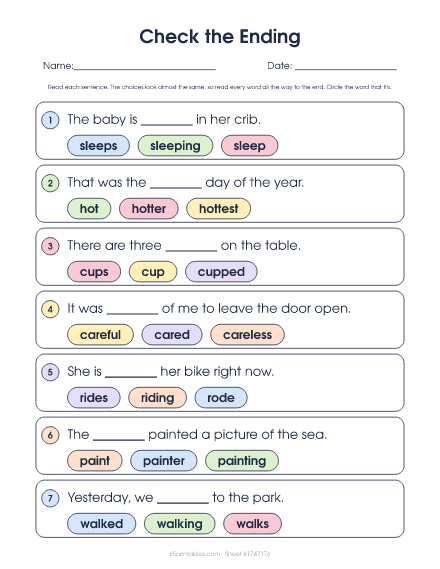
Check the Ending
Sentences with near-miss choices like walked, walking and walks to pick from. Fewer has 6, Standard has 7 and More has 8. Includes an answer key.
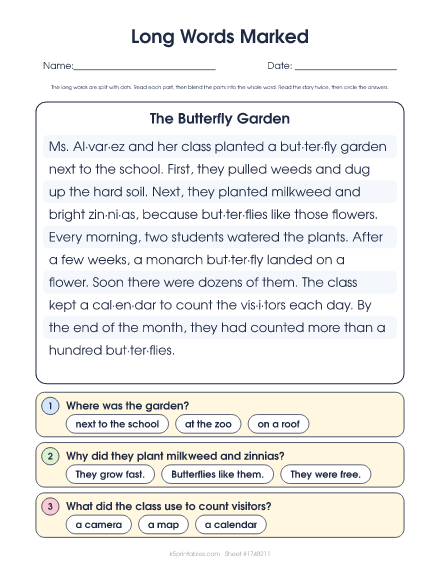
Long Words Marked
A short large-print story with its long words split into syllables, shaded lines to keep your place and three questions. New sheet changes the story. Includes an answer key.
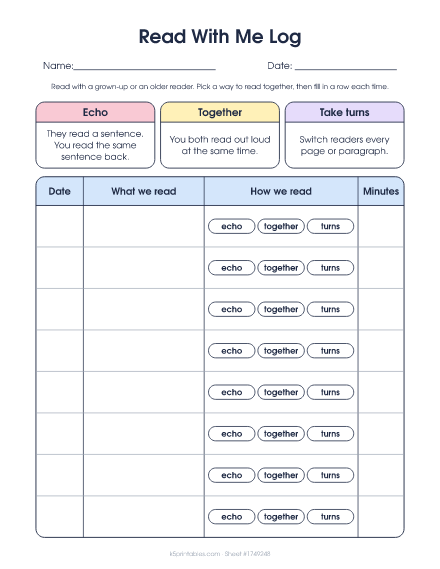
Read With Me Log
Three ways to read with someone, plus a log for the date, what you read, how you read it and for how long.
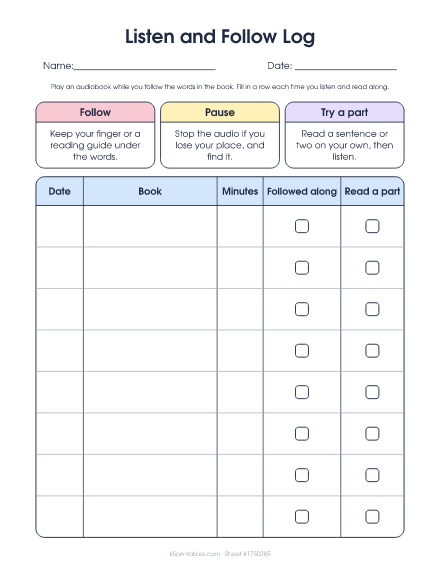
Listen and Follow Log
Tips for reading along with an audiobook, plus a log for the date, book, minutes, following along and reading a part yourself.
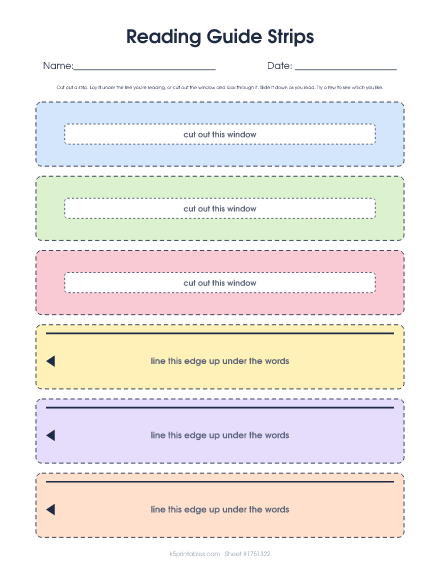
Reading Guide Strips
Six cut-out reading guides in different colors, three with a window to cut out and three with an edge to line up under the words.
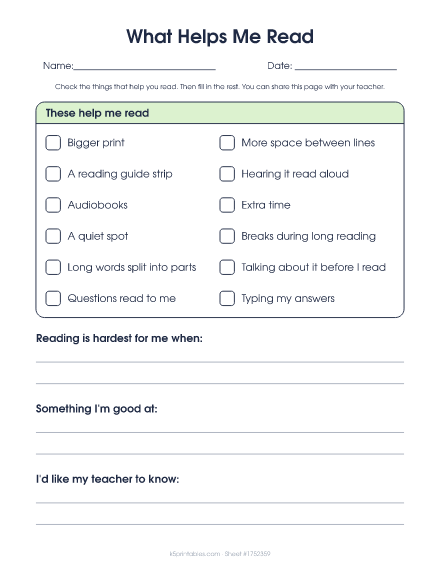
What Helps Me Read
A checklist of reading supports like bigger print, audiobooks and extra time, plus space to tell a teacher what helps.
Print the whole packet
One copy of every sheet above, in order. Tap + for more copies (up to 10).
For the parent or teacher
What it is
These are supports for kids who work hard to read words accurately and smoothly. By 4th grade, texts are full of long words, and kids are expected to read more on their own. These sheets give a plan for tricky words, practice with two habits that trip readers up (picking the right vowel sound and reading all the way to the end of a word), scaffolded passages with long words already split, and logs for shared reading and audiobooks so kids keep enjoying books while their decoding catches up. The print is large with extra spacing. These sheets can help many children, with or without dyslexia. They are not a test and not a diagnosis. If reading worries you, talk with your child's teacher or doctor about an evaluation.
What comes next
The Multisyllable words and Fluency passages topics in 4th grade Reading give more practice with long words and reading smoothly.
How to teach it
- Teach in order or jump to whatever your student needs. A student may split long words well and still be building the habit of reading word endings.
- Keep the Stuck on a Word bookmark in every book and point to a step instead of saying the word.
- Read the marked passages more than once. The second read is usually smoother.
- Count audiobooks and shared reading as real reading. They build vocabulary and a love of stories.
- Fill in What Helps Me Read together and share it with your child's teacher.
Common mistakes
- Guessing a long word from its first letters instead of reading every part.
- Sticking with the first vowel sound even when the word doesn't sound real.
- Dropping or changing word endings, like reading walked as walking.
- Pushing through long reading sessions without breaks.
- Treating slow reading as not trying. Decoding takes real effort.