Third-grade tricky words worksheets
Aligned with Common Core RF.3.3d
Printable third-grade tricky word worksheets: 50 common words that don't follow the usual spelling rules, like although, enough and people, with a chart, tracing, finding the tricky part, sentences and flash cards.
The worksheets
- See it all
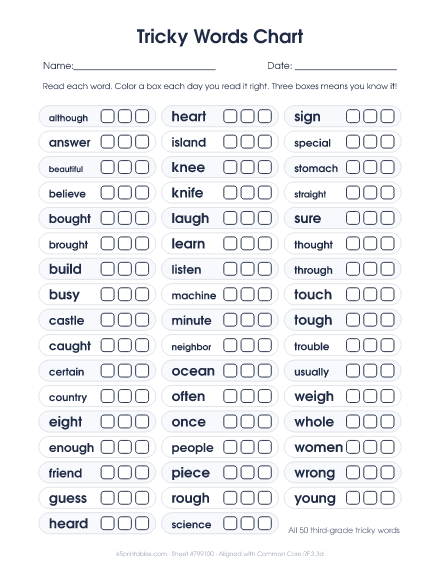
Tricky Words Chart
All 50 third-grade tricky words with boxes to track progress.
- See it all
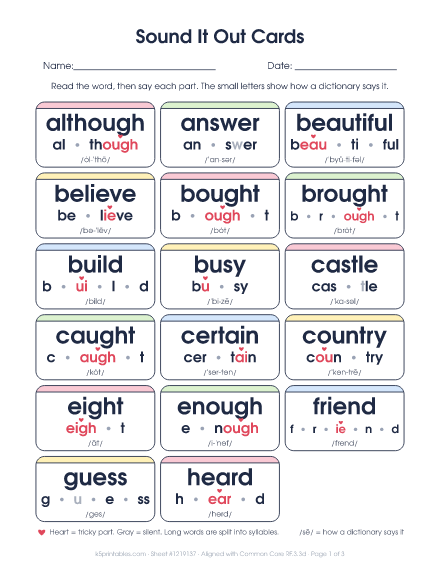
Sound It Out Cards
All 50 tricky words split into sounds or syllables, like a • gain, with the tricky part marked with a heart and how a dictionary says each word (3 pages).
- See it all
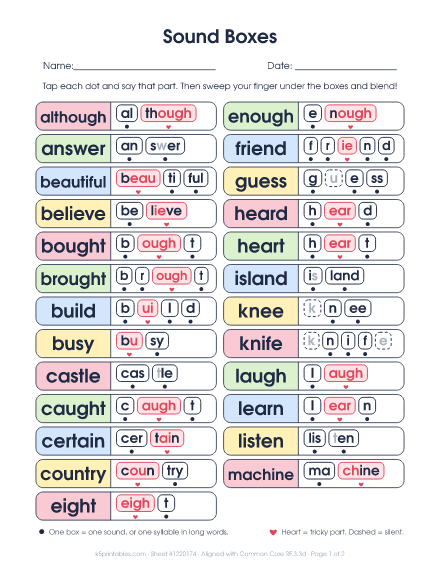
Sound Boxes
All 50 tricky words with one box for each sound or syllable and a dot to tap under each box (2 pages).
- See it all
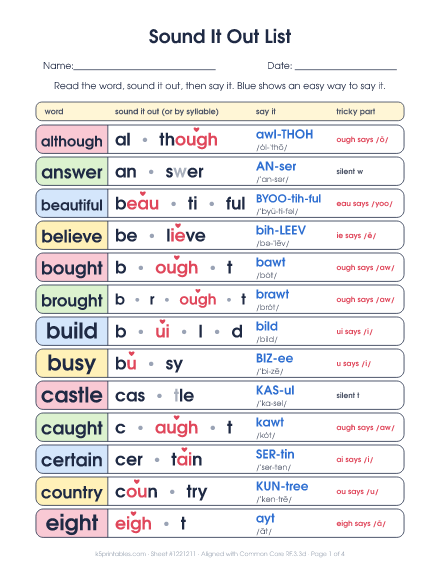
Sound It Out List
All 50 tricky words in a list with the sound parts, an easy "say it" spelling, how a dictionary says it, and what makes it tricky (4 pages).
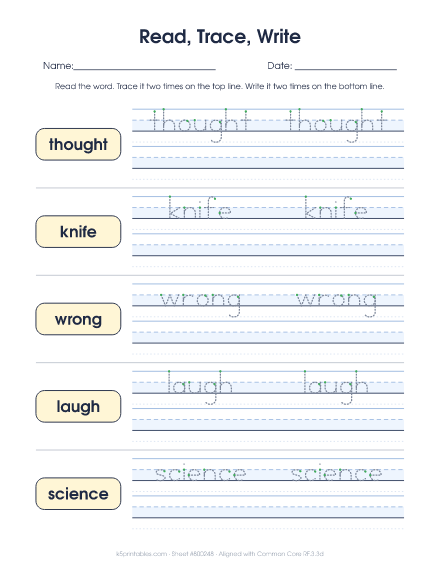
Read, Trace, Write
Read each tricky word, trace it twice, then write it twice on its own.
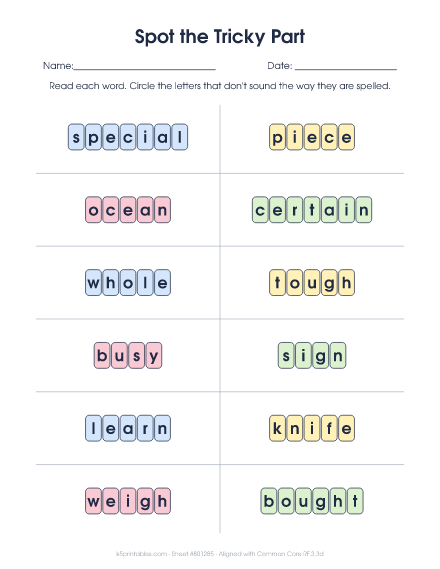
Spot the Tricky Part
Tricky words in letter tiles. Circle the part that doesn't follow the rules, like the ough in enough.
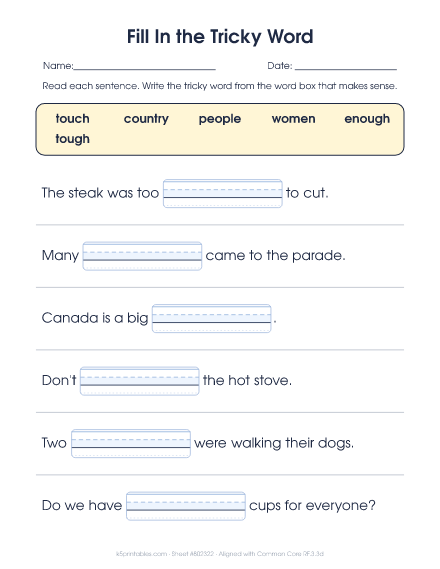
Fill In the Tricky Word
Sentences to complete with tricky words from a word box.
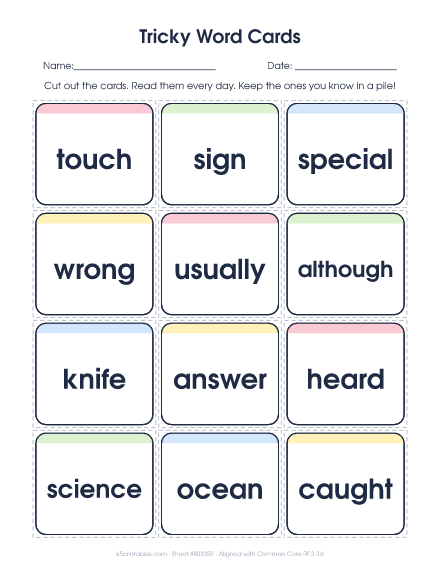
Tricky Word Cards
Twelve cut-out flash cards of third-grade tricky words.
Print the whole packet
One copy of every sheet above, in order. Tap + for more copies (up to 10).
For the parent or teacher
What it is
Tricky words are common words that are not spelled the way they sound, like enough, friend and island. Third graders learn to read and spell these words by heart. Most of each word still follows the rules, so it helps to find the one part that is tricky.
What comes next
Fluency passages.
How to teach it
- Say the word, then look for the part that doesn't match the sounds.
- Use a fun way to remember the tricky part, like "a friend is there to the end."
- Practice a few words at a time, not the whole list at once.
- Review the cards every day for a few minutes and move known words to a "got it" pile.
- Point out the words when you see them in books.
Common mistakes
- Spelling the word the way it sounds, like "enuf" for enough.
- Mixing up words that look alike, like though, through and thought.
- Skipping words that aren't used often, so they get forgotten.