Prefixes and suffixes worksheets
Aligned with Common Core RF.2.3d
Printable second-grade prefix and suffix worksheets: un-, re-, pre- and dis- at the start, -ful, -less, -ly and -er at the end, with word building, meanings and sentences.
The worksheets
- See it all
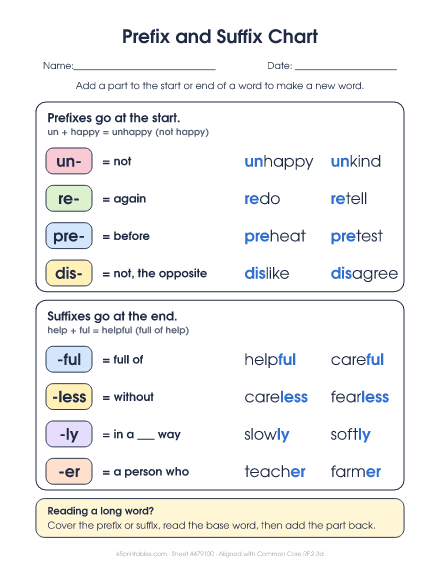
Prefix and Suffix Chart
un-, re-, pre- and dis-, and -ful, -less, -ly and -er, with meanings and example words.
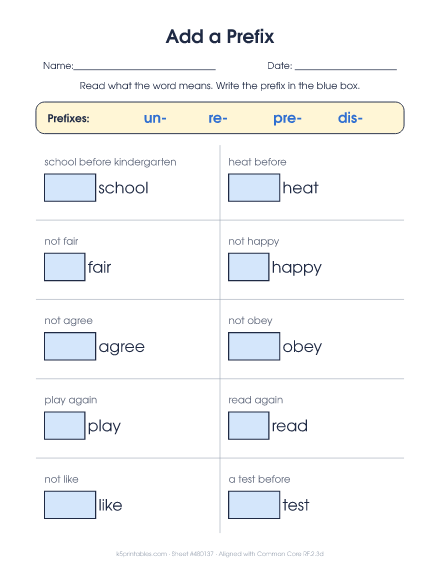
Add a Prefix
Words with a meaning above them. Write the prefix that makes that meaning.
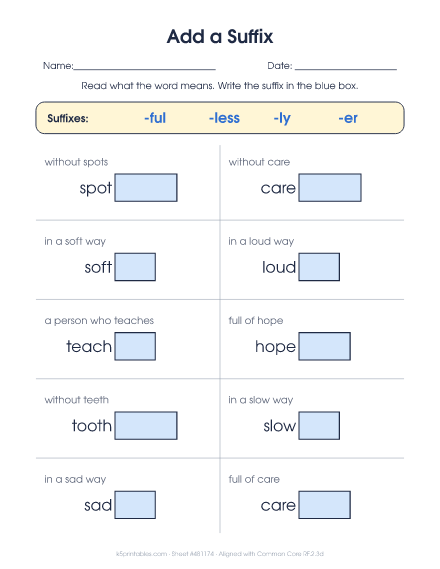
Add a Suffix
Base words with a meaning above them. Write the suffix that makes that meaning.
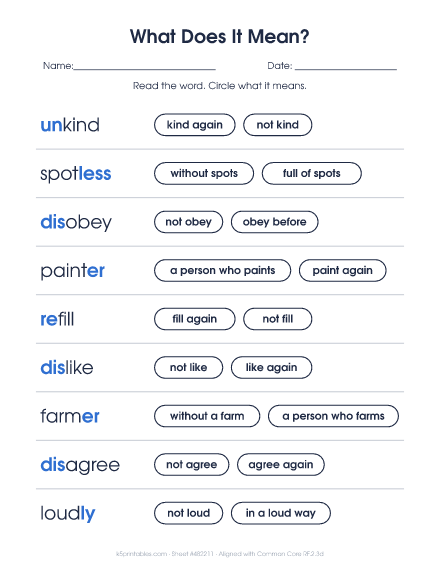
What Does It Mean?
Words with a prefix or suffix and two meanings to choose from.
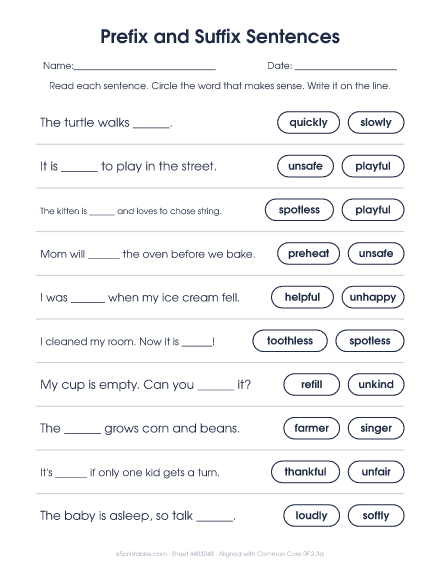
Prefix and Suffix Sentences
Sentences with a missing word. Pick the word with the prefix or suffix that fits.
Print the whole packet
One copy of every sheet above, in order. Tap + for more copies (up to 10).
For the parent or teacher
What it is
A prefix is a word part added to the start of a word, and a suffix is added to the end. Each one changes the meaning in a way you can learn: un- means not, so unhappy means not happy. -ful means full of, so helpful means full of help. Knowing these parts helps kids read and understand longer words.
What comes next
Contractions and compound words, two more ways small words join together.
How to teach it
- Start with a base word your child knows, like happy, then add the part and talk about the new meaning.
- Teach one prefix or suffix at a time, with two or three examples.
- When reading a long word, cover the prefix or suffix, read the base word, then add the part back.
- Make opposite pairs, like careful and careless, to show how the suffix changes the meaning.
Common mistakes
- Reading the prefix as part of the base word, like unhappy as "un-hap-py" without seeing happy.
- Mixing up -ful and -less, which mean almost opposite things.
- Thinking every word that starts with re or un has a prefix, like read or uncle.