Place value to 1,000 worksheets
Aligned with Common Core 2.NBT.A.1
Printable second-grade place value worksheets for numbers to 1,000: hundreds, tens and ones with base-ten blocks, quick drawings, expanded form, number words, the value of each digit, and comparing three-digit numbers.
The worksheets
- See it all
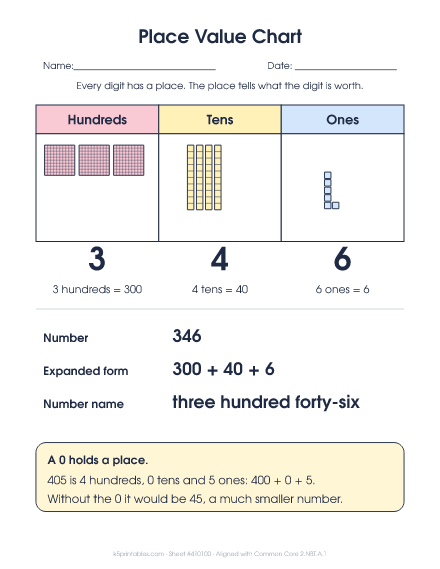
Place Value Chart
One number shown with blocks, digits, expanded form and words, plus why a 0 holds a place.
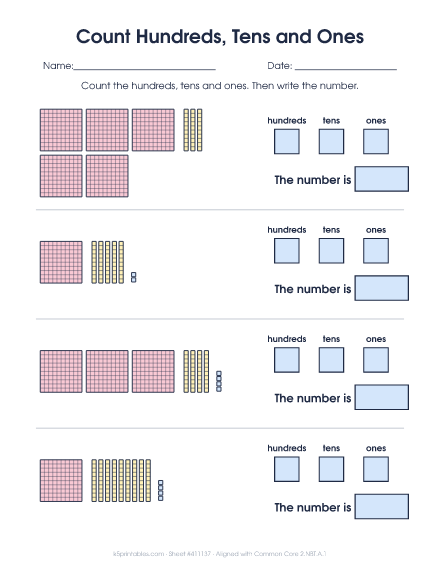
Count Hundreds, Tens and Ones
Base-ten blocks with hundred squares, ten rods and ones, with a place value chart to fill in.
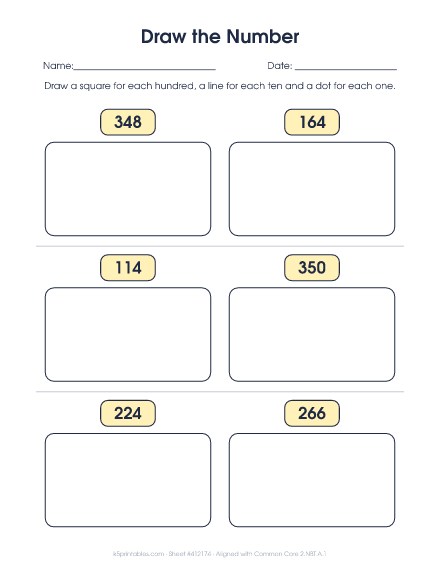
Draw the Number
Kids show each number with a quick drawing, the way they will sketch numbers on their own.
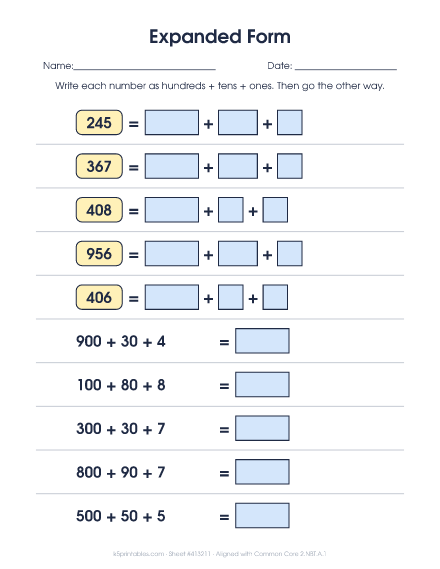
Expanded Form
Write numbers as hundreds + tens + ones, then go back from expanded form to the number.
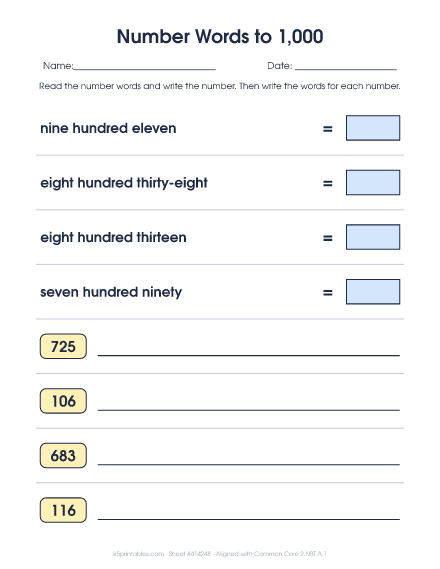
Number Words to 1,000
Match number names and numbers to 1,000, both ways.
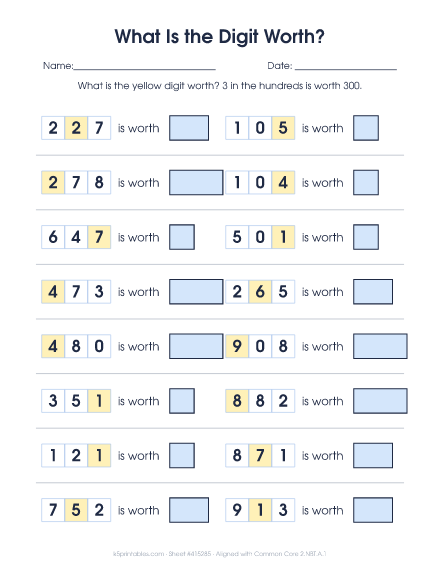
What Is the Digit Worth?
Find the value of one digit in a three-digit number.
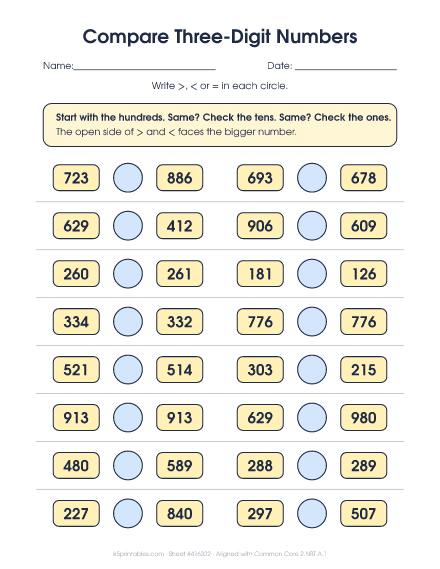
Compare Three-Digit Numbers
Compare pairs of three-digit numbers, many with the same hundreds or tens so kids look past the first digit.
Print the whole packet
One copy of every sheet above, in order. Tap + for more copies (up to 10).
For the parent or teacher
What it is
In a three-digit number like 346, the 3 means 3 hundreds, the 4 means 4 tens and the 6 means 6 ones. Second graders learn to see a number in all its forms: blocks, a quick drawing, digits, expanded form (300 + 40 + 6) and words (three hundred forty-six). They also learn that a 0 holds a place, and use place value to compare numbers.
What comes next
Adding and subtracting within 1,000, using the same hundreds, tens and ones.
How to teach it
- Build numbers with base-ten blocks, or drawings of squares, lines and dots, before writing them.
- Say numbers the long way first, "3 hundreds, 4 tens, 6 ones", then the short way.
- Point to each digit and ask "what is this one worth?"
- To compare, line the numbers up and start with the hundreds.
Common mistakes
- Writing 300406 for three hundred forty-six, by writing each part as you hear it.
- Leaving out the 0 in numbers like 405, so it turns into 45.
- Comparing only the last digits, or thinking the number with more big digits is bigger.