Addition and subtraction facts to 20 worksheets
Aligned with Common Core 2.OA.B.2
Printable second-grade fact worksheets with addition and subtraction mixed on the same page: a strategies chart, plus-or-minus practice on graph paper, take back to 10, a 3-minute fact sprint and missing numbers.
The worksheets
- See it all
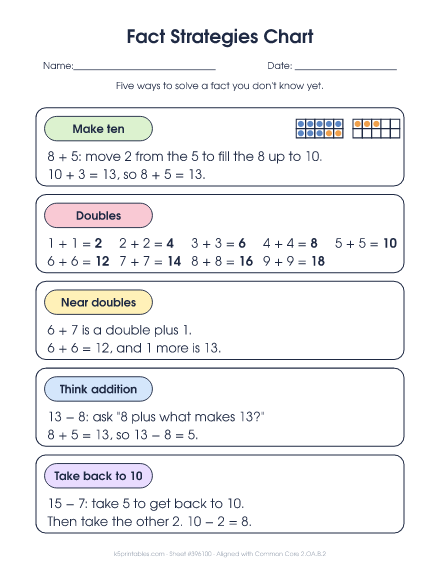
Fact Strategies Chart
Five ways to solve a fact you don't know yet, with an example for each.
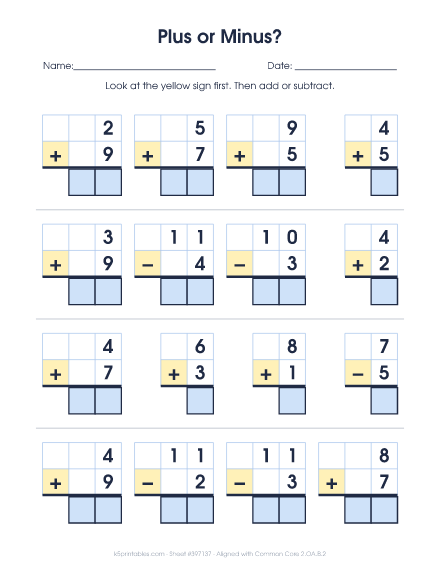
Plus or Minus?
Addition and subtraction facts mixed together on graph paper, so kids have to read the sign.
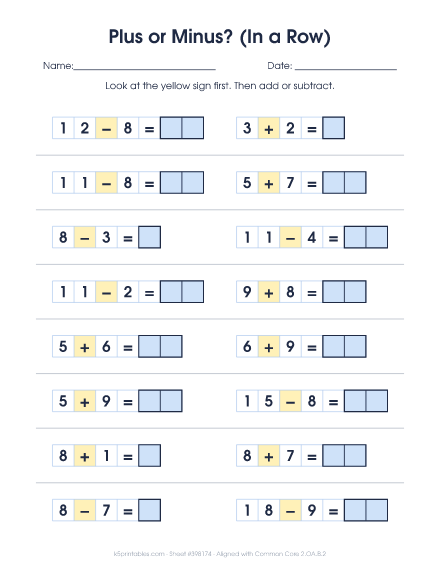
Plus or Minus? (In a Row)
The same mixed facts written in a line, the way they look in story problems and on tests.
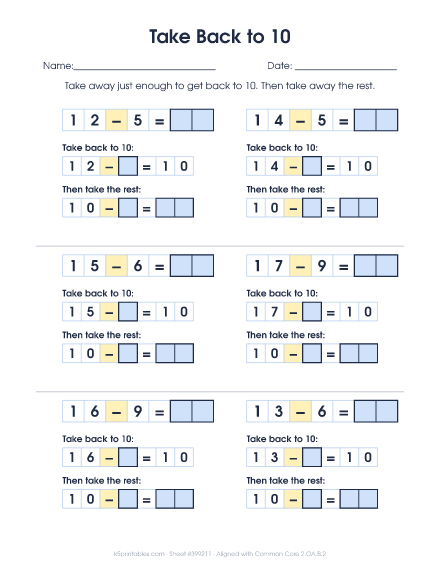
Take Back to 10
Teen subtraction facts broken into two easy steps, through 10.
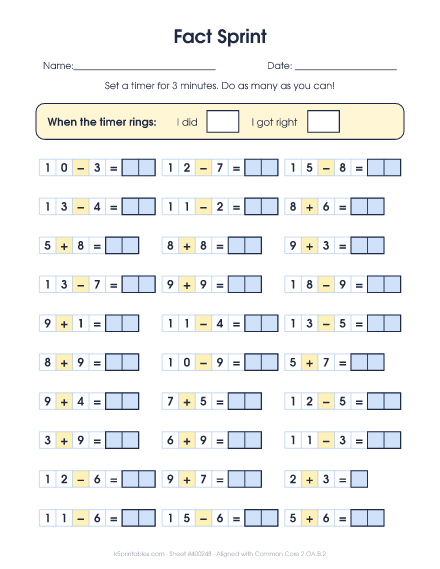
Fact Sprint
A full page of mixed facts and a score box for a 3-minute timed practice.
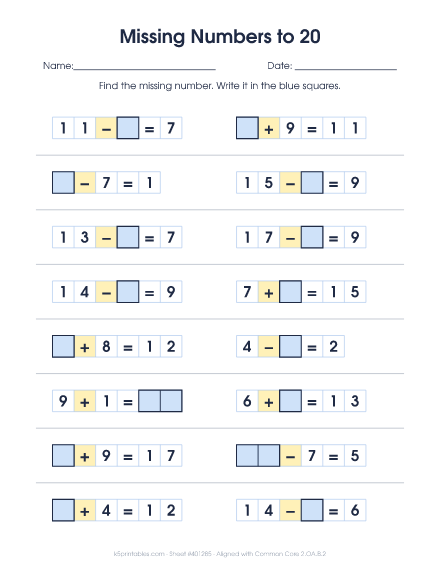
Missing Numbers to 20
Addition and subtraction facts with the missing number in any spot, like ? - 6 = 8.
Print the whole packet
One copy of every sheet above, in order. Tap + for more copies (up to 10).
For the parent or teacher
What it is
By the end of second grade, kids should know every addition fact up to 9 + 9 without counting, and subtract within 20 quickly. In first grade they learned the facts one kind at a time. Now the facts are mixed, so the first job is to read the sign, and the second is to pick a fast way to solve it.
What comes next
Adding and subtracting within 100, where these facts are used in the ones place.
How to teach it
- Start each page by pointing at the yellow sign square. Say "plus" or "minus" out loud before solving.
- Teach a strategy for the facts they don't know yet. Make ten and doubles cover most of the hard ones.
- For subtraction, think addition. 14 - 6 is the same question as "6 plus what makes 14?"
- Use the fact sprint once or twice a week, not every day. Beat your own score, not someone else's.
Common mistakes
- Adding when the sign says subtract, especially after a row of addition problems.
- Counting on fingers for facts they already know. Ask "do you know this one by heart?" first.
- In take back to 10, taking away the whole bottom number from the teen number in one step and losing track.