Reading helpers (dyslexia-friendly) worksheets
Printable reading support for second graders who need extra help: vowel team mapping, syllable splitting, word building, heart words, phrase reading, a supported story and tricky look-alike words.
The worksheets
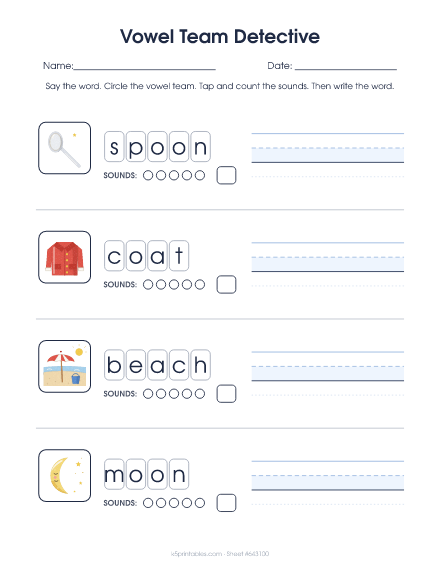
Vowel Team Detective
Four picture words with vowel teams (ai, ee, ea, oa, oo, ow) in big print. Kids circle the team, count the sounds and write the word on big blue lines. Includes an answer key.
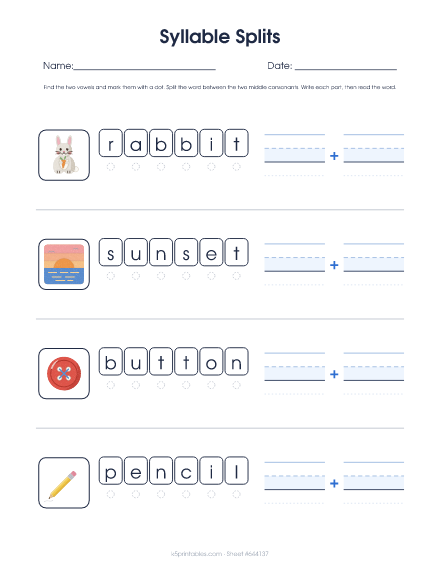
Syllable Splits
Four two-syllable picture words like rabbit and napkin, with letter tiles to mark and two lines to write each syllable. Includes an answer key.
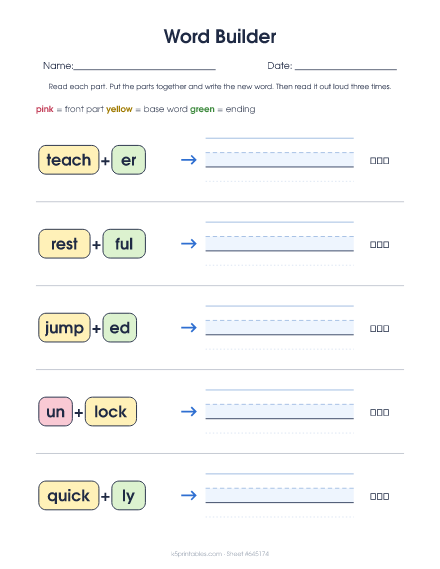
Word Builder
Five color-coded word builds (front part, base word, ending) like un + lock and help + ful, with big writing lines. Includes an answer key.
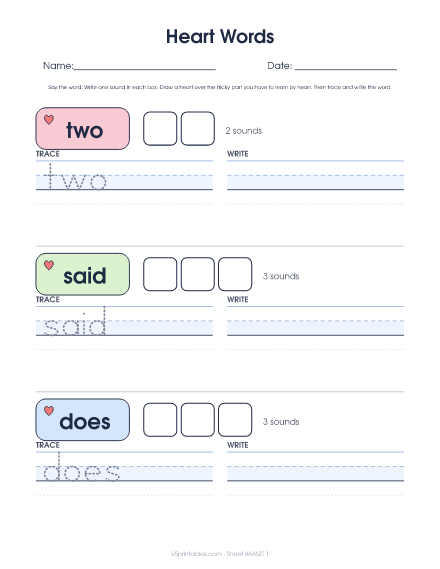
Heart Words
Three tricky words like said and was, mapped sound by sound with a heart over the part you have to learn by heart. Then kids trace and write each word. Includes an answer key.
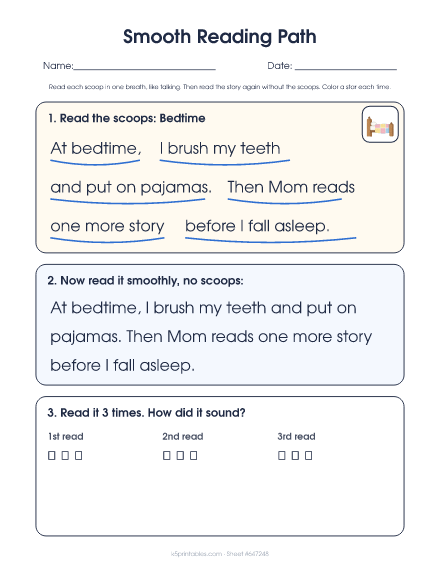
Smooth Reading Path
A short story split into scooped phrases, then the same story without scoops, with a three-read tracker. One of ten stories.
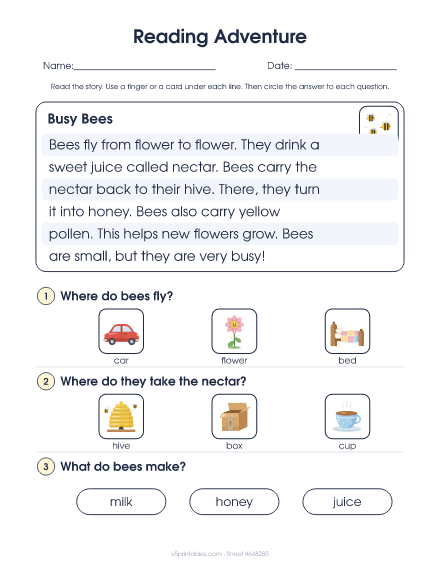
Reading Adventure
A short story in large print with shaded lines to keep your place, and three questions with picture answers. One of ten stories. Includes an answer key.
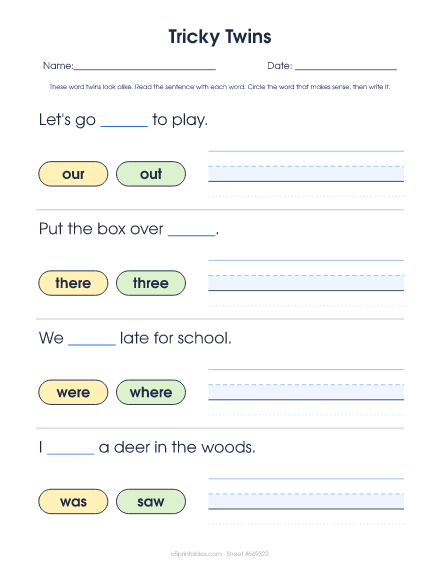
Tricky Twins
Four sentences with look-alike word twins like was and saw, on and no, and where and were, with big writing lines. Includes an answer key.
Print the whole packet
One copy of every sheet above, in order. Tap + for more copies (up to 10).
For the parent or teacher
What it is
These sheets use the kind of reading practice that works best for kids who find reading hard, including kids with dyslexia: big clear print, one job at a time, saying and tapping sounds, and lots of practice reading whole phrases. They follow a structured literacy approach, which teaches how sounds and letters work together step by step. They are not a test or a diagnosis. If reading is still much harder for your child than for other kids, talk with their teacher or ask for a reading evaluation.
What comes next
Use these alongside the regular 2nd grade reading topics, like vowel teams and two-syllable words, and keep reading books together every day.
How to teach it
- Keep sessions short and regular. Ten focused minutes a day helps more than an hour once a week.
- Say it, tap it, then write it. Using the voice, hands and eyes together helps words stick.
- Read the directions out loud for your child. These sheets practice reading words, not directions.
- Praise effort and good strategies. "You split that word into two parts all by yourself!"
- Let your child use a finger or a card under the line when reading longer text.
Common mistakes
- Guessing from the picture or the first letter. Have your child slide through every sound.
- Rushing to read faster. Smooth and accurate comes first; speed grows on its own.
- Too many words at once. Use the Fewer button if a page feels like a lot.
- Turning practice into a test. Correct gently, model the right way, and try again.