Sounds k g f v y ng (mixed practice) worksheets
Printable speech sound practice for the k, g, f, v, y and ng sounds: picture word sheets for each sound, a sound hunt, and a say-it board game.
The worksheets
- See it all
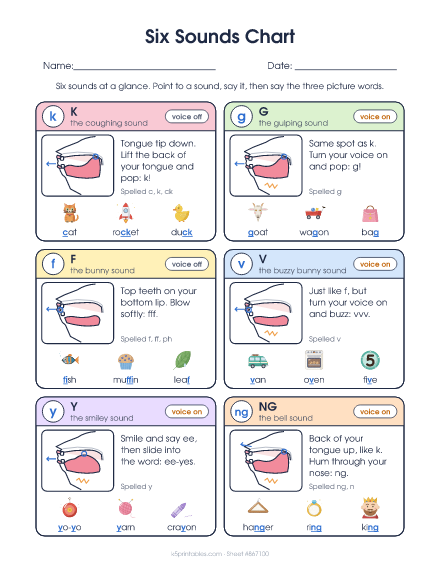
Six Sounds Chart
The k, g, f, v, y and ng sounds at a glance, each with a mouth picture, how to make it, voice on or off, how it is spelled and three picture words.
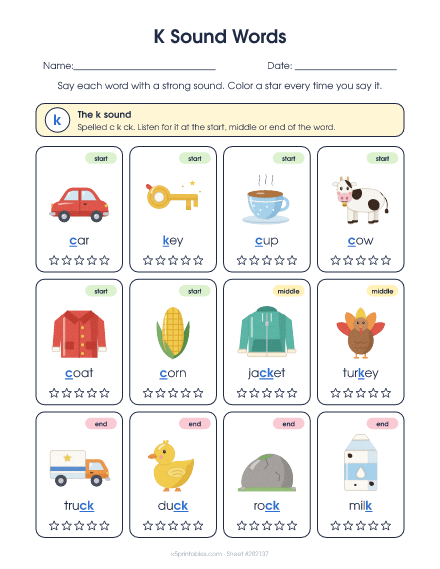
K Sound Words
Twelve picture words with the k sound at the start, middle or end. The letters that make the sound are underlined.
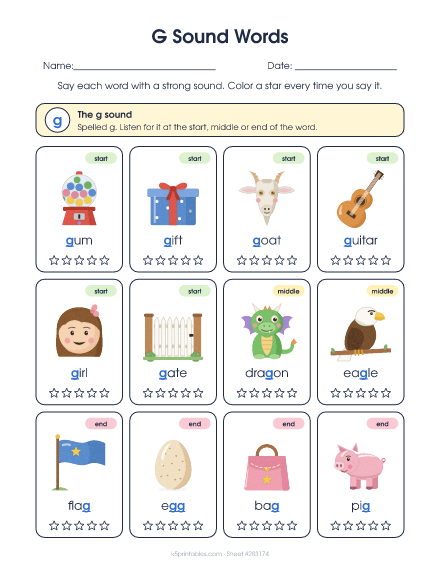
G Sound Words
Twelve picture words with the g sound at the start, middle or end.
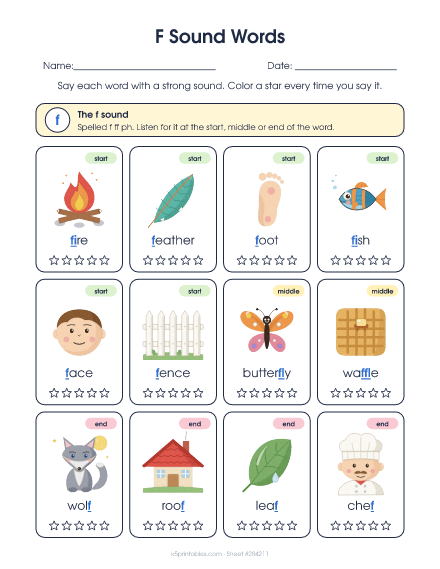
F Sound Words
Twelve picture words with the f sound at the start, middle or end.
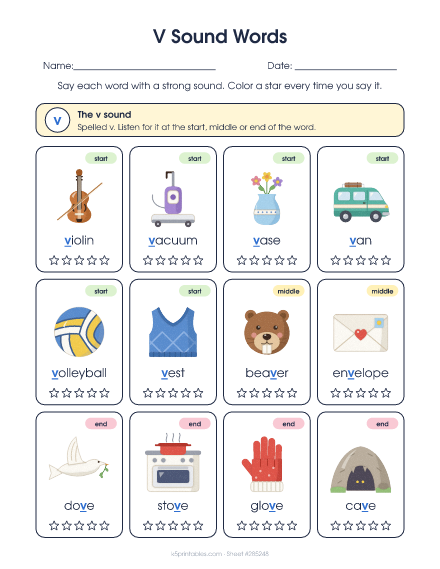
V Sound Words
Eleven picture words with the v sound at the start, middle or end.
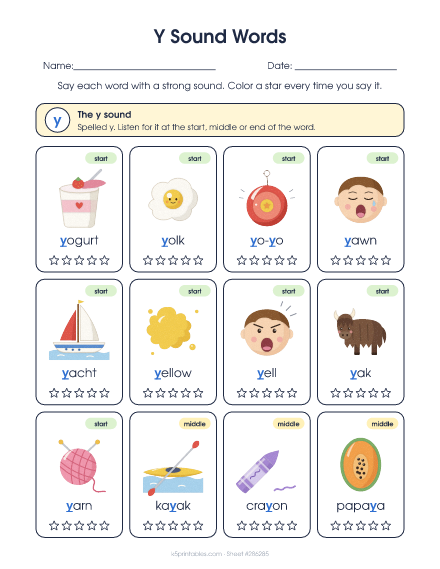
Y Sound Words
Eight picture words that start with the y sound.
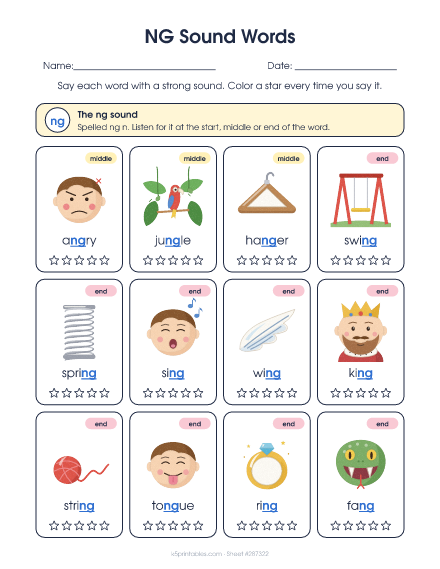
NG Sound Words
Ten picture words with the ng sound in the middle or at the end.
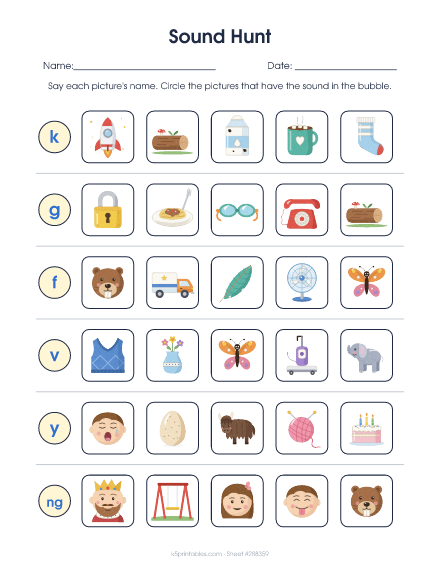
Sound Hunt
One row for each sound. Some pictures have the sound and some don't. Listening for the sound is half the work.
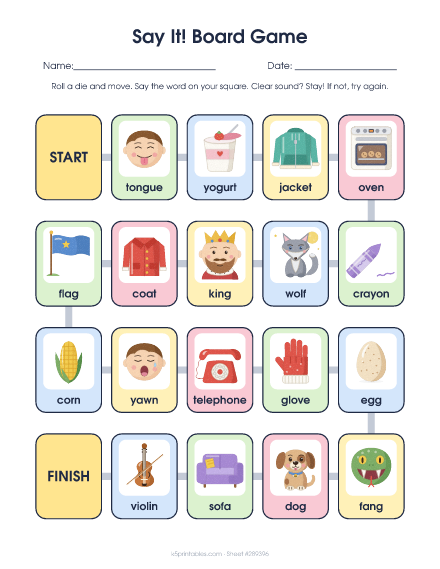
Say It! Board Game
A board game with picture words for all six sounds. Play with a die and a coin or button as a marker.
Print the whole packet
One copy of every sheet above, in order. Tap + for more copies (up to 10).
For the parent or teacher
What it is
These sheets give kids lots of short, fun practice saying six speech sounds: k (as in cat), g (as in goat), f (as in fish), v (as in van), y (as in yo-yo) and ng (as in ring). Most children say k, g, f, y and ng by about age 4, and v by about age 5. Kids who are still working on them in first grade often say t for k (tat for cat), d for g, p for f, b for v, or n for ng. Common Core doesn't cover speech sounds, so these sheets have no Common Core code.
What comes next
For deeper practice on one sound, use that sound's articulation set (cue card, picture cards, phrases, sentences, bingo, board game and tracker). Then move on to minimal pairs.
How to teach it
- Show how the sound is made. k and g are in the back of the mouth, f and v use top teeth on the bottom lip, and ng is a k-spot sound that hums through the nose.
- Practice the sound by itself first, then in words, then in short sentences like "I see a cat."
- Keep it short and playful. Five minutes a day works better than a long session once a week.
- Praise effort, not just correct sounds. "I heard that strong k!" is more helpful than "No, say it again."
- If your child is working with a speech-language pathologist, use these sheets for the sounds and word positions they are practicing.
Common mistakes
- Saying the sound right alone but not in words. That's normal. Keep going word by word.
- Practicing too fast. Slow, clear tries teach the mouth better than quick ones.
- Correcting every word in everyday talk. Save practice for practice time.
- If your child is hard to understand or gets frustrated when talking, ask your pediatrician or a speech-language pathologist for a check.