First-grade sight words worksheets
Aligned with Common Core RF.1.3g
Printable first-grade sight word worksheets: read, trace and write, sight word hunt, fill in the sentence and cut-out word cards, using the 41 first-grade sight words.
The worksheets
- See it all
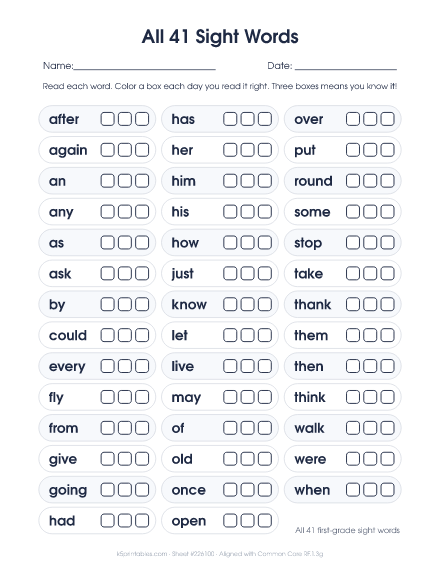
All 41 Sight Words
Every first-grade sight word on one page, with three boxes per word to track progress.
- See it all
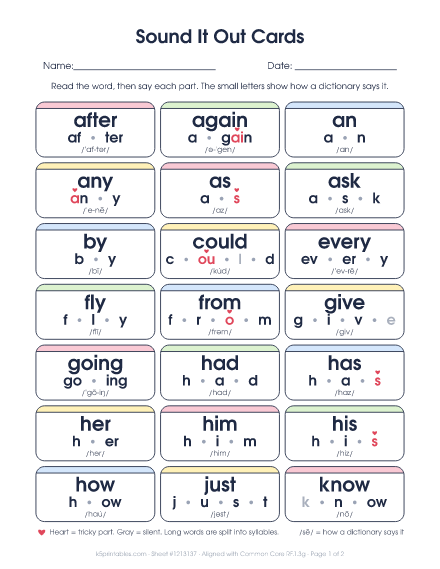
Sound It Out Cards
All 41 sight words split into sounds or syllables, like a • gain, with the tricky part marked with a heart and how a dictionary says each word (2 pages).
- See it all
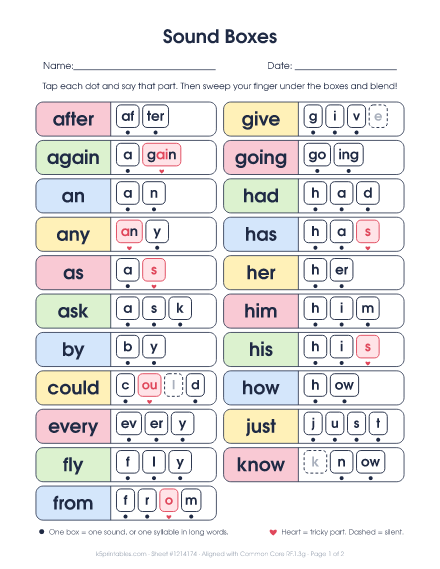
Sound Boxes
All 41 sight words with one box for each sound or syllable and a dot to tap under each box (2 pages).
- See it all
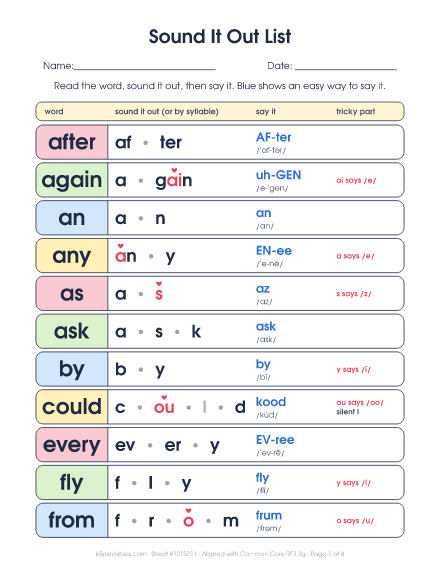
Sound It Out List
All 41 sight words in a list with the sound parts, an easy "say it" spelling, how a dictionary says it, and what makes it tricky (4 pages).
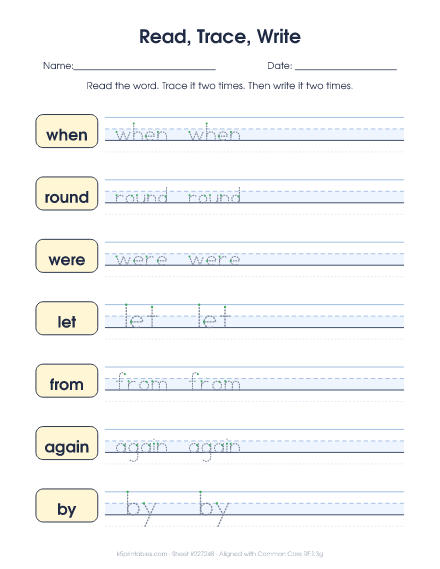
Read, Trace, Write
Seven sight words to read, trace and write on handwriting lines.
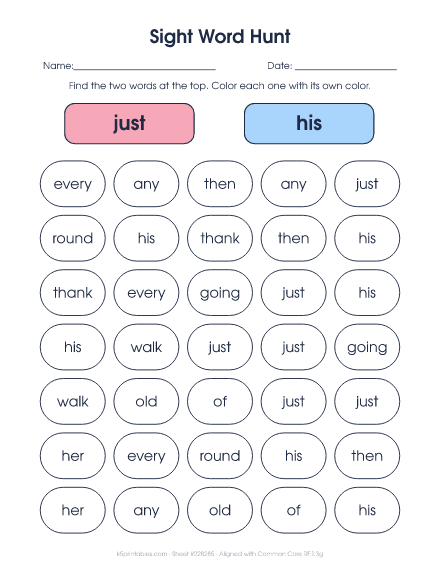
Sight Word Hunt
Two sight words hidden six times each among other sight words.
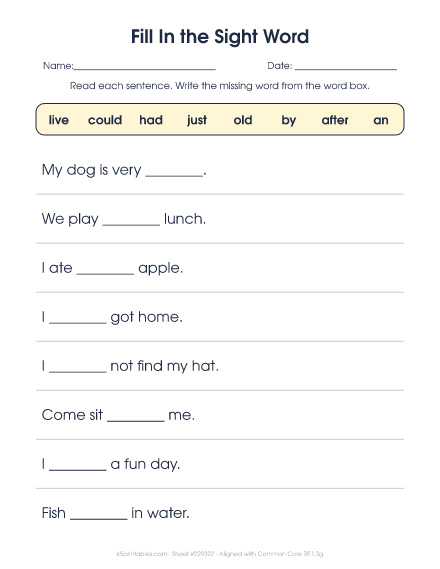
Fill In the Sight Word
Eight sentences with a missing sight word and a word box at the top.
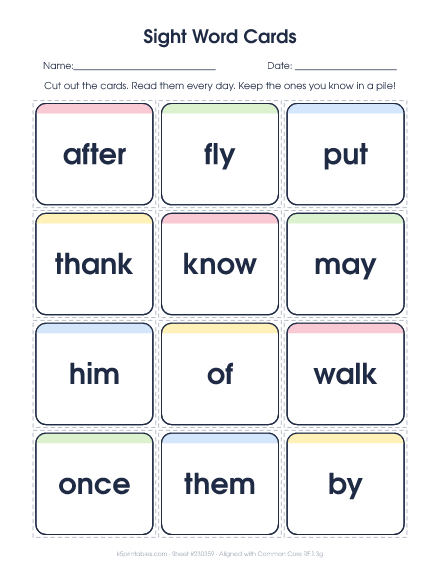
Sight Word Cards
Twelve big sight word cards to cut out. A new set every time.
Print the whole packet
One copy of every sheet above, in order. Tap + for more copies (up to 10).
For the parent or teacher
What it is
Sight words are common words kids should know instantly, without sounding them out. Many, like of, once and could, don't follow phonics rules. These sheets use the 41 first-grade Dolch sight words, such as after, again, could, every, from, know, once, some, were and when.
What comes next
Fluency passages, where sight words and phonics come together in smooth reading.
How to teach it
- Say it, spell it, say it again: "once, o-n-c-e, once."
- Point out the parts that do follow phonics, and the tricky part to remember.
- Practice a few words at a time. Add new ones when the old ones are quick.
- Find the words in real books. Seeing them in stories helps them stick.
Common mistakes
- Mixing up words that look alike, like then and them, or when and were.
- Sounding out words that can't be sounded out, like o-f for of.
- Learning words on cards but not in sentences. Always read them in context too.