Measuring length worksheets
Aligned with Common Core 1.MD.A.2
Printable measuring worksheets for first grade: measuring pictures with cubes and paper clips, and finding the longest and shortest things.
The worksheets
- See it all
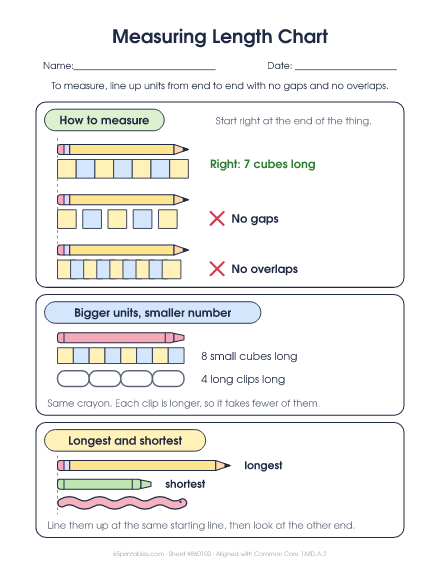
Measuring Length Chart
How to measure with no gaps or overlaps, why bigger units give a smaller number, and comparing lengths.
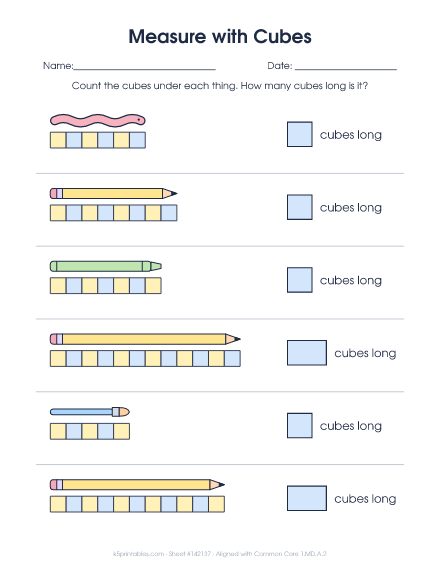
Measure with Cubes
Pictures of everyday things with a row of cubes underneath to count.
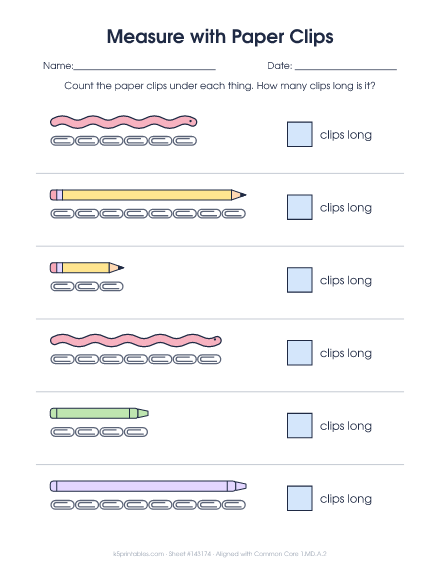
Measure with Paper Clips
Pictures measured with a row of paper clips. A bigger unit means a smaller number.
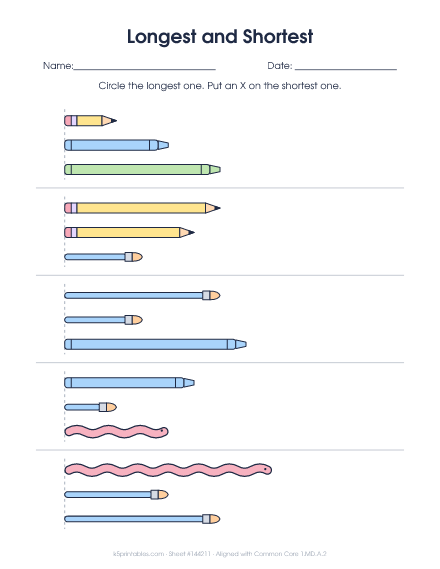
Longest and Shortest
Groups of three pictures to compare by length. Matches 1.MD.A.1.
Print the whole packet
One copy of every sheet above, in order. Tap + for more copies (up to 10).
For the parent or teacher
What it is
In first grade, measuring means lining up copies of something small, like cubes or paper clips, along an object and counting them. Kids learn that the units have to touch with no gaps or overlaps, and they start at one end of the object. Rulers come later.
What comes next
Telling time to the hour and half hour.
How to teach it
- Measure real things first. How many blocks long is a spoon? A shoe?
- Line the units up end to end, starting right at the edge. No gaps and no overlaps.
- Count the units, then say the number with the unit, like "6 cubes long".
- Compare two things by measuring both. The bigger number is the longer thing.
Common mistakes
- Starting in the middle of the object or leaving gaps between units.
- Saying just the number without the unit.
- Thinking a taller picture is longer even when it's measured the other way.