Addition within 20 worksheets
Aligned with Common Core 1.OA.C.6
Printable addition worksheets for sums up to 20: adding picture groups, making ten with ten frames, counting on with a number line, doubles and near doubles, breaking numbers apart to make ten, and then fact practice.
The worksheets
- See it all
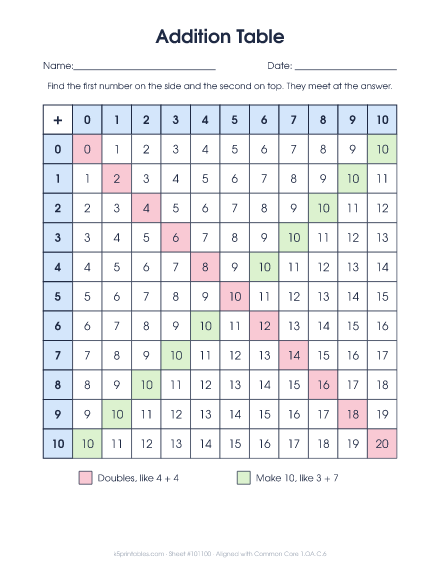
Addition Table
Every addition fact from 0 + 0 to 10 + 10, with doubles and make-10 facts colored.
- See it all
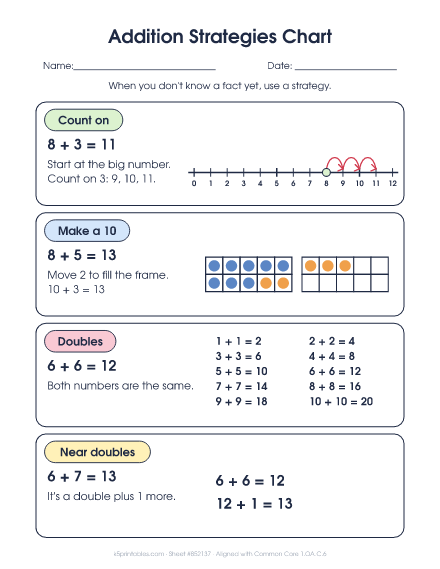
Addition Strategies Chart
Four ways to add: count on, make a 10, doubles and near doubles, each with a picture.
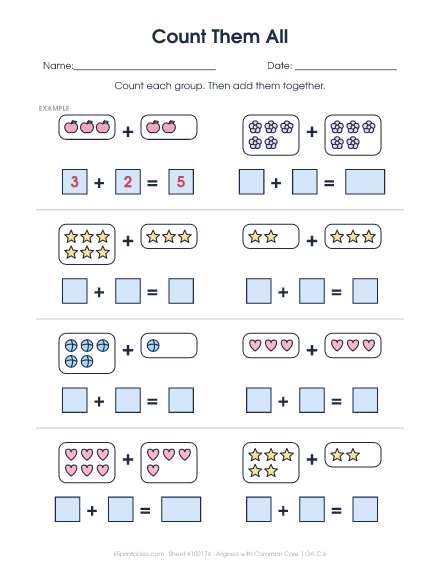
Count Them All
Two small picture groups for each problem. Count each group, then put them together.
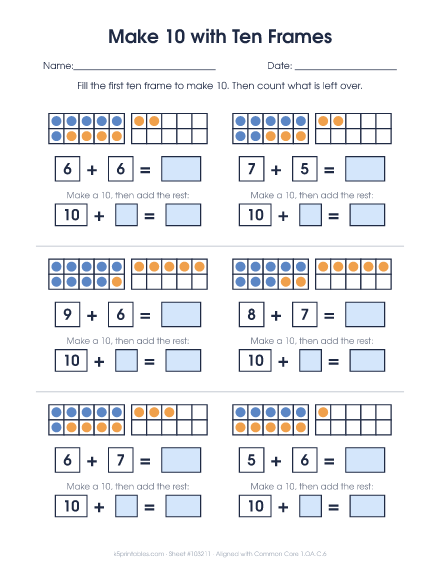
Make 10 with Ten Frames
Two ten frames for each problem. Filling the first frame shows that 8 + 5 is the same as 10 + 3.
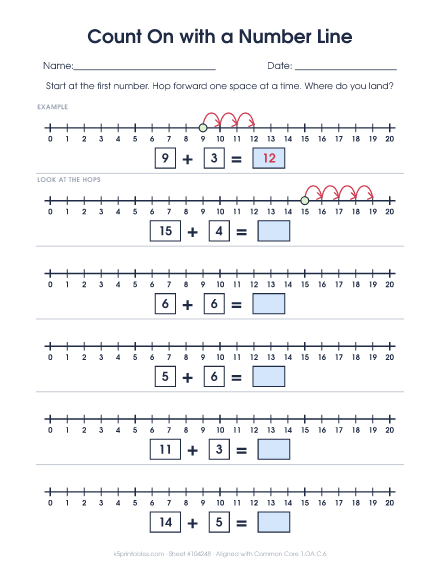
Count On with a Number Line
A 0 to 20 number line for each problem. The first two rows show the hops as examples.
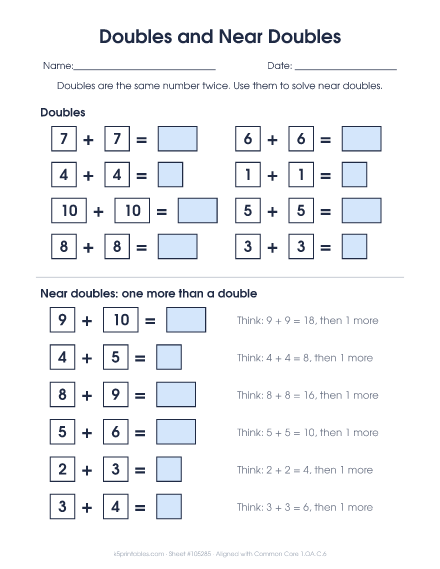
Doubles and Near Doubles
Eight doubles facts, then six near doubles with a hint that shows the double to start from.
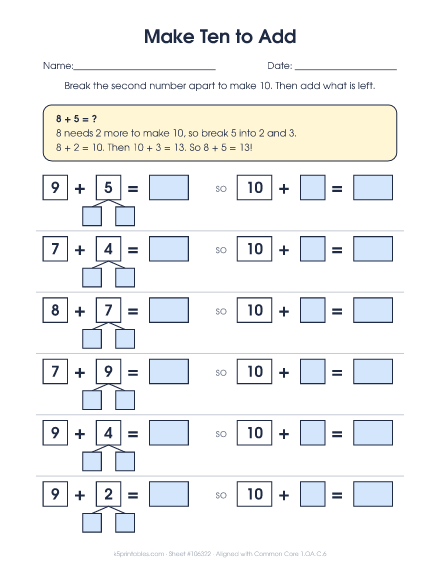
Make Ten to Add
Split the second addend into two boxes to make a 10, then finish the problem as 10 plus something.
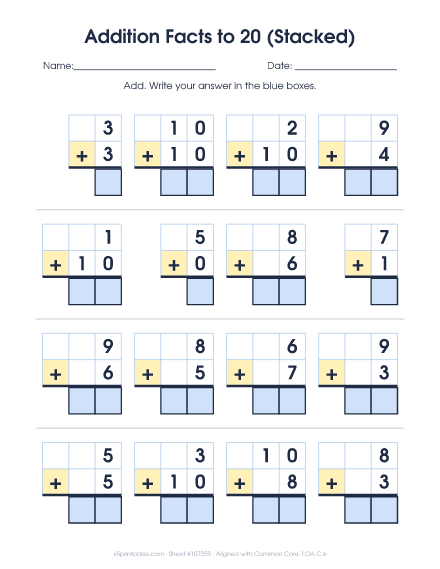
Addition Facts to 20 (Stacked)
Sixteen addition facts with sums up to 20, written top to bottom like they are in later grades.
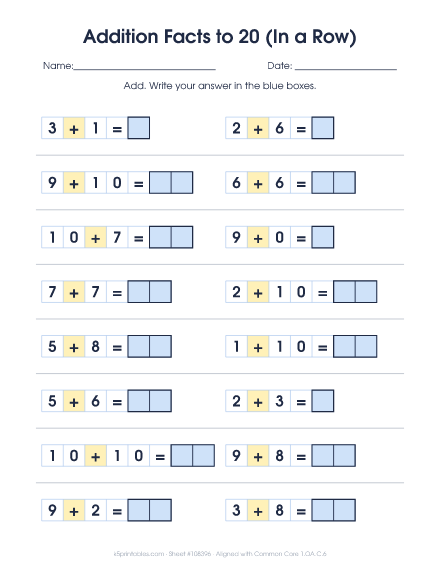
Addition Facts to 20 (In a Row)
Sixteen addition facts with sums up to 20, written across the page.
Print the whole packet
One copy of every sheet above, in order. Tap + for more copies (up to 10).
For the parent or teacher
What it is
Addition within 20 means putting two groups together when the total is 20 or less. In first grade, kids move from counting every object to faster tricks like counting on, doubles and making ten. Those tricks are what make the bigger facts like 8 + 6 feel easy.
What comes next
Subtraction within 20, using the same make-ten and doubles ideas backwards.
How to teach it
- Start with things you can hold. Put two piles of blocks or snacks together and count them all.
- Next, count on. Say the bigger number, then count up the smaller one on your fingers.
- Learn the doubles (3 + 3, 7 + 7). Then near doubles are just one more.
- Make ten. For 8 + 5, take 2 from the 5 to fill 8 up to 10, then add the 3 left over.
- Practice the facts a few minutes a day instead of all at once.
Common mistakes
- Counting the first number again when counting on, so 8 + 3 becomes 10 instead of 11.
- Counting everything from 1 every time, which is slow and leads to mistakes.
- Forgetting that order does not matter. 2 + 9 is the same as 9 + 2, so start with the bigger number.