Reading helpers (dyslexia-friendly) worksheets
Printable reading help for first graders who find letters and sounds hard: tap the sounds, b or d practice, letter hunts, syllable clapping, word ladders, letter-sound speed grids, phrase scooping and reading guide strips.
The worksheets
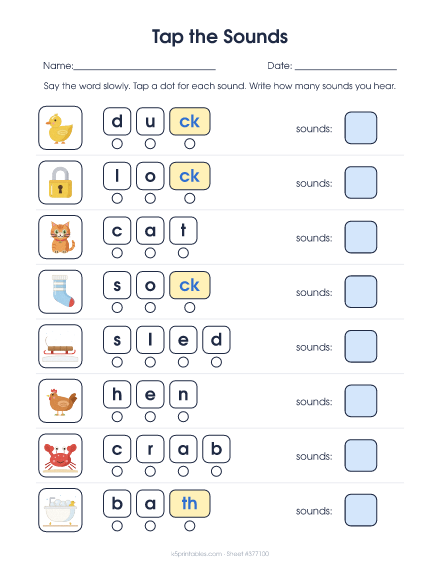
Tap the Sounds
Short words split into sounds, with a dot to tap for each one. Some words have two letters that make one sound.
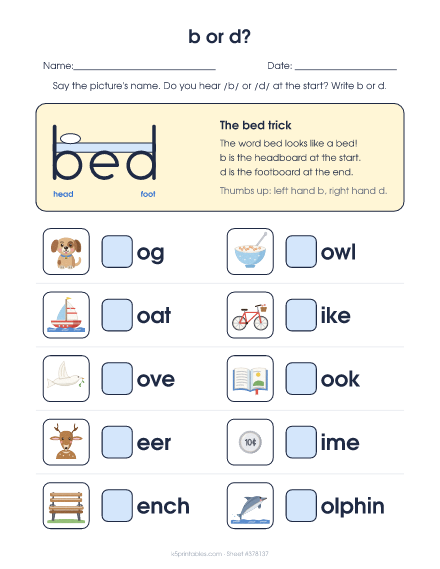
b or d?
The bed trick for b and d, then ten pictures that start with b or d.
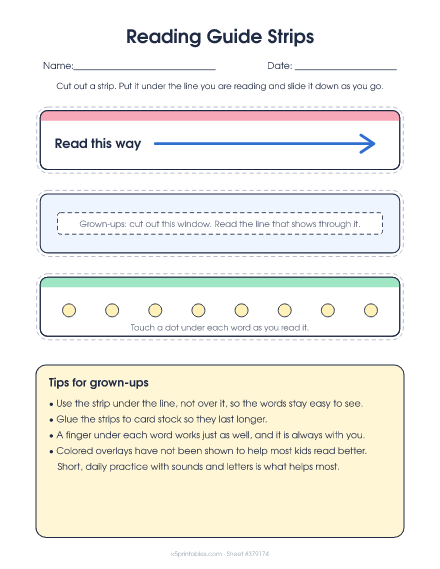
Reading Guide Strips
Three cut-out strips that help keep your place on a page, plus tips for grown-ups.
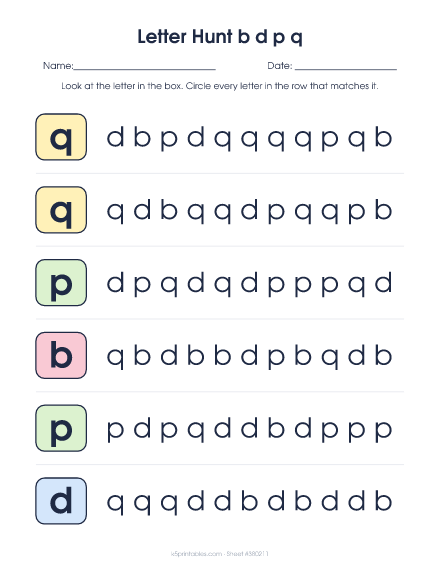
Letter Hunt b d p q
Rows of b, d, p and q to scan for one target letter.
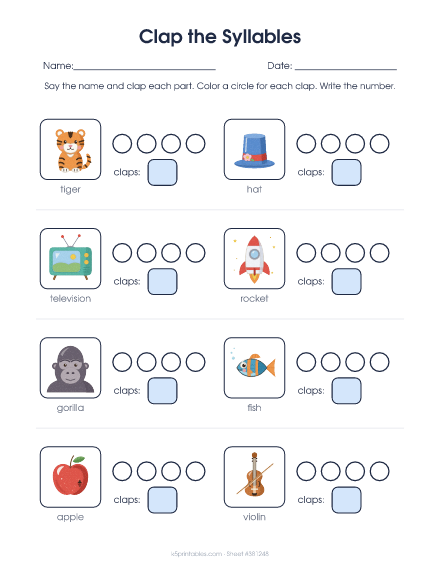
Clap the Syllables
Pictures with one to four syllables, with circles to color for each clap.
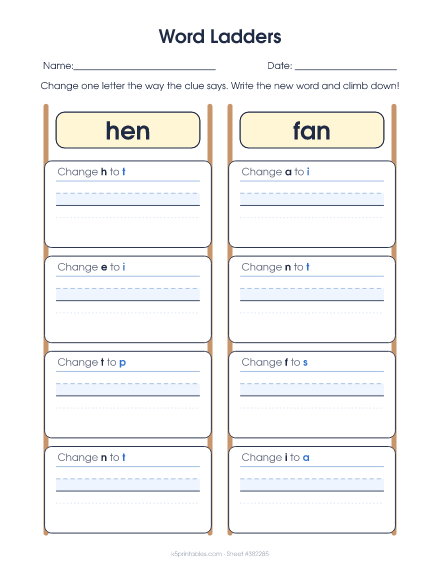
Word Ladders
Two ladders of short-vowel words. Each step changes just one letter.
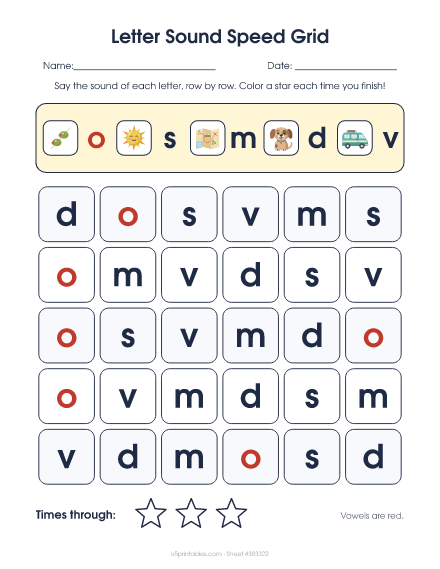
Letter Sound Speed Grid
A grid of five letters mixed up in rows, to read three times for smooth letter-sound practice.
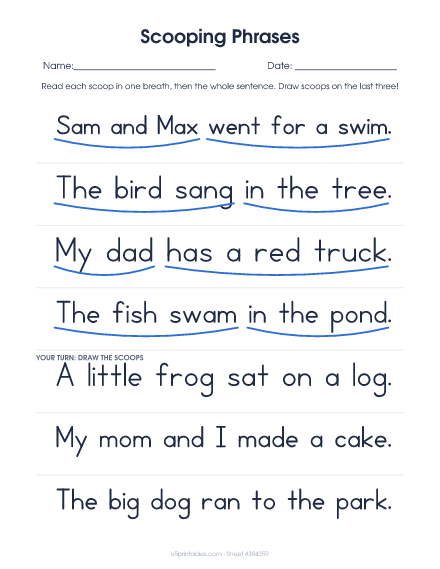
Scooping Phrases
Sentences with scoops under each phrase, then sentences for your child to scoop.
Print the whole packet
One copy of every sheet above, in order. Tap + for more copies (up to 10).
For the parent or teacher
What it is
These sheets practice the skills that are hardest for kids who struggle to read: hearing each sound in a word, connecting sounds to letters, telling look-alike letters apart, and reading smoothly in phrases. They follow the same ideas as structured literacy programs. They help any beginning reader. They are not a test and not a diagnosis. If reading is a struggle, ask your child's school or doctor about an evaluation. Only a qualified professional can diagnose dyslexia.
What comes next
Pair these with the Reading sheets for first grade. The Fewer button on any practice sheet makes a calmer page with bigger print.
How to teach it
- Use sounds, not letter names. Say /b/, not "bee."
- Make it physical. Tap a finger for each sound, clap each part of a word, trace letters big in the air.
- Teach one confusing letter at a time. Get b solid before adding d.
- Short and often. Ten minutes a day works better than an hour once a week.
- Read to your child too, so books stay fun while the hard work happens on the sheets.
Common mistakes
- Guessing from the first letter or the picture. Point to each letter and blend the whole word.
- Special dyslexia fonts and colored overlays. Research hasn't found that they help most children read better, so time is better spent on sound and letter practice.
- Waiting to see if it gets better on its own. Early help works best, so ask the school if reading is still hard by the middle of first grade.
- Rushing for speed. Accurate first, then smooth, then quicker.