Handwriting helpers (dysgraphia-friendly) worksheets
Printable handwriting help for first graders: warm-up strokes, sky-grass-ground paper, path tracing, numbered stroke order, letter families, copying from right above, mazes and cutting practice.
The worksheets
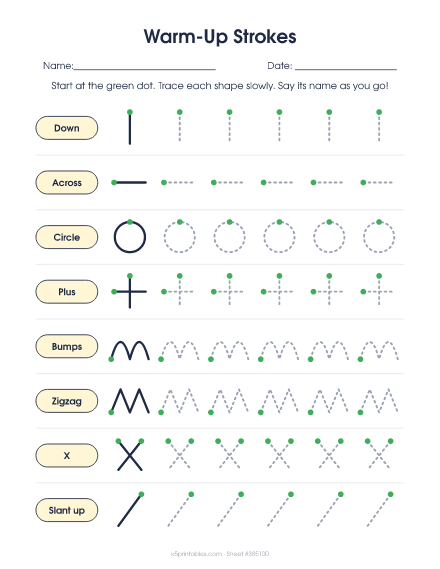
Warm-Up Strokes
Lines, crosses, slants, circles, bumps and zigzags to trace, the strokes that make every letter.
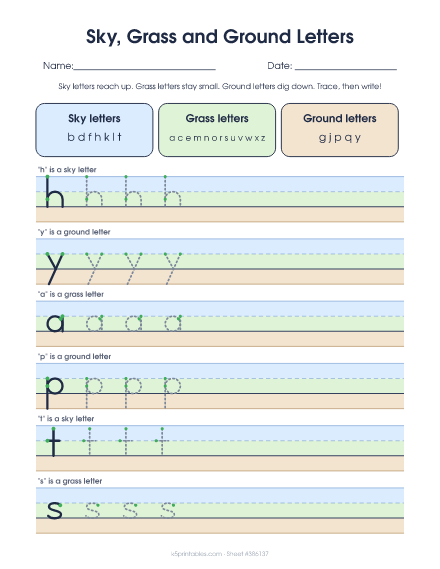
Sky, Grass and Ground Letters
Color-zoned handwriting lines that show where tall, small and tail letters go.
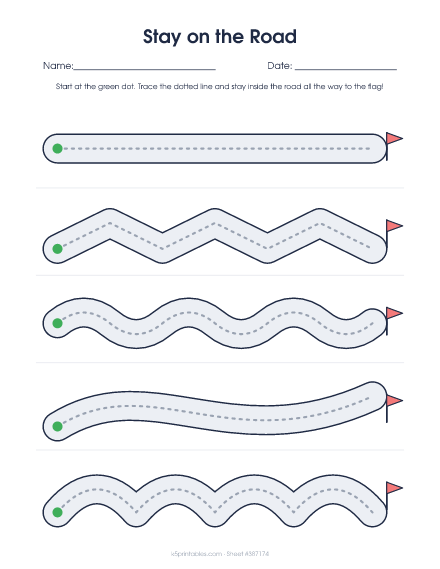
Stay on the Road
Five wide roads to trace, from straight to wavy and zigzag.
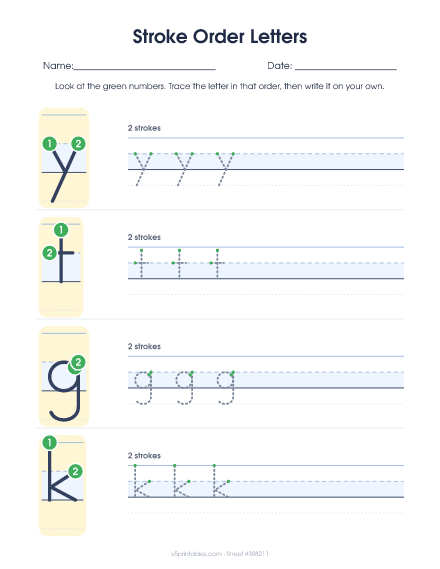
Stroke Order Letters
Big model letters with numbered starting points, then letters to trace and space to write.
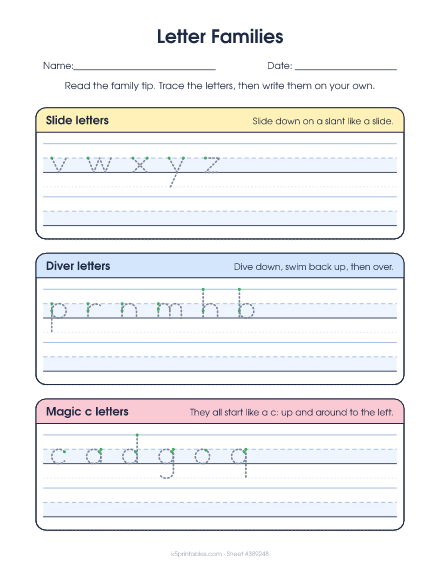
Letter Families
Lowercase letters grouped by how they start, like the magic c letters c, a, d, g, o and q.
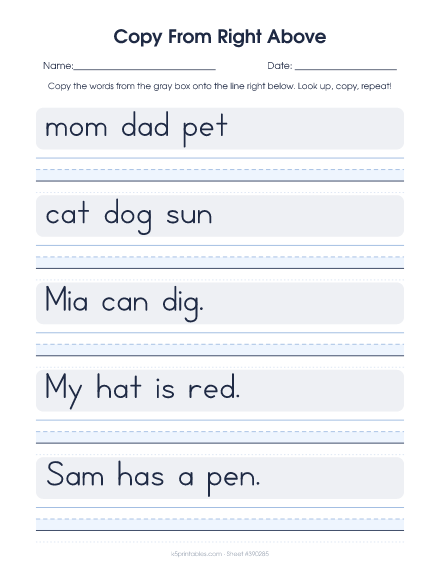
Copy From Right Above
Short words and sentences to copy onto the line right below them.
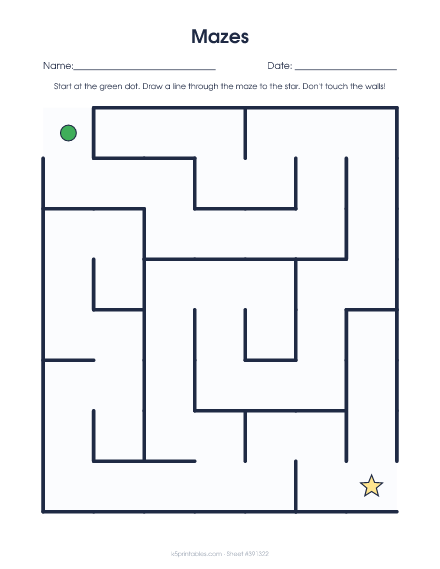
Mazes
A wide-path maze with a new layout every time you open it.
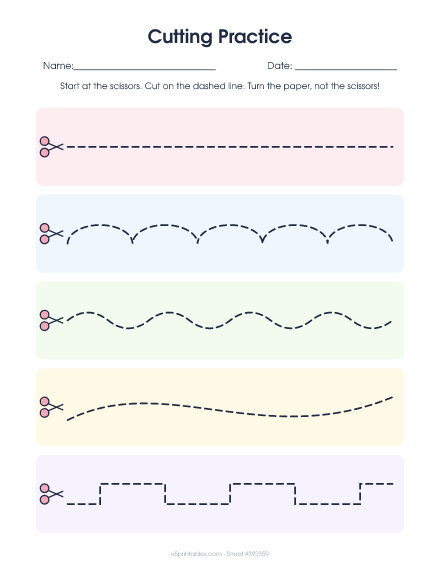
Cutting Practice
Five strips to cut, from straight lines to waves, zigzags and curves.
Print the whole packet
One copy of every sheet above, in order. Tap + for more copies (up to 10).
For the parent or teacher
What it is
These sheets build the hand skills underneath neat writing: controlling the pencil, starting letters in the right place, sizing letters on the lines, and copying without losing your place. They help many children, with or without a writing difficulty. They are not a test and not a diagnosis. If writing is very slow, painful or hard to read, ask your child's doctor or school about an occupational therapy evaluation. Only a qualified professional can diagnose dysgraphia.
What comes next
Move on to the Writing sheets for first grade. The Fewer button on any handwriting sheet gives fewer, bigger lines.
How to teach it
- Warm up first. A minute of strokes or a maze gets the hand ready.
- Check the grip and posture. Feet flat, paper slanted a little, a short pencil or crayon helps small hands.
- Teach where letters start. Most backwards and messy letters come from starting in the wrong place.
- Keep writing short and frequent. A few neat lines beat a page of tired ones.
- Let your child type or say the answer sometimes, so ideas don't get stuck behind handwriting.
Common mistakes
- Erasing over and over. Cross it out once and keep going.
- Copying from far away, like a board across the room. Copying from right above is easier and builds the skill.
- Pushing so hard the pencil tip breaks. A softer pencil and a hand shake-out break help.
- Waiting too long to ask for help. If writing stays very hard all year, an occupational therapist can help a lot.